
Nigerians spend N14.78 trillion on foreign education in six years, CBN data shows
Nigerian families have spent N14.78 trillion on overseas education between 2020 and mid-2025, with first-half 2026 costs reaching N1.92 trillion, according to Central Bank of Nigeria data.
By LAS News Desk · Published 21 Nov 2026, 06:17 WAT
Nigerian families have continued to prioritize overseas education, resulting in a cumulative expenditure of N14.78 trillion on foreign study opportunities between 2020 and mid-2025. According to data released by the Central Bank of Nigeria (CBN), this six-year period saw a total outflow of $11.1 billion dedicated to education tourism. This trajectory has gained momentum lately, as Nigerians have committed a minimum of N1.92 trillion to overseas schooling during the initial six months of 2026. This figure represents a significant increase from the estimated N1.85 trillion spent in the entirety of 2025, indicating a sustained and growing appetite for international academic opportunities despite the high financial burden.
The financial commitment required for overseas education has led many parents to make substantial sacrifices, including selling assets and exhausting personal savings. For many households, securing an admission letter from institutions in the United Kingdom, Canada, the United States, or other foreign destinations is viewed not merely as an academic milestone but as a critical investment in their children’s future. This perception persists even as foreign educational institutions increasingly establish a presence within Nigeria, suggesting that domestic alternatives have not yet fully met the perceived quality standards or expectations of these families.
Background
The CBN’s Balance of Payments statistics provide a detailed breakdown of these expenditures. During the first half of 2026, expenditures on international education comprised 50.5 percent of the nation's aggregate travel-associated foreign currency disbursements, totaling $2.85 billion (approximately N3.79 trillion). This figure signifies a 3.51 percent surge compared to the $1.39 billion utilized in the same timeframe of 2025, indicating an extra drain of $48.85 million. Additionally, academic pursuits represented 59.1 percent of the $2.44 billion allocated to individual overseas journeys in that interval, far surpassing other sectors like medical travel, which reached $341.28 million in the first half of 2026, a slight uptick from $340.94 million recorded a year earlier.
The data highlights a persistent demand for overseas education that has not been curbed by the influx of international schools and universities into the Nigerian market. The consistent growth in expenditure, rising from 2020 through to mid-2025 and continuing into 2026, suggests that the domestic education system faces challenges in retaining students who are willing to pay premium prices for foreign credentials. The CBN’s reporting underscores the scale of capital flight associated with education, raising questions about the capacity of local institutions to compete with international options in terms of perceived quality and value.
Why it matters
The substantial outflow of funds for education has significant implications for the Nigerian economy and family finances. The N14.78 trillion spent over six years represents a massive transfer of wealth abroad, which could otherwise have been invested in local economic activities. For individual families, the cost is often devastating, requiring the liquidation of assets and the depletion of savings reserves. This financial strain is driven by a belief that educational opportunities at home are increasingly difficult to find or are of insufficient quality compared to foreign institutions.
The data also highlights the dominance of education in personal travel spending, accounting for nearly 60 percent of such outflows. This indicates that for many Nigerians, the primary motivation for international travel is academic rather than leisure or medical. The persistence of this trend, despite the presence of foreign educational institutions within Nigeria, suggests a deep-seated preference for foreign credentials and environments. This has consequences for the domestic education sector, which must address quality concerns to retain students and reduce the associated economic drain.
What happens next
The sources do not provide specific information on upcoming policy changes, new initiatives by the Nigerian government to curb education outflows, or projected figures for the remainder of 2026. The CBN data presented reflects historical and current spending patterns up to mid-2026, but no further dates, pending decisions, or next steps are outlined in the provided material.
Sources
Spotted an error? · Corrections policy
Related stories
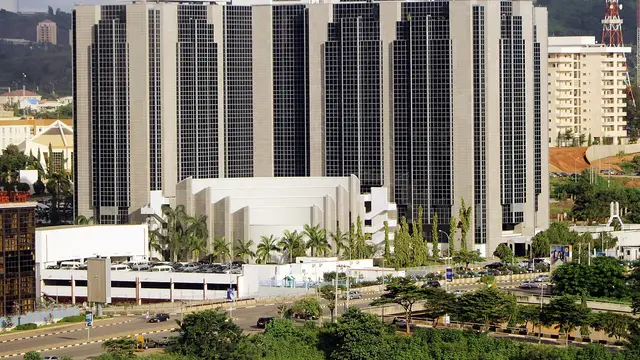
Nigeria's BDC operators warn CBN reforms threaten retail forex access
The Association of Bureaux De Change Operators of Nigeria has urged the Central Bank to address licensing delays and capital requirements, warning that current reforms could eliminate a key channel for retail foreign exchange.
Photo: GodwinPaya / Wikimedia Commons · CC BY-SA 4.0
LAS News Desk · 10 Nov 2026, 12:18 WAT · 2 sources

Naira falls to N1,367.61 per dollar as currency extends decline
The Nigerian Naira weakened further against the US dollar on Monday, dropping to N1,367.61 at the official rate despite a recent increase in the country's external reserves.
LAS News Desk · 27 Oct 2026, 00:00 WAT · 1 source

BBC launches Hausa‑language learning programme for Nigerian children
The BBC has introduced Dars Hausa, a multimedia education initiative aimed at Nigerian children who cannot attend school due to insecurity, poverty or other barriers. The programme offers lessons in maths, English, science and geography via TV, radio and social media.
LAS News Desk · 19 Nov 2026, 11:43 WAT · 1 source
UNICEF reports 624,000 out-of-school children in Nigeria's Sokoto, Kebbi and Zamfara states
UNICEF identified roughly 624,000 children out of school in the three north‑western states, with only 68,000 reached by re‑enrolment programmes, highlighting a gap that requires greater government and community action.
LAS News Desk · 20 Nov 2026, 13:45 WAT · 2 sources
Federal government halts all 2026 admissions to NTI’s NCE and degree programmes over regulatory breaches
The Ministry of Education announced on 7 November 2026 that all admissions to the National Teachers’ Institute in Kaduna for NCE and degree courses are cancelled and university affiliations terminated, citing violations of operational guidelines.
LAS News Desk · 7 Nov 2026, 17:15 WAT · 6 sources
Nigerian Finance Minister admits households spend 120% of income on food
Taiwo Oyedele stated at Chatham House that soaring food prices force many Nigerians to borrow money, with food inflation outpacing headline inflation.
LAS News Desk · 27 Oct 2026, 10:46 WAT · 2 sources
More Africa/Nigeria news ›
- Senate schedules on‑site visit to Ogun communities to probe army land dispute
- President Tinubu praises Dr Musa Aliyu’s election as chair of African Asset Recovery Forum
- Atiku’s media adviser challenges Defence Ministry’s use of official social media to promote Tinubu rally
- South African golfer and Kenyan chef detained at Lagos airport over 50kg cannabis shipment
- Tinubu Reaffirms Commitment to Uninterrupted Academic Calendars at FUTA Convocation