
UNICEF reports 624,000 out-of-school children in Nigeria's Sokoto, Kebbi and Zamfara states
UNICEF identified roughly 624,000 children out of school in the three north‑western states, with only 68,000 reached by re‑enrolment programmes, highlighting a gap that requires greater government and community action.
By LAS News Desk · Published 20 Nov 2026, 13:45 WAT
UNICEF announced on 20 November 2026 that an estimated 624,000 children are currently out of school across the north‑western Nigerian states of Sokoto, Kebbi and Zamfara. The figure was disclosed by Dr Michael Juma, chief of UNICEF’s Sokoto field office, during a media briefing held to mark World Children’s Day. Of the children identified, only 68,000 have been reached through UNICEF‑supported school re‑enrolment interventions, underscoring a substantial gap between identification and actual return to education.
Dr Juma stressed that the disparity points to an urgent need for stronger government commitment, sustained investment and active community mobilisation to bring more children back into classrooms. He also called on journalists to play a pivotal role in advocating for children’s rights, urging balanced coverage that highlights both achievements and persisting gaps.
Background
A UNICEF review of the three states indicated that around 98,000 young learners gained advantages from the Teaching at the Right Level (TaRL) initiative, a scheme designed to enhance basic reading and math skills. Beyond the TaRL effort, the agency is aiding educator training, supplying educational resources, fast-tracking fundamental schooling, combining Islamic studies with general education, and offering alternative study methods like audio broadcasts and the Nigeria Learning Passport.
Health interventions were also highlighted. UNICEF reported that measles‑rubella vaccination campaigns reached about 7.The population of children across these three states stands at 8 million, and over five million of them were administered polio immunizations during the latest vaccination drive. In Kebbi State, around 148,000 children received the first dose of the malaria vaccine and 130,000 received the second dose.
State governments have contributed financially to related health and nutrition programmes. Sokoto and Zamfara committed approximately N100 million and N500 million, respectively, to purchase Ready-to-Use Therapeutic Food for managing severe acute malnutrition. Kebbi State allocated about N540 million to provide free medical care for children. Social health insurance programs backed by UNICEF have enrolled about 86,000 individuals in Zamfara, 18,000 in Sokoto, and 10,000 in Kebbi.
The organization also helped draft laws concerning child safety, regulations for Family Courts, and wider social welfare strategies intended to bolster the safeguarding, recovery, and societal re-entry of at-risk minors, including those who have broken the law.
Why it matters
The scale of out‑of‑school children in Sokoto, Kebbi and Zamfara represents a significant barrier to achieving Nigeria’s education targets and undermines broader development goals. The limited reach of re‑enrolment programmes means that the majority of identified children remain excluded from formal learning, potentially affecting their long‑term socioeconomic prospects. Health interventions linked to the education effort indicate a holistic approach, yet the need for continued funding and community engagement remains critical.
Government contributions to nutrition and healthcare demonstrate a multi‑sectoral response, but the disparity between identified out‑of‑school children and those re‑enrolled suggests that current measures are insufficient on their own. UNICEF’s call for increased media advocacy reflects the belief that public awareness and accountability are essential to mobilise additional resources and policy action.
What happens next
UNICEF has indicated that continued support will focus on expanding teacher training, learning material distribution, accelerated basic education and alternative learning platforms to reach more children. The organisation also plans to sustain vaccination and nutrition programmes while advocating for further state investment in education and child protection frameworks. No specific dates for additional interventions were provided, but the briefing emphasized the need for immediate and coordinated action to close the enrollment gap.
Sources
Spotted an error? · Corrections policy
Related stories

NELFUND to curb double‑payment of school fees with new token system
The Nigerian Education Loan Fund announced a tokenised payment pilot to stop students from paying tuition twice and to give parents a way to verify fee payments. The move follows reports of students receiving loans while parents still paid fees.
LAS News Desk · 28 Oct 2026, 13:46 WAT · 4 sources
BBC launches Hausa‑language learning programme for Nigerian children
The BBC has introduced Dars Hausa, a multimedia education initiative aimed at Nigerian children who cannot attend school due to insecurity, poverty or other barriers. The programme offers lessons in maths, English, science and geography via TV, radio and social media.
LAS News Desk · 19 Nov 2026, 11:43 WAT · 1 source
Peter Obi pledges 10,000 primary health centres and 40,000 school blocks at Onitsha town hall
During a town‑hall meeting in Onitsha on 20 November 2026, NDC presidential candidate Peter Obi promised a primary health centre in every ward and 40,000 new primary‑school blocks, while urging voters to protect their ballots in the 2027 election.
LAS News Desk · 20 Nov 2026, 22:45 WAT · 4 sources
Federal Ministry of Education refutes viral claims of 2,000 fake universities and 100 bogus professors in Nigeria
The Ministry of Education said the National Universities Commission never announced 2,000 fake universities or a list of 100 fake professors, describing the circulating posts as recycled misinformation, and urged the public to verify information through official channels.
LAS News Desk · 15 Nov 2026, 05:09 WAT · 2 sources
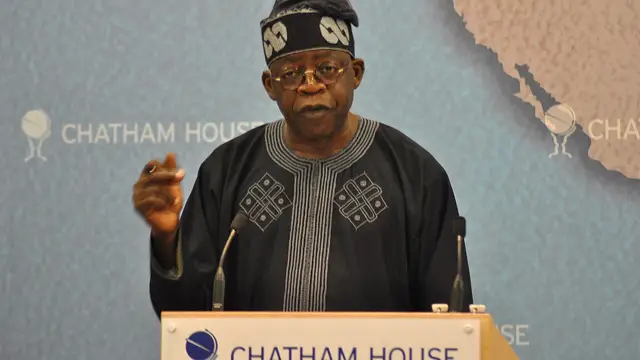
President Tinubu recounts US taxi driving and jobs that funded his education, ties experience to education reforms in Nigeria
President Bola Tinubu said he drove a taxi and held various jobs in the United States to pay for his university studies, and linked that personal history to his government's education initiatives such as NELFUND loans, vocational college upgrades and a new ASUU agreement.
Photo: Chatham House / Wikimedia Commons · CC BY 2.0
LAS News Desk · 4 Nov 2026, 16:15 WAT · 5 sources
Federal Government Sets 18‑Month Timeline and $155bn Funding to Complete Abuja National Library
Nigeria’s federal government has revived the long‑delayed National Library headquarters in Abuja, flagging a new 18‑month deadline and committing roughly N155.3 billion, while the First Lady’s fundraising drive has already secured over N25 billion.
LAS News Desk · 20 Nov 2026, 10:15 WAT · 3 sources
More Africa/Nigeria news ›
- Senate schedules on‑site visit to Ogun communities to probe army land dispute
- President Tinubu praises Dr Musa Aliyu’s election as chair of African Asset Recovery Forum
- Atiku’s media adviser challenges Defence Ministry’s use of official social media to promote Tinubu rally
- South African golfer and Kenyan chef detained at Lagos airport over 50kg cannabis shipment
- Tinubu Reaffirms Commitment to Uninterrupted Academic Calendars at FUTA Convocation