
Nigerian Finance Minister admits households spend 120% of income on food
Taiwo Oyedele stated at Chatham House that soaring food prices force many Nigerians to borrow money, with food inflation outpacing headline inflation.
By LAS News Desk · Published 27 Oct 2026, 10:46 WAT
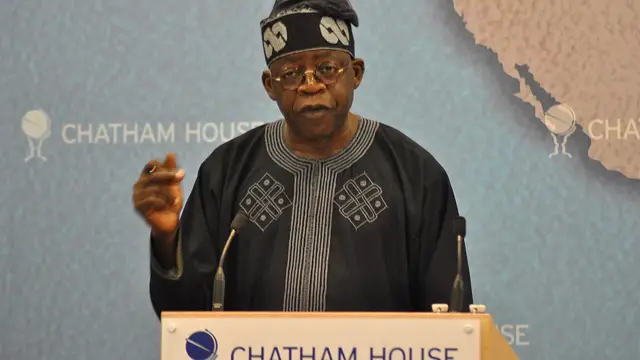
Nigerian households are spending up to 120 per cent of their monthly income on food, according to an admission by the Minister of Finance and Coordinating Minister of the Economy, Taiwo Oyedele. Speaking at a recent event at Chatham House in London, Oyedele revealed that a government survey indicated that food expenses have exceeded the earnings of many families. This economic strain has forced residents to borrow money or rely on relatives to survive until the end of the month.
Oyedele highlighted the disconnect between macroeconomic indicators and the daily reality of ordinary citizens. He noted that while the country’s headline inflation stood at 14.63 per cent in September, food inflation was significantly higher at 19.59 per cent. The minister argued that this divergence widens inequality, as the cost of essential items such as tomatoes, gari, and beans is not falling as quickly as the broader inflation rate. He emphasised that macroeconomic stability offers little comfort to a mother who cannot afford basic nourishment, describing the situation as a crisis of the "working poor" rather than traditional unemployment.
Background
The financial pressure on Nigerian families is compounded by a poverty rate that remains above 50 per cent, despite an unemployment rate hovering around five per cent. Oyedele attributed the persistent high food prices to deep-seated structural issues within the agricultural sector rather than fiscal policies such as fuel taxes, noting that Nigeria currently imposes no taxes on fuel. Key factors driving prices include low agricultural yields, seasonal farming patterns, poor storage and logistics, high transport costs, and insecurity in farming communities. The minister cited specific examples of these challenges, such as post-harvest losses of up to 60 per cent for tomatoes.
In response to these structural bottlenecks, the government is investing in agricultural technology, irrigation systems to enable year-round farming, and improved storage facilities. Additionally, the administration is working to provide smallholder farmers with better access to finance. The government’s strategy prioritises agriculture and non-tradable services, sectors that collectively employ 81.4 per cent of the working population. The aim is to grow these sectors faster than the overall economy to increase incomes and reduce long-term reliance on state support.
Why it matters
The situation underscores a significant gap between national economic metrics and household welfare. While headline inflation is declining, the sharp rise in food costs means that real purchasing power for the majority of Nigerians is eroding. Experts have also criticised the data provided by the National Bureau of Statistics, with financial analyst Okechukwu Unegbu arguing that the actual inflation rate is considerably higher than the official figures suggest. This debate highlights the urgency of addressing the livelihoods of those who are employed but still unable to meet basic needs.
To mitigate the immediate impact on vulnerable populations, the administration has implemented a direct cash transfer programme. This initiative has reached more than 10 million households, with payments made digitally and beneficiaries verified using National Identification Numbers to minimise leakage. These measures are designed to provide short-term relief while longer-term agricultural reforms take effect.
What happens next
The government intends to continue its focus on growing the agricultural and non-tradable services sectors to outpace the general economy. By increasing productivity and incomes in these key areas, the administration aims to gradually reduce the dependence of households on direct cash transfers. The continued monitoring of inflation rates and the implementation of agricultural improvements will be central to addressing the affordability crisis.
Sources
Spotted an error? Report a correction · Corrections policy
Related stories
Nigeria targets single-digit inflation by 2027 despite rising lending rates
Finance Minister Taiwo Oyedele announced a goal to bring inflation below 10 percent by late 2027, aiming to lower borrowing costs, even as average lending rates increased to 32.62 percent in September.
LAS News Desk · 27 Oct 2026, 04:46 WAT · 2 sources
Nigeria's headline inflation eases to 14.6% in September as energy costs jump
The National Bureau of Statistics reported a fall in overall inflation to 14.63% in September 2026, the fourth consecutive monthly decline, while energy inflation more than doubled to 10.85% and food prices remained high.
LAS News Desk · 15 Oct 2026, 19:15 WAT · 10 sources
Oyo Governor Makinde criticises Tinubu’s foreign‑reserve narrative, calls for comprehensive reset ahead of 2027 elections
Oyo State Governor Seyi Makinde told President Bola Tinubu that rising foreign‑reserve figures do not alleviate hunger, urging a reset of the economy, security, education and political system as the 2027 elections approach.
Photo: Chatham House / Wikimedia Commons · CC BY 2.0
LAS News Desk · 25 Oct 2026, 03:45 WAT · 6 sources
President Tinubu Rejects Fuel Subsidy Reinstatement, Citing Economic Risks
President Bola Tinubu reiterated his refusal to restore Nigeria’s petrol subsidy, arguing that doing so would damage the economy and raise fuel prices, while Finance Minister Taiwo Oyedele warned of capital flight and a weaker naira.
Photo: Chatham House / Wikimedia Commons · CC BY 2.0
LAS News Desk · 20 Oct 2026, 06:15 WAT · 2 sources
Nigeria sets 7% growth target, aims to outpace IMF forecast
Nigeria's finance minister announced a 7% economic growth goal for 2027, contrasting with the IMF's 4.3% projection, and outlined fiscal measures to curb inflation and stabilise the naira.
LAS News Desk · 18 Oct 2026, 08:45 WAT · 2 sources

Former Osun lawmaker urges support for President Tinubu amid Nigeria's economic hardship
Olatunbosun Oyintiloye, a former Osun State legislator and APC chieftain, called on Nigerians and opposition politicians to back President Bola Tinubu instead of criticising his handling of the economy, citing recent reforms and the upcoming 2027 election.
LAS News Desk · 25 Oct 2026, 13:15 WAT · 2 sources
More Africa/Nigeria news ›
- Ekiti Governor Oyebanji seeks Assembly approval for three commissioners and ten advisers
- Seven Killed in Nighttime Shooting in Plateau State Community
- Atiku supporter remanded after posting forged Tinubu letter
- Peter Obi demands release of NDC mobiliser Rilwan Olawale, accuses Tinubu of undermining democracy
- Five Obidient Leaders Omitted from NDC Campaign Council