
Matan Kahana elected Knesset speaker with 66 votes, signalling shift away from Netanyahu's agenda
Israel's parliament chose Matan Kahana as speaker on 18 November 2026, backed by opposition and Arab parties, a move seen as a step toward reversing policies of the outgoing Netanyahu government.
By LAS News Desk · Published 18 Nov 2026, 00:16 WAT · Updated 18 Nov 2026, 08:16 WAT
Israel's 120‑member parliament elected a new speaker on Tuesday, 18 November 2026, in a vote that highlighted the growing influence of parties opposed to Prime Minister Benjamin Netanyahu. Matan Kahana, a member of the centre‑right Yashar party and an ally of opposition leader Gadi Eisenkot, secured 66 votes, while the candidate supported by Netanyahu's bloc, Ofir Katz, received 52 votes. The result was achieved after a protracted seven‑hour debate that saw both Jewish‑led opposition parties and Arab‑led parties rally behind Kahana.
Taking over from Likud's Amir Ohana, Kahana delivered his first address to the assembly, committing to act as a voice representing everyone and guaranteeing that the Knesset fully complies with judicial decisions. His election is being interpreted as a preliminary step toward undoing several of the outgoing government's most contentious policies, a promise echoed by Eisenkot's bloc.
Background
The election follows an inconclusive October 2026 parliamentary election that left Netanyahu without a clear governing majority. Gadi Eisenkot, leader of the Yashar party and former chief of staff to Netanyahu, emerged as the primary challenger to the incumbent prime minister. Eisenkot has been actively seeking to form a coalition capable of replacing Netanyahu, and his bloc has pledged to reverse policies that it describes as divisive.
The speakership in Israel's unicameral Knesset carries significant procedural power, including control over the legislative agenda and the scheduling of votes. Historically, the position has been held by members of the governing coalition, making Kahana's election by a coalition of opposition forces notable. The vote tally—66 for Kahana and 52 for Katz—reflected a clear, though not overwhelming, majority for the opposition candidate, with support crossing ethnic and party lines, including backing from Arab‑led parties.
Why it matters
Kahana's appointment is expected to facilitate the advancement of bills favored by Eisenkot's bloc and its coalition partners, potentially reshaping Israel's domestic policy landscape. The new speaker's commitment to uphold court decisions may also affect ongoing legal disputes involving government actions taken under Netanyahu's tenure. Opposition parties view the speakership as a lever to challenge legislation they consider to have been passed without broad consensus.
The shift also signals a broader realignment within the Knesset, where the traditional dominance of Netanyahu's Likud party is being contested by a coalition that includes both secular and religious factions, as well as Arab representatives. This coalition's ability to work together could influence the formation of the next government, a process that remains unresolved as of the date of reporting.
What happens next
With the speakership now in the hands of an Eisenkot ally, the next steps involve the opposition bloc leveraging its new procedural advantage to push forward its legislative priorities. Eisenkot continues negotiations to assemble a governing coalition, and the composition of that coalition will determine whether Kahana's role can translate into substantive policy changes. The Knesset is expected to convene for further sessions where the new speaker will oversee debates and votes, while the broader political landscape will watch for any moves by Netanyahu's faction to regain influence.
The election outcome also sets the stage for potential legal and parliamentary challenges to policies enacted by the previous government, as Kahana has pledged to respect judicial rulings. Observers note that the effectiveness of this shift will depend on the ability of Eisenkot's bloc to maintain unity among its diverse partners and to secure the confidence of the president in forming a new cabinet.
Overall, the election of Matan Kahana marks a decisive moment in Israel's post‑election transition, offering opposition forces a platform to influence the legislative agenda and possibly reshape the country's policy direction ahead of the next government formation.
Sources
- Eisenkot-led bloc replaces Netanyahu ally as Knesset speaker — Al-Monitor
- Israel parliament elects Eisenkot ally as speaker in blow for Netanyahu — Al-Monitor
- Eisenkot-led bloc replaces Netanyahu ally as Parliament speaker — Straits Times World
- Israeli parliament elects Eisenkot ally as speaker in blow for Netanyahu — Middle East Eye
- 🔴Israeli parliament elects Eisenkot ally Matan Kahana as new Knesset speaker — France 24
- Israeli Parliament elects new Knesset Speaker backed by Netanyahu's opponents — Hindu World
- Israeli parliament elects new Knesset speaker backed by Netanyahu’s opponents — Korea Herald
- Eisenkot ally elected Knesset speaker with Arab bloc’s backing — Al Jazeera
- Knesset votes 66-52 to elect Yashar’s Matan Kahana as speaker, in boost to Eisenkot bloc — Times of Israel
Spotted an error? · Corrections policy
Related stories
Israel's election results point to a hung parliament as Netanyahu's Likud remains largest party
Exit polls on 27 October 2026 show Prime Minister Benjamin Netanyahu's Likud party topping the vote but lacking a clear majority, while Arab parties achieve record parliamentary seats, leaving coalition talks uncertain.
LAS News Desk · 27 Oct 2026, 22:15 WAT · 10 sources

Trump publicly backs Netanyahu ahead of Israel’s October 27 election
U.S. President Donald Trump has issued a full endorsement of Israeli Prime Minister Benjamin Netanyahu, arriving just weeks before Israel’s parliamentary vote. The move comes amid a tight race and a backdrop of recent conflict with Iran and the Hamas attack.
Photo: The White House / Wikimedia Commons · Public domain
LAS News Desk · 19 Oct 2026, 03:15 WAT · 6 sources
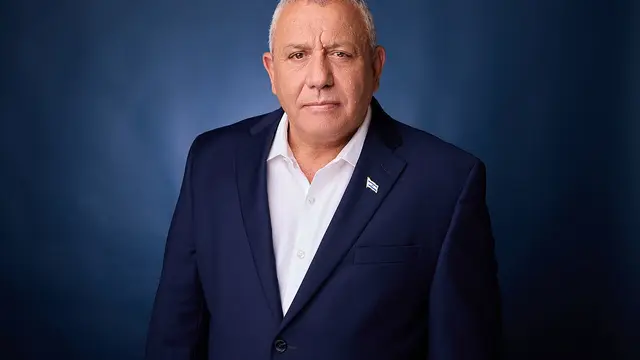
Israeli opposition leader Gadi Eisenkot invites Likud to marathon coalition talks as deadline looms
Centrist Yashar party chair Gadi Eisenkot has called caretaker Prime Minister Benjamin Netanyahu’s Likud party to a series of coalition negotiations starting 22 November, seeking the broadest possible government before his December deadline.
Photo: יהב טרודלר (Yahav Trudler - Yahav Studio) / Wikimedia Commons · CC BY-SA 3.0
LAS News Desk · 22 Nov 2026, 10:47 WAT · 5 sources
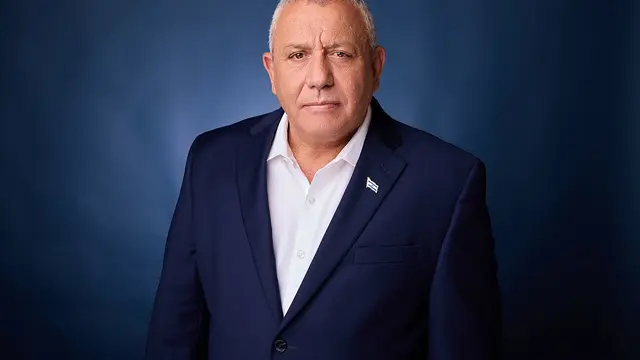
Israel's new Knesset sworn in as Gadi Eisenkot begins coalition talks to replace caretaker Netanyahu
The 120‑member Israeli parliament convened on 10 November 2026 after an inconclusive October election, with opposition leader Gadi Eisenkot tasked by President Isaac Herzog to form a government within 28 days.
Photo: יהב טרודלר (Yahav Trudler - Yahav Studio) / Wikimedia Commons · CC BY-SA 3.0
LAS News Desk · 10 Nov 2026, 21:45 WAT · 9 sources

Israeli President Herzog assigns opposition leader Gadi Eisenkot mandate to build new coalition
President Isaac Herzog has given Gadi Eisenkot, head of the centrist Yashar party, up to six weeks to form a government that could replace Benjamin Netanyahu’s current administration, amid complex coalition talks.
Photo: Suresh Babunair / Wikimedia · CC BY 3.0
LAS News Desk · 8 Nov 2026, 19:46 WAT · 9 sources
President Herzog to decide who will form Israel’s new government
Israeli President Isaac Herzog will announce on Sunday who will try to build a new cabinet after the October 27 election left no clear majority. Gadi Eisenkot received 67 recommendations, while Benjamin Netanyahu got 46, with seven abstentions.
Photo: יהב טרודלר (Yahav Trudler - Yahav Studio) / Wikimedia Commons · CC BY-SA 3.0
LAS News Desk · 7 Nov 2026, 08:08 WAT · 12 sources
More World news ›
- Iran attacks trigger fire at Bahrain industrial site and strike US bases as tankers hit in Hormuz
- Three dead and 36 missing after fire engulfs confectionery factory near Jakarta
- US Central Command refutes Iranian claim of missile strike on F-16 in Gulf
- Israeli strike on Gaza vehicle distributing food kills three, civil defence says four dead overall
- South Korean education minister resigns after AI‑assisted cheating scandal erupts ahead of university entrance exam