
Arab parties endorse Gadi Eisenkot, giving him a majority of 67 Knesset seats in coalition talks
Israel's Joint List and Ra'am announced they will support opposition leader Gadi Eisenkot to form the next government, raising his backing to 67 of the 120 Knesset seats and challenging Prime Minister Benjamin Netanyahu’s bid to stay in power.
By LAS News Desk · Published 5 Nov 2026, 19:19 WAT · Updated 5 Nov 2026, 21:45 WAT
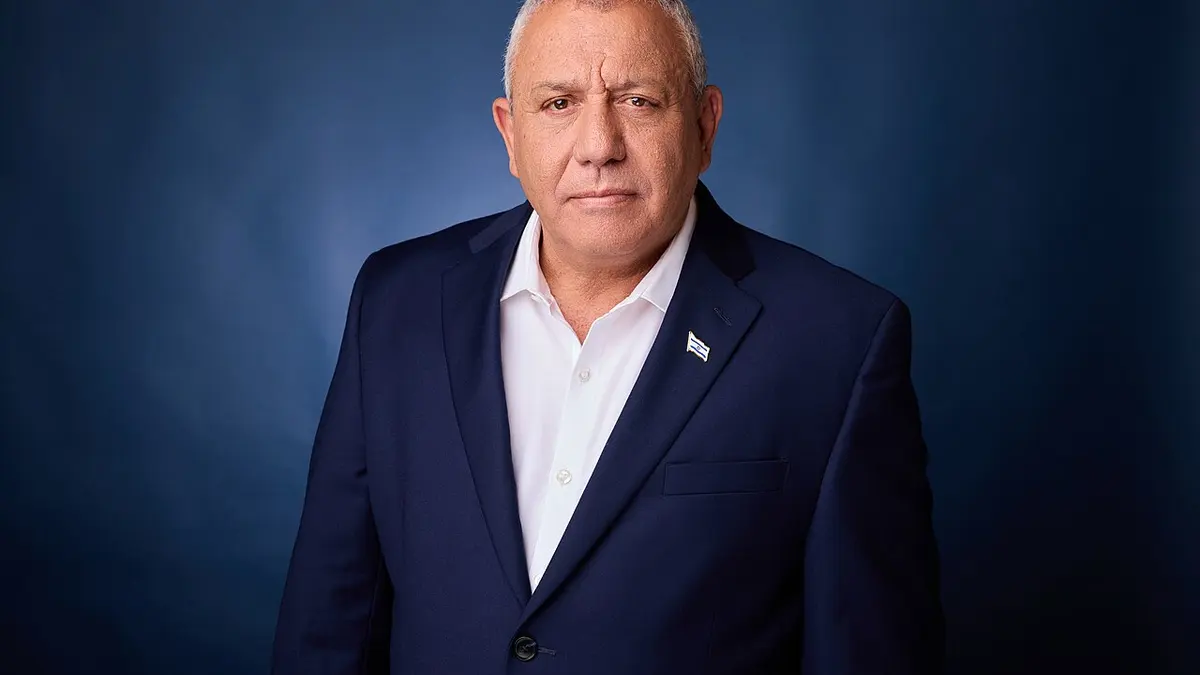
Israel’s political landscape shifted on Thursday as two Arab‑led parties – the Joint List and Ra'am – declared their support for opposition leader Gadi Eisenkot in the race to form the next government. The endorsements bring the total number of Knesset members backing Eisenkot to 67, surpassing the 61‑seat threshold required for a majority in the 120‑seat parliament. The move follows President Isaac Herzog’s second day of consultations with party leaders after the 27 October election left both the incumbent Likud bloc and the opposition alliance short of a clear majority.
Eisenkot, a former chief of the Israel Defence Forces and head of the Yashar party, has positioned himself as a unifying figure promising national cohesion after three years of war. His rival, Prime Minister Benjamin Netanyahu, heads a right‑wing bloc that secured 53 seats in the election, while Eisenkot’s Yashar‑led opposition alliance won 48 seats. The Arab parties, together holding a record 19 seats, now hold the balance of power in the coalition‑building process.
Background
The 27 October general election produced a fragmented Knesset, with no single bloc achieving the 61 seats needed to govern alone. Netanyahu’s Likud party emerged as the largest, but its coalition fell short, prompting the president to seek recommendations from all parties. Under Israeli law, President Herzog must appoint the candidate he believes can assemble a stable majority, not necessarily the leader of the largest party.
The Joint List, an alliance of three Arab‑led factions, and Ra'am, a separate Arab‑majority party, together captured 19 seats – a historic high for Arab parties in Israel. Their endorsement of Eisenkot follows a Wednesday announcement by Ra'am, whose eight lawmakers also backed him. The Joint List’s leader, Yousef Jabareen, framed the decision as a response to public demand to prevent Netanyahu’s return to power and to widen the gap between the two leading candidates.
Both Arab parties have previously been excluded from coalition talks due to longstanding political and ideological divisions, particularly over issues such as Palestinian statehood, Hamas, and the Gaza conflict. Their current support for Eisenkot marks a notable shift, as some Jewish parties have signalled they would not serve in a government that includes Arab factions.
Why it matters
The endorsement gives Eisenkot a clear numerical advantage, with 67 lawmakers now publicly backing his mandate to form a government. This majority not only strengthens his claim in President Herzog’s eyes but also signals to smaller parties that a coalition led by Eisenkot could be viable.
For Netanyahu, the loss of Arab party support weakens his ability to cobble together the 61‑seat majority he needs to retain the premiership. The right‑wing bloc’s 53 seats now appear insufficient without the backing of parties that have expressed reservations about joining a coalition with Arab representatives.
The Arab parties’ decision also reflects broader public sentiment within Israel’s Arab community, which, according to the Joint List, voted for a change that would keep Netanyahu out of power. Their involvement could influence policy directions on issues such as the Gaza war, minority rights, and the prospect of a unified national agenda.
What happens next
President Isaac Herzog is expected to conclude his consultations with party representatives by Thursday evening. Following the consultations, he will formally appoint the candidate he believes has the best chance of forming a stable government. If Herzog selects Eisenkot, the next step will be for him to negotiate coalition agreements with the Arab parties and other smaller factions to solidify a governing majority.
The timeline for finalising a coalition remains uncertain, as negotiations often involve detailed policy compromises and ministerial allocations. However, the current backing of 67 Knesset members places Eisenkot in a strong position to secure the president’s mandate and move toward establishing a new government.
Tags: [israel, politics, elections, coalition, arab parties]
Sources
- Gadi Eisenkot tipped to seek Israel government with backing of Arab lists — Dawn
- Arab-led Joint List says it will back Eisenkot to form Israel's next government — Middle East Eye
- Arab-led Joint List says it will back Eisenkot to form Israel's next government — Middle East Eye
- Israel's Arab list backs Eisenkot as Netanyahu loses ultra-Orthodox support — France 24
- Joint List says it will back Eisenkot to form Israel’s next government — Al Jazeera
- Arab party backs Eisenkot in bid to form Israel’s next government — Al Jazeera
- Arab parties' backing gives Eisenkot edge over Netanyahu for PM: What to know — Al-Monitor
Spotted an error? Report a correction · Corrections policy
Related stories
Israel election results show no clear winner as Arab parties emerge as potential kingmakers
Partial counts from Israel's 2026 election indicate neither Benjamin Netanyahu nor Gadi Eisenkot has secured a majority, while Arab parties have performed strongly enough to influence coalition talks, prompting accusations from Likud of election theft.
LAS News Desk · 29 Oct 2026, 02:15 WAT · 9 sources
Trump publicly backs Netanyahu ahead of Israel’s October 27 election
U.S. President Donald Trump has issued a full endorsement of Israeli Prime Minister Benjamin Netanyahu, arriving just weeks before Israel’s parliamentary vote. The move comes amid a tight race and a backdrop of recent conflict with Iran and the Hamas attack.
Photo: The White House / Wikimedia Commons · Public domain
LAS News Desk · 19 Oct 2026, 03:15 WAT · 6 sources
Netanyahu and Eisenkot share hawkish stance, unlikely to change Palestinian policy after election
Israel's upcoming election is not expected to change core policies, as Prime Minister Benjamin Netanyahu and challenger Gadi Eisenkot both oppose a Palestinian state and demand Hamas disarmament.
Photo: יהב טרודלר (Yahav Trudler - Yahav Studio) / Wikimedia Commons · CC BY-SA 3.0
LAS News Desk · 25 Oct 2026, 19:15 WAT · 2 sources
US Vice President JD Vance blames Iran war for Republican midterm losses and distances himself from Trump
JD Vance posted on X that the conflict with Iran was the primary cause of the GOP’s defeat in the 2026 midterms, seeking to separate himself from President Trump’s defence of the war as he weighs a possible 2028 presidential run.
Photo: Elekes Andor / Wikimedia Commons · CC BY 4.0
LAS News Desk · 5 Nov 2026, 14:15 WAT · 9 sources

Finnish court jails Russian captain and Azerbaijani crew member over Baltic cable damage
A Helsinki court has sentenced the captain of the cargo ship Fitburg and a crew member to prison for aggravated sabotage after they intentionally damaged two undersea telecommunications cables in the Gulf of Finland.
LAS News Desk · 5 Nov 2026, 22:16 WAT · 3 sources
Mississippi Senate race remains tight as provisional ballots are counted
Democrat Scott Colom leads incumbent Cindy Hyde-Smith by over 1,000 votes with 96% of ballots counted. Officials must finish counting all votes by November 13.
LAS News Desk · 5 Nov 2026, 22:17 WAT · 2 sources
More World news ›
- Democrats hold Congress but tight midterm races in Alaska, Mississippi and Colorado remain undecided
- Wallaroos fullback Caitlyn Halse signs with Leicester Tigers for 2026/27 Premiership Women's Rugby season
- Hoax bomb threats disrupt at least 27 European flights for second time in a week
- Alan Jones, 1980 Formula One champion, dies aged 80
- Iran’s security chief meets Putin to discuss post‑war security and gas pipeline