
Israel's election results point to a hung parliament as Netanyahu's Likud remains largest party
Exit polls on 27 October 2026 show Prime Minister Benjamin Netanyahu's Likud party topping the vote but lacking a clear majority, while Arab parties achieve record parliamentary seats, leaving coalition talks uncertain.
By LAS News Desk · Published 27 Oct 2026, 12:45 WAT · Updated 27 Oct 2026, 22:15 WAT
Israel held a national election on Tuesday, 27 October 2026, amid ongoing conflict in Gaza, Lebanon and Syria. Early exit polls released by the country's major television networks suggest that Prime Minister Benjamin Netanyahu's Likud party emerged as the single largest party, yet neither his bloc nor the opposition secured enough seats to form a government outright in the 120‑member Knesset.
The polls indicate that a majority of voters rejected Netanyahu's proposed coalition, while his main challenger, opposition leader Gadi Eisenkot, also fell short of a clear mandate. Both sides are now expected to engage in protracted negotiations to assemble a governing majority, a process that could extend for weeks.
Background
The 2026 election is the first since the Hamas‑led attack on 7 October 2023, an event described by Israeli authorities as the most severe security failure since the state's founding in 1948. The attack triggered a multifront war involving Gaza, Lebanon and Syria, and has dominated political discourse for the past three years. Netanyahu, who has led Israel for nearly 19 years, campaigned on a platform of keeping Arab parties out of power, arguing that their participation would jeopardise national security.
Arab citizens, who constitute roughly 20 % of Israel's population, turned out in historic numbers, securing more seats than ever before. This surge follows reports of hardship faced by Arab communities under Netanyahu's hard‑right government. Despite the electoral gains, both Netanyahu and the opposition have publicly pledged not to rely on Arab parties to form a coalition, citing security concerns.
Opposition leader Gadi Eisenkot, who travelled to the southern community of Nir Oz to meet voters, promised a “different spirit” for Israel, pledging to dismantle Hamas's capabilities and to establish a state commission of inquiry into the 2023 security failures—an initiative Netanyahu’s government has resisted.
Why it matters
The election outcome has immediate implications for Israel's domestic stability and its ongoing military operations. A fragmented Knesset could delay the formation of a new government, potentially affecting decision‑making on the war effort and on internal security reforms. Netanyahu’s supporters, who gathered outside polling stations as he cast his ballot in Jerusalem, argue that continuity is essential for national defence, while critics demand accountability and a change in leadership.
The record performance of Arab parties signals a shift in political engagement among Israel's minority communities, potentially reshaping future policy debates on integration and resource allocation. However, the parties' exclusion from coalition talks, as pledged by both blocs, may limit their influence on legislative outcomes despite their parliamentary presence.
International observers view the election as a referendum on Netanyahu’s handling of the post‑2023 wars and on Israel’s broader strategic posture in the region. A stalemate could invite external pressure for a more inclusive government, while a coalition led by Netanyahu might continue his current security policies.
What happens next
Both Likud and the opposition are expected to begin coalition negotiations within days, seeking partners among smaller parties to reach the 61‑seat threshold required for a majority. Analysts note that Israeli politics often sees parties breaking pre‑election vows when coalition formation becomes necessary, meaning the promised exclusion of Arab parties could be tested.
If a coalition cannot be formed promptly, the Knesset may be dissolved, triggering a new election, as has occurred in previous Israeli dead‑locks. Meanwhile, the security situation on the ground remains volatile, with the war in Gaza and tensions along the northern front continuing to shape public sentiment.
The final official results, expected later this week, will confirm whether the exit‑poll projections hold and will clarify the exact seat distribution, setting the stage for the next phase of Israel’s political landscape.
Sources
- Israeli elections: voters turnout reaches '16.7%' four hours after polls open — France 24
- Israel to give verdict on Netanyahu in pivotal election — Dawn
- Polls open as Netanyahu fights to retain power — Middle East Eye
- October 7 terror attacks loom large over Israel’s elections as Netanyahu fights for his future — Independent World
- Israel to give verdict on Netanyahu in pivotal election — Bangkok Post
- Israeli election exit polls show race headed toward stalemate — CBS News
- Israel wraps up voting in do-or-die election for Netanyahu: What to watch — The Hill
- Israelis vote in a tense election: What's at stake? — France 24
- Israel: Netanyahu supporters gather as PM votes — France 24
- Israelis vote in pivotal election as Netanyahu faces challenge from Eisenkot — Africanews
Spotted an error? Report a correction · Corrections policy
Related stories
Israel’s election count shows deadlock with Netanyahu’s bloc 54 seats, Eisenkot’s 49
Israel’s latest election results reveal a stalemate: Netanyahu’s Likud‑led coalition holds 54 seats, while Gadi Eisenkot’s Yashar bloc has 49, leaving both sides short of the 61‑seat majority needed to form a government.
LAS News Desk · 28 Oct 2026, 15:46 WAT · 7 sources
Israel holds first national election since October 7 attacks, with Netanyahu and Gadi Eisenkot vying for leadership
Israel's first parliamentary vote since the October 7 Hamas assault will take place on Tuesday, October 27, with Prime Minister Benjamin Netanyahu seeking a new mandate and former military chief Gadi Eisenkot leading the main opposition bloc.
LAS News Desk · 26 Oct 2026, 17:47 WAT · 10 sources
Trump publicly backs Netanyahu ahead of Israel’s October 27 election
U.S. President Donald Trump has issued a full endorsement of Israeli Prime Minister Benjamin Netanyahu, arriving just weeks before Israel’s parliamentary vote. The move comes amid a tight race and a backdrop of recent conflict with Iran and the Hamas attack.
Photo: The White House / Wikimedia Commons · Public domain
LAS News Desk · 19 Oct 2026, 03:15 WAT · 6 sources
Iran dismisses Israeli election outcome as irrelevant amid heightened threats from Netanyahu
Iran's foreign ministry said the result of Israel's October 27 parliamentary vote will not affect Tehran, while Israeli Prime Minister Benjamin Netanyahu warned Iran and its proxies against any attempts to disrupt the election.
LAS News Desk · 26 Oct 2026, 11:16 WAT · 7 sources
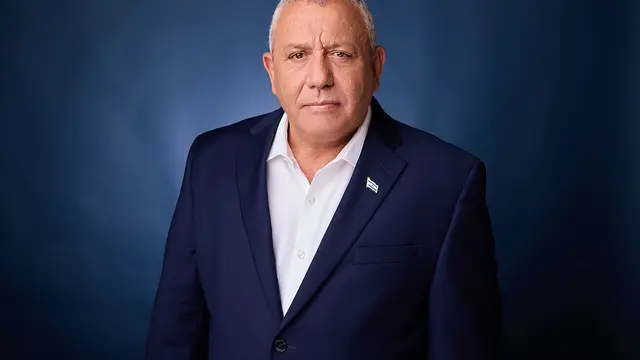
Netanyahu and Eisenkot share hawkish stance, unlikely to change Palestinian policy after election
Israel's upcoming election is not expected to change core policies, as Prime Minister Benjamin Netanyahu and challenger Gadi Eisenkot both oppose a Palestinian state and demand Hamas disarmament.
Photo: יהב טרודלר (Yahav Trudler - Yahav Studio) / Wikimedia Commons · CC BY-SA 3.0
LAS News Desk · 25 Oct 2026, 19:15 WAT · 2 sources
Thousands rally in Tel Aviv demanding inquiry into October 7 attacks ahead of Israeli election
On 24 October 2026, thousands gathered in Tel Aviv to protest Prime Minister Benjamin Netanyahu’s government, calling for a state commission of inquiry into the October 7 Hamas attack as the country heads toward a tightly contested election.
LAS News Desk · 25 Oct 2026, 01:46 WAT · 5 sources
More World news ›
- Flávio Bolsonaro departs Brazil for U.S. amid court ban and corruption probes
- Police officer fatally shoots knife‑wielding attacker outside Israeli embassy in Belgrade
- At least 30 killed in high‑speed train collision near Toledo, Spain
- Alastair Campbell discusses Trump, political violence and the rise of populism in new podcast
- US war on Iran costs exceed $47 billion, Pentagon data shows