
Israel prepares for first parliamentary vote since Oct 7 attacks as Netanyahu faces strong challenge
Israel will hold its first national election since the Oct 7, 2023 terror attacks on 27 October, with Prime Minister Benjamin Netanyahu confronting former army chief Gadi Eisenkot and a fragmented party field, while polls show his coalition trailing.
By LAS News Desk · Published 26 Oct 2026, 03:45 WAT
Israel is set to vote on Tuesday, 27 October 2026, in the first parliamentary election since the Oct 7, 2023 terrorist attacks and the ensuing Gaza, Iran and Lebanon conflicts. The election features 39 parties, but the contest is largely framed as a showdown between incumbent Prime Minister Benjamin Netanyahu and former army chief Gadi Eisenkot, both of whom are unlikely to secure an outright majority in the 120‑seat Knesset.
Polls released in the days leading up to the vote indicate a tight race. A recent survey cited by The Independent suggests Netanyahu’s religious‑nationalist bloc would win roughly 50 seats, while Eisenkot’s centrist bloc would capture about 52. No single party has ever achieved a clear majority, meaning any governing coalition will need to negotiate with multiple smaller factions, a process that can be unstable in Israel’s historically fragmented political landscape.
The election follows a period of intense public protest. Tens of thousands marched in Tel Aviv the night before the vote, demanding accountability for the failures that preceded the Oct 7 attacks. Demonstrators voiced concerns about what they described as authoritarian tendencies and alleged criminal conduct by the government. Among the crowd, a woman warned against a “dictatorship,” while an 80‑year‑old survivor of the attacks, Margalit Moses, expressed doubt that Netanyahu protects citizens like herself.
Background
Benjamin Netanyahu, often referred to as “Bibi,” has dominated Israeli politics for over three decades, serving a cumulative 19 years as prime minister since first taking office in 1996. His tenure has been marked by a series of controversial reforms, notably the overhaul of the judiciary that critics argue undermines judicial independence. Netanyahu also faces an ongoing corruption trial and accusations that he ignored prior warnings about the Hamas threat that culminated in the Oct 7 attacks.
Gadi Eisenkot, a former chief of the Israel Defence Forces, entered the political arena only last year, forming a new party that quickly positioned him as the primary challenger to Netanyahu. Both candidates share a hard‑line stance on the Palestinian issue, opposing an independent Palestinian state and supporting continued Israeli security control over the territories.
Public opinion appears split. In a Tel Aviv market, restaurant owner Benny Abraham expressed strong support for Netanyahu, praising his charisma and global standing. Conversely, residents like Liat and her husband Sharon voiced a desire for change, acknowledging Netanyahu’s past achievements but questioning his current management abilities.
Why it matters
The election outcome will shape Israel’s domestic and foreign policy at a critical juncture. A change in leadership could influence the trajectory of Israel’s security posture, especially regarding ongoing tensions with Hamas, Iran and Hezbollah. However, both leading candidates maintain similar positions on core security issues, suggesting limited policy shift in that arena.
Domestically, the result will affect the balance of power between secular and religious‑nationalist forces. Netanyahu’s policies on religion and state have drawn criticism, and a weakened coalition could empower secular parties in coalition negotiations. The fragmented Knesset also means that smaller parties—often representing specific religious, ethnic or ideological constituencies—could become kingmakers, impacting legislation on judicial reform, settlement expansion and civil liberties.
The election is also a referendum on Netanyahu’s personal legal battles. A loss could accelerate calls for his resignation or further legal scrutiny, while a victory would reinforce his political resilience despite the corruption trial.
What happens next
If no party secures a majority, the president will task a Knesset member with forming a coalition government, a process that can take weeks. Both Netanyahu and Eisenkot will need to court smaller parties to reach the 61‑seat threshold required for a governing majority. The Independent notes that coalition talks in Israel are often fluid, with alliances forming and dissolving rapidly.
International observers will watch closely, as Israel’s political stability has implications for regional security and diplomatic relations, particularly with the United States and European partners. The election’s aftermath will also determine the pace of any further judicial reforms and the handling of the ongoing corruption investigation.
The vote marks a pivotal moment for Israel, testing the durability of Netanyahu’s long‑standing political dominance and setting the stage for the next phase of governance in a nation still grappling with the legacy of the Oct 7 attacks.
Sources
- Netanyahu's party lags in polls ahead of first election since Oct. 7, 2023 — CBS News
- Israeli election to test Netanyahu's ability to hold power — CBS World
- Israeli election to test Benjamin Netanyahu's ability to hold power — CBS World
- Israel votes in first election since 7 October attacks and Gaza war – could Netanyahu lose power? — Independent World
- The key players in Israel’s first election since October 7 attacks as Netanyahu fights for his political life — Independent World
Spotted an error? Report a correction · Corrections policy
Related stories
Trump publicly backs Netanyahu ahead of Israel’s October 27 election
U.S. President Donald Trump has issued a full endorsement of Israeli Prime Minister Benjamin Netanyahu, arriving just weeks before Israel’s parliamentary vote. The move comes amid a tight race and a backdrop of recent conflict with Iran and the Hamas attack.
Photo: The White House / Wikimedia Commons · Public domain
LAS News Desk · 19 Oct 2026, 03:15 WAT · 6 sources
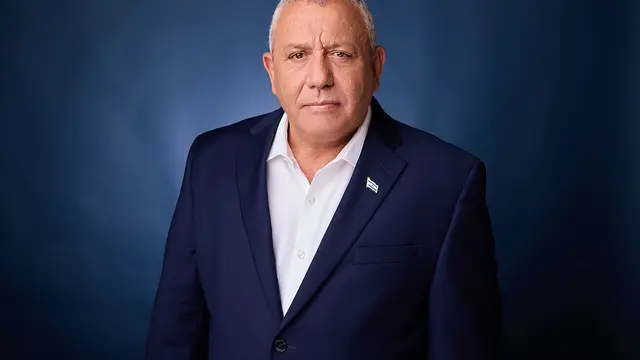
Netanyahu and Eisenkot share hawkish stance, unlikely to change Palestinian policy after election
Israel's upcoming election is not expected to change core policies, as Prime Minister Benjamin Netanyahu and challenger Gadi Eisenkot both oppose a Palestinian state and demand Hamas disarmament.
Photo: יהב טרודלר (Yahav Trudler - Yahav Studio) / Wikimedia Commons · CC BY-SA 3.0
LAS News Desk · 25 Oct 2026, 19:15 WAT · 2 sources
Israel announces closure of all West Bank land crossings for election day amid Hebron crackdown
Israel said it will shut every land crossing with the occupied West Bank on Tuesday’s election, following a military operation in Hebrew that displaced about 2,000 residents after Palestinian gunmen killed two soldiers.
LAS News Desk · 25 Oct 2026, 09:15 WAT · 11 sources
Thousands rally in Tel Aviv demanding inquiry into October 7 attacks ahead of Israeli election
On 24 October 2026, thousands gathered in Tel Aviv to protest Prime Minister Benjamin Netanyahu’s government, calling for a state commission of inquiry into the October 7 Hamas attack as the country heads toward a tightly contested election.
LAS News Desk · 25 Oct 2026, 01:46 WAT · 5 sources

Netanyahu announces large‑scale military operation and lockdown in West Bank after soldiers killed
Israeli Prime Minister Benjamin Netanyahu ordered a sweeping military operation and a full lockdown of parts of the occupied West Bank following a shooting that killed two Israeli soldiers near Hebron, saying the move would target terrorist infrastructure.
LAS News Desk · 24 Oct 2026, 16:46 WAT · 9 sources

Italian prosecutors expand probe into Israeli officials over alleged flotilla abuses
Italian prosecutors have widened an investigation into the treatment of detained activists to include Defence Minister Israel Katz and 12 senior officials, following complaints of abuse during two 2025-2026 missions.
LAS News Desk · 24 Oct 2026, 16:45 WAT · 3 sources
More World news ›
- Lula wins historic fourth term after stunning comeback against Flávio Bolsonaro
- France Sees 410,000 Protesters, 1,300 Arrests as Violence Escalates
- Kimi Antonelli poised to clinch 2026 F1 drivers' title after US Grand Prix win
- Storms Boelo and Austen disrupt power, travel and communications across northern Europe
- England legend Jimmy Anderson to leave Lancashire after 25 years