
New Zealand's National-led coalition falls one seat short, must court centrist Opportunity Party
Final results from the 7 November election show the National‑ACT‑NZ First bloc with 65 seats, one shy of a majority in the 130‑seat Parliament, prompting Prime Minister Christopher Luxon to begin negotiations with the seven‑seat Opportunity Party.
By LAS News Desk · Published 27 Nov 2026, 07:15 WAT · Updated 27 Nov 2026, 11:15 WAT

Final counts from the 7 November general election confirmed that New Zealand's incumbent centre‑right coalition failed to secure a majority in the 130‑seat House of Representatives. The National Party, led by Prime Minister Christopher Luxon, together with its partners ACT and New Zealand First, won a combined 65 seats, leaving them one seat short of the 66 required for a governing majority. The left‑leaning bloc of Labour, the Greens and Te Pāti Māori secured 58 seats, also insufficient even with the support of the new centrist Opportunity Party, which entered Parliament with seven seats.
The shortfall has triggered the start of formal negotiations, with Luxon indicating that his government will seek the backing of Opportunity to avoid a fresh election. Opportunity’s leader, 38‑year‑old business consultant Qiulae Wong, has said she will engage with National as the party with the largest seat count, while also keeping the option open to speak with other parties.
Background
The 2026 election was the tightest in recent memory, with initial night‑time tallies suggesting a razor‑thin lead for the right‑hand bloc. After the inclusion of roughly 400,000 special votes – ballots cast by overseas New Zealanders and other late‑returning voters – the Electoral Commission adjusted the numbers, confirming National’s loss of two seats and the left’s gain of one. This shifted the balance to a dead‑lock, echoing the 2017 scenario when Labour and NZ First formed a coalition that installed Jacinda Ardern as prime minister.
National’s coalition partners, ACT and New Zealand First, contributed 13 and 12 seats respectively, while the governing party itself secured 40 seats. On the opposition side, Labour’s 58 seats comprise its own share plus those of the Green Party and Te Pāti Māori. Opportunity’s seven seats, though modest, make it the potential king‑maker.
Why it matters
The outcome directly affects New Zealand’s political stability and policy direction. If Luxon’s bloc secures Opportunity’s confidence‑and‑supply or a formal coalition, the government can continue its current agenda, which includes a mixed‑member proportional system and a focus on economic recovery after a sluggish period. Nevertheless, the political platform of Opportunity distinguishes itself on several major topics, including more robust climate pledges, a prohibition on bottom-trawling, stricter antitrust regulations, and a greater willingness to intervene in public spending. Reconciling these differences will shape legislation on the environment, fisheries and economic policy.
Labour leader Chris Hipkins acknowledged that despite winning the popular vote, his party lacks the parliamentary leverage to form government. The left‑leaning bloc’s inability to attract Opportunity means the next administration will likely remain centre‑right, but the precise policy mix will depend on the forthcoming negotiations.
Political analysts, such as Victoria University’s Luke Oldfield, expect a right‑leaning arrangement to emerge, noting that a second election appears unlikely. Nonetheless, the talks are projected to be complex and could extend into the following year, reflecting the divergent priorities of the coalition partners and Opportunity.
What happens next
Luxon has pledged to negotiate with Opportunity while maintaining dialogue with ACT and New Zealand First. Formal talks are expected to commence shortly, with both sides acknowledging that reaching an agreement may be challenging and time‑consuming. Should the parties fail to forge a workable deal, New Zealand could be forced to hold a fresh election, though political commentators deem this scenario improbable.
Opportunity’s leader has signalled willingness to negotiate with the largest party but has not ruled out discussions with other groups, leaving open the possibility of cross‑bloc arrangements. The next few weeks will therefore determine whether a stable government can be assembled or whether New Zealand faces prolonged political uncertainty.
The stakes are high for voters who sought decisive leadership after an election marked by economic concerns and voter disillusionment. The outcome of the negotiations will dictate the policy trajectory for the coming term and test the resilience of New Zealand’s mixed‑member proportional system.
Sources
- New Zealand election results: Ruling coalition falls short of majority by just one seat after knife-edge vote — Independent World
- Explainer-Parties to negotiate after no one wins majority in New Zealand election — Straits Times Asia
- New Zealand’s ruling coalition falls just short of majority, needs centrist party’s support to govern — Japan Times
- New Zealand's ruling coalition falls short of parliamentary majority by one seat — BBC News
- Centrists kingmakers as New Zealand PM loses majority — RTE
Spotted an error? · Corrections policy
Related stories
New Zealand election results leave parliament split, coalition talks likely
New Zealand's 2026 general election produced a hung parliament, with the National Party winning 42 seats and Labour 36, forcing both leaders to prepare for coalition negotiations.
LAS News Desk · 14 Nov 2026, 19:16 WAT · 1 source
Israel election results show no clear winner as Arab parties emerge as potential kingmakers
Partial counts from Israel's 2026 election indicate neither Benjamin Netanyahu nor Gadi Eisenkot has secured a majority, while Arab parties have performed strongly enough to influence coalition talks, prompting accusations from Likud of election theft.
LAS News Desk · 29 Oct 2026, 02:15 WAT · 9 sources
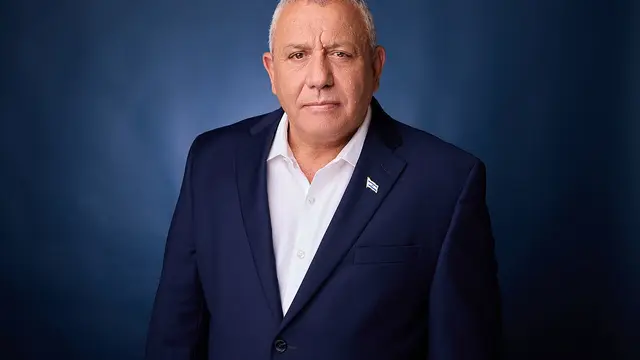
Israeli opposition leader Gadi Eisenkot invites Likud to marathon coalition talks as deadline looms
Centrist Yashar party chair Gadi Eisenkot has called caretaker Prime Minister Benjamin Netanyahu’s Likud party to a series of coalition negotiations starting 22 November, seeking the broadest possible government before his December deadline.
Photo: יהב טרודלר (Yahav Trudler - Yahav Studio) / Wikimedia Commons · CC BY-SA 3.0
LAS News Desk · 22 Nov 2026, 10:47 WAT · 5 sources
Serbian leader Aleksandar Vučić concedes defeat to student‑led protest movement in snap parliamentary election
After preliminary results showed a record turnout favouring the Student List, long‑standing prime ministerial candidate Aleksandar Vučić announced his party had lost the October 25 snap election, prompting celebrations across Belgrade.
LAS News Desk · 25 Oct 2026, 23:15 WAT · 9 sources

Brazilian voters head to polls for tightly contested presidential runoff between Lula and Flávio Bolsonaro
Nearly 160 million Brazilians are voting Sunday in a runoff that pits incumbent President Luiz Inácio Lula da Silva against right‑wing Senator Flávio Bolsonaro, with polls showing the race dead‑locked.
LAS News Desk · 25 Oct 2026, 13:45 WAT · 8 sources
Matan Kahana elected Knesset speaker with 66 votes, signalling shift away from Netanyahu's agenda
Israel's parliament chose Matan Kahana as speaker on 18 November 2026, backed by opposition and Arab parties, a move seen as a step toward reversing policies of the outgoing Netanyahu government.
LAS News Desk · 18 Nov 2026, 08:16 WAT · 9 sources
More World news ›
- Australian woman convicted of mushroom murders seeks High Court appeal
- London's Gingerbread City returns for tenth anniversary with 50 edible structures
- Macron rebukes Le Pen over EU budget timing as Brussels summit seeks 2028‑2034 deal
- Trump says Nvidia CEO Jensen Huang poses no security risk after board reinstates him
- Trump says he asked Putin to pull back military aggression in Europe during China meeting