
Netanyahu proposes rotating premiership with rival Eisenkot ahead of coalition talks
Israel's caretaker prime minister Benjamin Netanyahu offered a power‑sharing deal that would see Gadi Eisenkot serve as prime minister first, prompting Eisenkot to invite Netanyahu to coalition negotiations on Sunday.
By LAS News Desk · Published 28 Nov 2026, 20:15 WAT · Updated 28 Nov 2026, 21:45 WAT
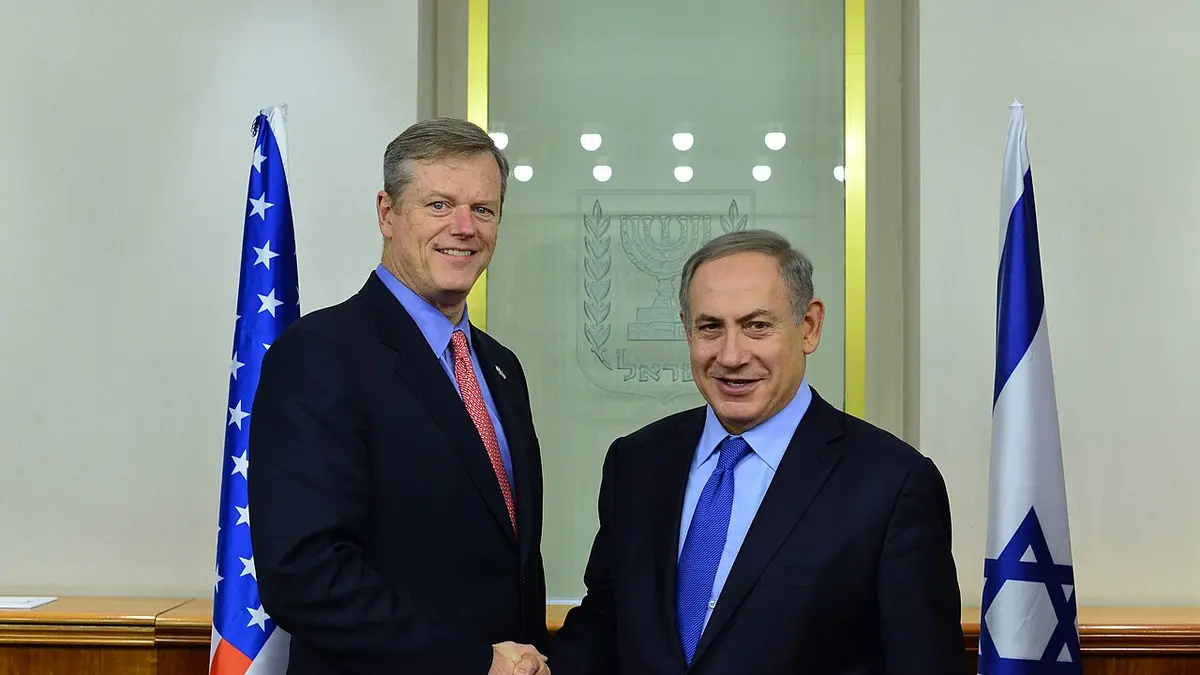
Israel’s caretaker prime minister Benjamin Netanyahu announced a proposal for a unity government that would rotate the premiership with his main rival, Gadi Eisenkot. In a social‑media post late on Saturday, Netanyahu said he was prepared to set aside political differences and allow Eisenkot to serve as prime minister first, while he would take the role of alternate prime minister at the start of the term. The proposal was made in the wake of inconclusive elections held in late October 2026, which left neither the right‑wing bloc nor the opposition with a clear majority.
Following the offer, Eisenkot, the chairman of the Yashar Party and the president‑appointed figure tasked with forming a government, responded by inviting Netanyahu to immediate coalition talks. The two leaders are scheduled to meet on Sunday morning at 10:00 local time (08:00 GMT) in a hotel in Herzliya, a coastal city north of Tel Aviv. Likud, Netanyahu’s party, confirmed the meeting in an official statement.
Background
The October 2026 elections produced a fragmented Knesset, with no party or coalition able to command a governing majority. President Isaac Herzog consulted with all parliamentary factions and assigned Eisenkot the responsibility of assembling a coalition. Eisenkot has faced a difficult balancing act: he must avoid reliance on Arab‑Israeli parties, which many right‑wing voters oppose, while also seeking the support of ultra‑Orthodox parties that often demand substantial policy concessions.
Netanyahu, Israel’s longest‑serving premier, has been leading a caretaker government since the elections. Facing a potential loss of power, he publicly offered a unity government that would share the top post. According to his public remarks, the official characterized the decision as an obligation to the country, explaining that his role as a leader compelled him to disregard all other matters. The rotating premiership model would see Eisenkot occupy the prime minister’s office for the first part of the term, after which Netanyahu would assume the role of alternate prime minister.
Both DW and The Guardian reported that the proposal was intended to break the deadlock and avoid a prolonged period without a stable government. Al‑Monitor added that Eisenkot’s invitation to talks came after he had been trying to piece together a coalition despite opposition from both Arab‑Israeli and ultra‑Orthodox factions.
Why it matters
The proposed power‑sharing arrangement directly impacts Israel’s political stability and policy direction. If accepted, the rotating premiership could allow Netanyahu’s Likud party to retain influence while giving Eisenkot the opportunity to implement his agenda during the first phase of the term. Analysts note that such an arrangement may affect key domestic issues, including budget allocations for the ultra‑Orthodox community and the government’s stance toward Arab‑Israeli parties.
International observers are watching the development closely, as Israel’s internal cohesion influences regional security dynamics and diplomatic relations with the United States and neighbouring states. The unity government could also shape Israel’s approach to ongoing conflicts and peace initiatives in the broader Middle East.
What happens next
The scheduled meeting in Herzliya on Sunday will be the first formal discussion between Netanyahu and Eisenkot since the rotating‑premiership offer was made. Both parties have indicated a willingness to negotiate, but details of any agreement remain undisclosed. Eisenkot had earlier pledged that if negotiations resulted in a coalition pact, he would declare the establishment of a new administration before the statutory cutoff date of 6 December 2026.
If the parties fail to reach a consensus, Israel may face further political uncertainty, potentially leading to another election or the appointment of a caretaker administration for an extended period. The outcome of the Sunday talks will therefore determine whether Israel moves toward a shared‑government model or continues to grapple with a fragmented parliament.
The next steps will be closely reported by local and international media, with updates expected after the Herzliya meeting.
Sources
- At risk of losing power, Netanyahu makes long-shot unity appeal to rival Eisenkot — Hindu World
- At risk of losing power, Netanyahu makes long-shot unity appeal to rival Eisenkot — Al-Monitor
- At risk of losing power, Netanyahu makes long-shot unity appeal to rival Eisenkot — Dawn
- Netanyahu offers to rotate Israel PM role with Eisenkot, let rival go first — SCMP
- Netanyahu offers to rotate Israeli premiership with rival Gadi Eisenkot — Straits Times World
- Israel: Netanyahu, Eisenkot to meet for coalition talks after rotating premiership offer — DW Top
- Eisenkot invites Netanyahu to talks after caretaker PM proposes unity government — The Guardian
- Eisenkot invites Netanyahu to immediate coalition talks after rotating PM offer — Al-Monitor
- Netanyahu offers to rotate Israeli premiership with Gadi Eisenkot — Al Jazeera
- Benjamin Netanyahu offers to step down — Sky News
Spotted an error? · Corrections policy
Related stories
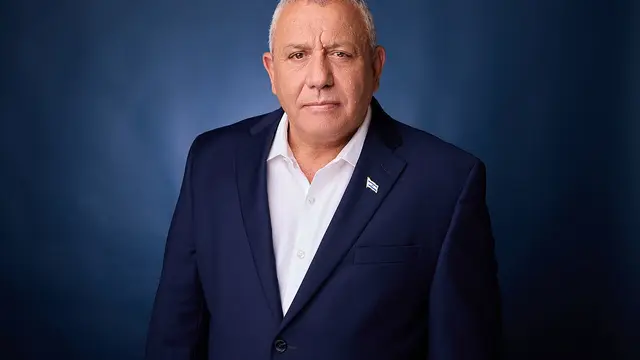
Israeli opposition leader Gadi Eisenkot invites Likud to marathon coalition talks as deadline looms
Centrist Yashar party chair Gadi Eisenkot has called caretaker Prime Minister Benjamin Netanyahu’s Likud party to a series of coalition negotiations starting 22 November, seeking the broadest possible government before his December deadline.
Photo: יהב טרודלר (Yahav Trudler - Yahav Studio) / Wikimedia Commons · CC BY-SA 3.0
LAS News Desk · 22 Nov 2026, 10:47 WAT · 5 sources
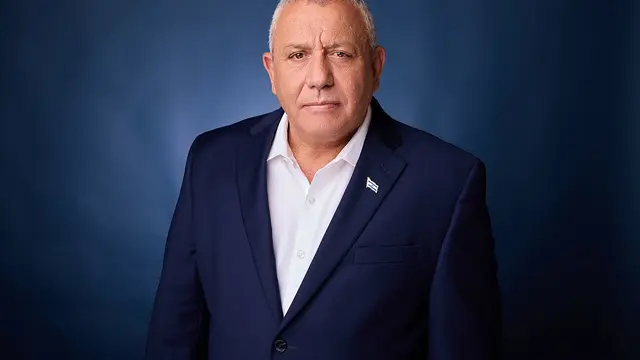
Israel's new Knesset sworn in as Gadi Eisenkot begins coalition talks to replace caretaker Netanyahu
The 120‑member Israeli parliament convened on 10 November 2026 after an inconclusive October election, with opposition leader Gadi Eisenkot tasked by President Isaac Herzog to form a government within 28 days.
Photo: יהב טרודלר (Yahav Trudler - Yahav Studio) / Wikimedia Commons · CC BY-SA 3.0
LAS News Desk · 10 Nov 2026, 21:45 WAT · 9 sources
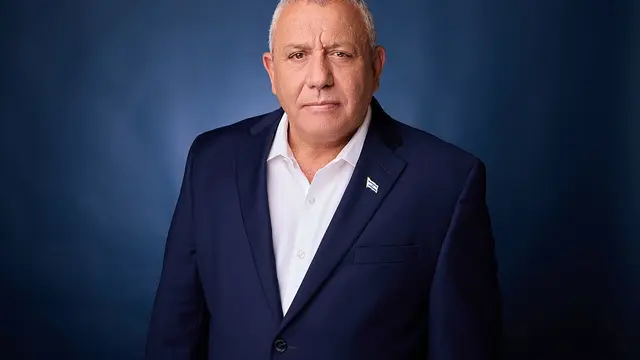
Eisenkot and Democrats secure coalition pact, edging Israel toward new government
Former military chief Gadi Eisenkot and left‑wing Democrats have agreed on a coalition deal, granting the Democrats four ministerial portfolios. The pact moves Israel closer to forming a government after the October election left no bloc with a majority.
Photo: יהב טרודלר (Yahav Trudler - Yahav Studio) / Wikimedia Commons · CC BY-SA 3.0
LAS News Desk · 28 Nov 2026, 11:49 WAT · 1 source

Israeli President Herzog assigns opposition leader Gadi Eisenkot mandate to build new coalition
President Isaac Herzog has given Gadi Eisenkot, head of the centrist Yashar party, up to six weeks to form a government that could replace Benjamin Netanyahu’s current administration, amid complex coalition talks.
Photo: Suresh Babunair / Wikimedia · CC BY 3.0
LAS News Desk · 8 Nov 2026, 19:46 WAT · 9 sources
President Herzog to decide who will form Israel’s new government
Israeli President Isaac Herzog will announce on Sunday who will try to build a new cabinet after the October 27 election left no clear majority. Gadi Eisenkot received 67 recommendations, while Benjamin Netanyahu got 46, with seven abstentions.
Photo: יהב טרודלר (Yahav Trudler - Yahav Studio) / Wikimedia Commons · CC BY-SA 3.0
LAS News Desk · 7 Nov 2026, 08:08 WAT · 12 sources

Israel election results show no clear winner as Arab parties emerge as potential kingmakers
Partial counts from Israel's 2026 election indicate neither Benjamin Netanyahu nor Gadi Eisenkot has secured a majority, while Arab parties have performed strongly enough to influence coalition talks, prompting accusations from Likud of election theft.
LAS News Desk · 29 Oct 2026, 02:15 WAT · 9 sources
More World news ›
- Russia reports 1,246 Ukrainian drones shot down as 10 civilians killed in Ukraine
- Eight Western nations press Palestinian Authority to schedule elections by March 2027
- Updated Crown Court Compendium mandates judges to warn juries against rape myths after Russell Brand case
- South Australian Liberal Senator Leah Blyth defects to One Nation, prompting criticism from former minister Amanda Vanstone
- Explosion near Asadabad school in Kunar province kills at least seven children and injures up to 110