
UN lauds Nigeria’s solar electrification project that reaches five million households
The United Nations highlighted Nigeria’s rural electrification programme, which has supplied electricity to more than five million people through solar mini‑grids and home systems, as a model for affordable energy access in developing countries.
By LAS News Desk · Published 19 Oct 2026, 09:45 WAT

UN report recognises Nigeria’s solar programme The World Social Report 2026, issued by the United Nations Department of Economic and Social Affairs, praised Nigeria’s rural electrification initiative as a successful example of expanding electricity access through targeted subsidies and private investment.
Scale of the programme According to the report, the Electrification Project has helped establish 125 mini‑grids across the country and has sold more than one million solar home systems. These interventions have brought electricity to over five million Nigerians and created more than 5,000 green jobs.
Policy approach The United Nations highlighted the use of subsidies for rural mini‑grids as a policy that combines affordable electricity with private‑sector participation. Targeted financial support is said to lower costs for poorer households while encouraging investment in underserved communities.
Solar and agriculture The report also noted that Nigeria, together with Ghana, is pioneering the integration of solar panels into agricultural land. This approach allows farmers to generate electricity on the same plots where they grow food, potentially strengthening food security, improving water management and expanding economic opportunities in rural areas.
Economic transformation and social inclusion In addition to the electrification achievements, the World Social Report 2026 assessed Nigeria’s performance in a new framework that measures economic transformation alongside social inclusion. The report recognises the country’s progress in linking renewable energy projects with broader development goals.
Implications The United Nations’ endorsement signals international support for Nigeria’s strategy of combining subsidies, private investment and renewable technology to broaden energy access. The recognition may encourage further investment and policy replication in other developing countries seeking to expand affordable electricity.
Sources
Spotted an error? Report a correction · Corrections policy
More in Africa/Nigeria

Police detain 17 suspects over witchcraft claim in Bauchi, 3 in Delta over alleged N2m theft
In Bauchi, 17 people were arrested after a violent attack linked to a witchcraft accusation, while in Delta, three suspects were taken into custody over a reported N2 million theft from a woman’s home.
Photo: Lupus in Saxonia / Wikimedia Commons · CC BY-SA 4.0
LAS News Desk · 19 Oct 2026, 10:46 WAT · 2 sources

APC Presidential Campaign Council convenes inaugural meeting and starts outreach to traditional rulers ahead of 2027 elections
The All Progressives Congress Presidential Campaign Council held its first meeting in Abuja on 20 October 2026 and, days later, its director‑general visited the Ooni of Ife and the Emir of Ilorin to seek blessings, signalling the start of a nationwide consultative tour before the 2027 polls.
Photo: Uzoma Ozurumba / Wikimedia Commons · CC BY-SA 4.0
LAS News Desk · 19 Oct 2026, 09:45 WAT · 3 sources
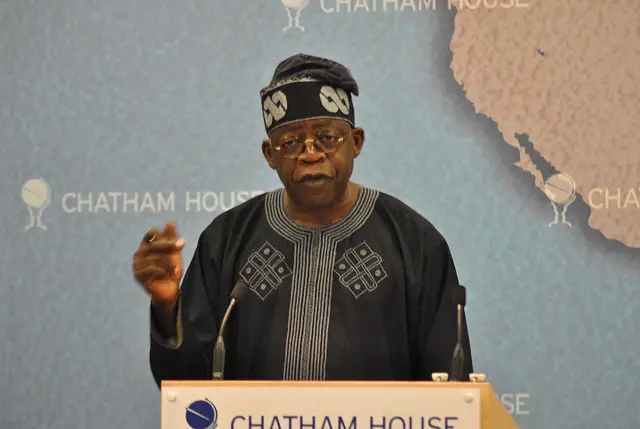
Ogun Igbo group backs Tinubu and Yayi for 2027 polls
The Ohanaeze Ndi Igbo in Ogun State has pledged support for President Bola Tinubu and Senator Solomon Adeola (Yayi) in the 2027 elections, awarding the senator a chieftaincy title for his development work.
Photo: Chatham House / Wikimedia Commons · CC BY 2.0
LAS News Desk · 19 Oct 2026, 09:15 WAT · 1 source