
Transmission Company of Nigeria rejects Ikeja Electric's claim that grid instability caused recent Band A outages
The Transmission Company of Nigeria (TCN) said the November 3‑4 Band A feeder outages reported by Ikeja Electric were due to low generation and distribution issues, not transmission faults, citing gas and hydro constraints and NISO’s allocation data.
By LAS News Desk · Published 6 Nov 2026, 20:16 WAT · Updated 6 Nov 2026, 21:15 WAT
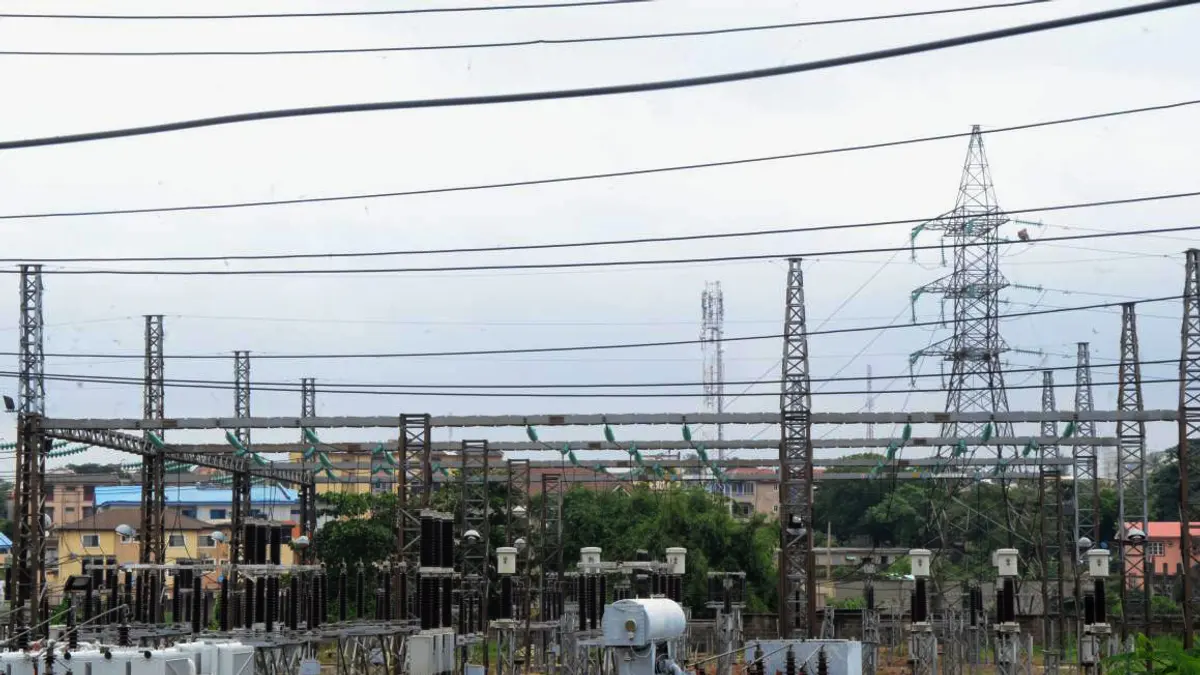
The Transmission Company of Nigeria (TCN) has publicly disputed Ikeja Electric’s (IE) attribution of recent Band A feeder outages to grid instability. In a statement released on 5 November, TCN said the outages recorded on 3 and 4 November were the result of reduced electricity generation and allocation issues, not failures in the national transmission network.
In a statement released on 5 November, the Irish Electricity Board connected the service disruptions to grid instability and named TCN as the entity at fault. TCN countered that the distribution company lacks the authority to determine the root causes of disturbances on the grid, a function reserved for the Nigerian Independent System Operator (NISO) under Section 67 of the Electricity Act 2023.
Background
TCN’s response was issued by Ms. Ndidi Mba, General Manager of the Corporate Communication Unit, in Lagos. She cited a NISO explanation from 5 November that traced the power deficit to two primary causes: limited gas deliveries to thermal plants and diminished hydroelectric production resulting from decreased reservoir water levels. According to TCN, these generation constraints lowered the volume of electricity available for allocation to distribution companies, leading to fewer supply hours and increased load‑shedding.
The transmission company provided detailed figures to support its position. Of the interruptions recorded on the feeders supplying IE, 68 % were classified as frequency‑control load shedding arising from low generation. A further 26% of the issue was connected to the IE’s purported failure to adhere to load assignments from the NISO National Control Centre, alongside defects and upkeep activities on the IE’s infrastructure. The remaining 6 % were attributed to planned TCN maintenance, switching operations or line limitations. TCN emphasised that it can only transmit electricity that has been generated; it cannot create power that does not exist.
Why it matters
The dispute highlights the broader challenges facing Nigeria’s power sector, where generation shortfalls directly affect distribution companies and end‑users. IE’s customers experienced reduced supply hours and heightened load‑shedding as a result of the lower generation output. TCN’s figures suggest that the majority of the interruptions were systemic, stemming from national generation constraints rather than isolated transmission faults.
The clarification also underscores the regulatory roles defined by the Electricity Act 2023. By asserting that only NISO can determine the causes of grid disturbances, TCN reinforces the separation of responsibilities between transmission operators, distribution companies, and the system operator. This delineation is critical for accountability and for guiding future investments in generation capacity and infrastructure.
What happens next
TCN indicated that its statement reflects NISO’s official explanation and that no further attribution to the transmission network will be made. The company did not announce any immediate remedial actions but reiterated that it will continue to transmit any electricity generated and allocated by NISO. Both TCN and IE are expected to monitor subsequent load‑shedding schedules and generation reports as the situation evolves.
Sources
- TCN faults Ikeja Electric, blames outages on low generation — Punch
- Power outage: TCN faults Ikeja Disco over blaming grid instability for blackout in Lagos — Daily Post
- TCN accuses Ikeja Electric of misleading customers over feeder outages — Nairametrics
- Grid instability not responsible for IE Band A outage — TCN — Vanguard
Spotted an error? Report a correction · Corrections policy
Related stories
Four new transmission substations commissioned in Kano, adding 544MW to the power grid
The Federal Ministry of Power and the Transmission Company of Nigeria commissioned four transmission substations in Kano State, increasing grid capacity by 544 megawatts and aiming to ease overloads and serve industrial, commercial and residential users.
LAS News Desk · 25 Oct 2026, 16:15 WAT · 3 sources
Nigeria’s Power Minister dismisses tariff hike rumours amid new Ibadan mini‑grid rollout
Minister Joseph Tegbe affirmed that the federal government has no plan to raise electricity tariffs, announcing the launch of five World Bank‑backed mini‑grid projects totalling 17.7 MW in Ibadan, aimed at expanding local power access.
LAS News Desk · 15 Oct 2026, 21:45 WAT · 2 sources
NISO attributes Nigeria's power blackouts to gas shortages and low water inflows
The Nigerian Independent System Operator has explained that recent nationwide power cuts are caused by limited gas supply to thermal plants and reduced water levels affecting hydroelectric generation.
LAS News Desk · 5 Nov 2026, 20:47 WAT · 2 sources
Gas shortages and low water levels cut Nigeria’s power output, NISO says
Nigeria’s grid operator NISO blamed limited gas supply to thermal plants and reduced hydro output for a fall in generation, forcing shorter supply hours and more load shedding nationwide.
LAS News Desk · 5 Nov 2026, 16:15 WAT · 4 sources
Eko Power Confirms Lagos State Licence for Southern Distribution
Eko Power Limited has confirmed that it holds the licence issued by the Lagos State Electricity Regulatory Commission (LASERC) to distribute electricity in the southern part of Lagos State, following a regulatory shift that transferred oversight from the federal regulator to the state.
LAS News Desk · 15 Oct 2026, 03:15 WAT · 2 sources
APC Campaign Council Defends Tinubu’s Power‑Sector Record Amid Calls for Scorecard
The All Progressives Congress presidential campaign team said President Bola Tinubu’s promise to end estimated electricity billing should be judged alongside his administration’s actions, citing the Electricity Act, metering initiative and debt‑settlement bond as evidence of progress.
Photo: Chatham House / Wikimedia Commons · CC BY 2.0
LAS News Desk · 2 Nov 2026, 08:47 WAT · 5 sources
More Africa/Nigeria news ›
- Imo AG challenges NJC authority over Chief Judge nomination process
- APC urges ADC to settle leadership dispute after court nullifies Mark and Atiku nominations
- APC Chairman Defends Tinubu’s Economic Reforms Amid Uyo Rally
- Victor Osimhen to miss Nigeria's AFCON qualifiers after arthroscopic knee surgery
- Kano High Court sentences two men to death for killing housewife and six children