
Rare Short-Necked Oil Beetle larvae discovered at Pembrokeshire site after six decades
After a 60‑year absence, larvae of the nationally rare Short‑Necked Oil Beetle have been found at Castlemartin Range in Pembrokeshire, indicating the species may be breeding again in Wales, according to Natural Resources Wales and the Bumblebee Conservation Trust.
By LAS News Desk · Published 1 Nov 2026, 14:45 WAT
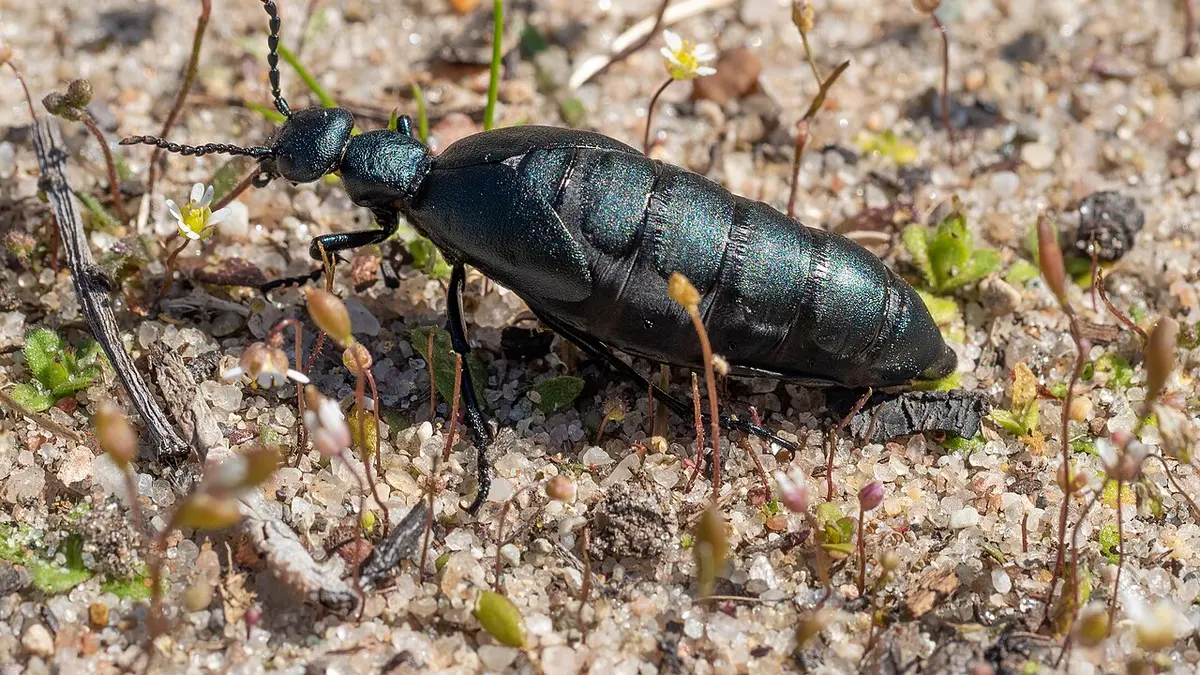
The Short‑Necked Oil Beetle, a beetle listed as vulnerable on the IUCN Red List and classified as nationally rare in Great Britain, has been recorded breeding in Wales for the first time since 1948. Survey teams working at Castlemartin Range in Pembrokeshire reported finding live larvae on a small area of the site, confirming the presence of immature beetles after three years of intensive searching. Natural Resources Wales (NRW) said the number and distribution of the larvae support the conclusion that a larger cohort of beetles is present, marking a significant development for the species in Wales.
The discovery follows a 2023 survey at the same location that only yielded dead adult beetles, prompting concerns about the species’ survival on the site. Anne Hobbs of the Bumblebee Conservation Trust described the finding as “very exciting” and highlighted the importance of the habitat – thick vegetation and dense flower coverage in coastal grassland and sand dunes – for the beetle’s lifecycle, which relies on solitary bees.
Background
The Short‑Necked Oil Beetle has a highly specialised life cycle, depending on solitary bees for its development and requiring specific coastal habitats. Historically, the beetle was last recorded in the UK in 1948, after which habitat loss drove it to the brink of extinction. It was rediscovered in Devon in 2006 and later on the Isle of Coll in Scotland in 2009, with additional populations identified on several Scottish islands including Tiree, Islay, Barra and Uist. As the sole identified Welsh location hosting the insect, Castlemartin Range operates under a national initiative designed to safeguard the beetle alongside other creatures that inhabit the same environment.
Adults of the species are active from March to June, favouring warm, sunny days, and can grow up to 24 mm in length, living for about a year. The scarcity of suitable habitats means only a handful of sites across the UK can support viable populations.
Why it matters
The presence of larvae indicates that the beetle is not only surviving but potentially reproducing in Wales, a development that could bolster the species’ overall UK numbers. Conservationists stress that the beetle’s survival is tied to the health of coastal grasslands and sand dunes, ecosystems that also support a range of other wildlife, including solitary bees. Successful management of Castlemartin Range could therefore have broader biodiversity benefits. The discovery also provides a morale boost for volunteers and partners involved in the long‑term monitoring programme, who had endured two years without any larval sightings.
What happens next
NRW and partner organisations plan to continue regular surveys at Castlemartin Range to monitor the beetle’s population trends and habitat condition. Ongoing management will focus on maintaining the thick vegetation and flower-rich environment required for both the beetle and its bee hosts. The flagship species recovery programme will use the findings to inform future conservation actions across the limited sites that support the Short‑Necked Oil Beetle in the UK.
Sources
Spotted an error? Report a correction · Corrections policy
Related stories

Australia set new women's Rugby League World Cup record with 124-6 win over Wales
Australia's Jillaroos defeated Wales 124-6 in Sydney, scoring 21 tries and establishing the highest score and winning margin in women's international rugby league history.
LAS News Desk · 1 Nov 2026, 15:17 WAT · 5 sources

Betsi Cadwaladr health board proposes closing three urgent primary care centres by 2027
The Betsi Cadwaladr University Health Board announced a consultation to shut urgent primary care centres at hospitals in Holyhead, Tremadog and Bangor by April 2027, citing funding shortfalls and staffing challenges, prompting criticism from local politicians.
LAS News Desk · 1 Nov 2026, 14:16 WAT · 1 source

UK artist with epilepsy still unable to obtain NHS cannabis prescription despite market growth
Louis Petit, a young London‑based artist diagnosed with a rare form of epilepsy, remains dependent on costly private medical cannabis after the NHS has not provided a prescription, even as the legal UK market expands.
LAS News Desk · 1 Nov 2026, 13:46 WAT · 1 source

Rare Nanotyrannus skeleton named Jodi sells for $47.3 million at New York auction
A mounted skeleton of the small tyrannosaur Nanotyrannus, nicknamed Jodi, fetched $47.3 million at Sotheby’s in New York, making it the second‑most valuable dinosaur fossil sold. The sale has sparked debate over private ownership of scientific specimens.
LAS News Desk · 27 Oct 2026, 23:16 WAT · 2 sources

Storm Boelo leaves 90,000 homes without power and two men dead
Storm Boelo battered Scotland and northern England, leaving around 90,000 properties without electricity and killing two men when trees fell. The Met Office has issued new wind warnings as engineers work to restore power.
LAS News Desk · 26 Oct 2026, 11:16 WAT · 3 sources
Storm Boelo kills one in Scotland as 50,000 lose power
A 60-year-old man died in Dumfries and Galloway after being struck by a tree during Storm Boelo. The severe weather caused widespread power cuts, flooding, and transport disruptions across Scotland.
LAS News Desk · 25 Oct 2026, 23:17 WAT · 2 sources