
Nigeria’s external reserves cover just over ten months of imports as CBN governor highlights AI investment and inflation trends
Central Bank Governor Olayemi Cardoso reported that Nigeria’s gross external reserves total $54.02 billion, enough for 10.26 months of imports, and outlined inflation easing, AI investment prospects and risks to the economy.
By LAS News Desk · Published 26 Nov 2026, 11:31 WAT
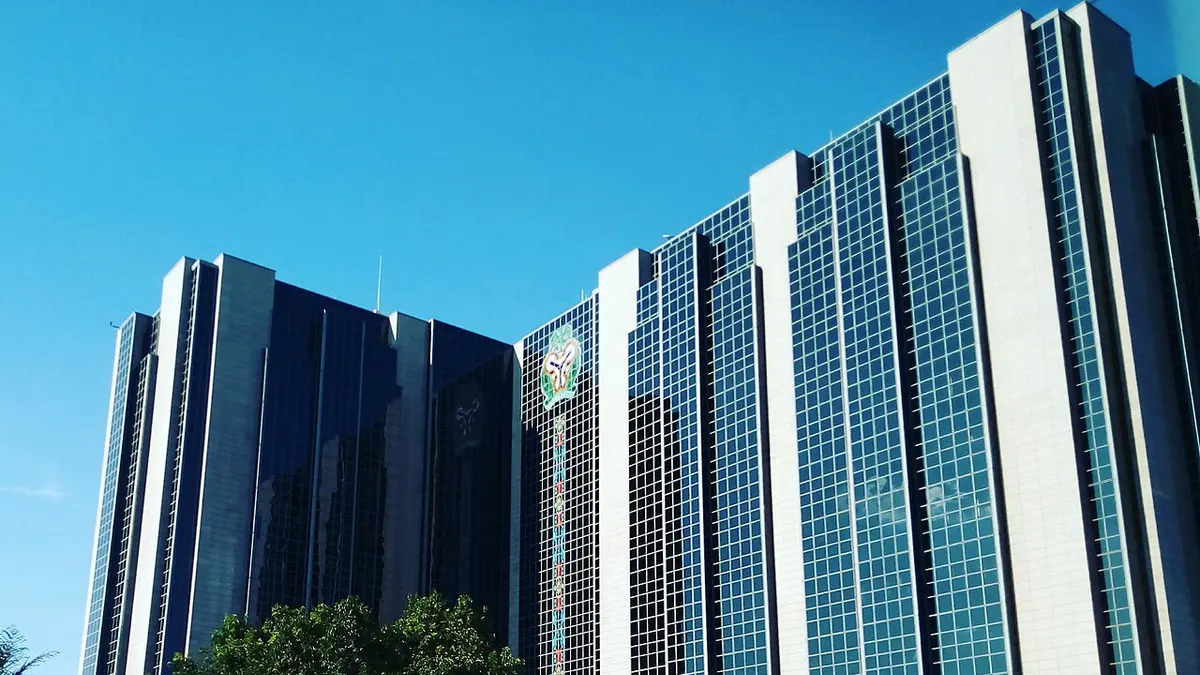
Olayemi Cardoso, the head of Nigeria's central banking authority, revealed on November 24, 2026, that the nation's total foreign currency holdings reached $54.02 billion by the end of the period ending November 17. This amount, disclosed in Abuja when the Monetary Policy Committee (MPC) issued the statement from its 308th session, equates to a buffer sufficient for 10.26 months' worth of purchasing goods and services from abroad.
Cardoso further outlined the latest price index statistics, observing that the overall rate of price increases dropped to 14.06 percent in October, down from 14.63 percent in the preceding month of September. Core inflation eased to 10.78 percent, driven by lower housing, education, insurance and financial‑service costs, while food inflation slipped to 19.13 percent as harvest season began. The Composite Purchasing Managers’ Index (PMI) remained in expansionary territory at 53.2 in October, reflecting activity gains across industry, agriculture and services.
Background
The external reserve level reported by Cardoso follows a series of MPC updates that have tracked Nigeria’s macro‑economic performance throughout 2026. The central bank’s restrictive monetary stance, aimed at stabilising the foreign‑exchange market, has been credited with moderating both headline and core inflation. In parallel, the MPC highlighted a projected slowdown in global economic growth for 2026, attributing the deceleration to elevated energy prices, lingering trade‑policy uncertainty and shrinking fiscal space in many economies.
The bank chief emphasized that strong capital allocation into artificial intelligence (AI) and other tech-driven fields could mitigate the effects of elevated energy expenses and wider international instability, despite existing challenges. He reiterated this view in a separate Nairametrics report, emphasizing that AI adoption may partially offset pressures on global growth. The governor cautioned that potential threats to future projections lean toward the negative, pointing to ongoing interruptions in energy and logistics, susceptibility to digital security breaches, elevated prices for raw materials and shipping, and the growing division within international commerce.
Why it matters
The reserve coverage figure is a key indicator of Nigeria’s ability to meet import demand without resorting to emergency financing or depleting foreign‑exchange buffers. At just over ten months, the coverage suggests a moderate margin of safety but also signals limited room for prolonged external shocks. Stakeholders—including importers, investors and policy‑makers—are likely to monitor the reserve level closely as the country navigates volatile commodity markets and fluctuating oil revenues.
The decline in inflation, particularly in core components, points to the effectiveness of the central bank’s tight monetary policy. Lower food inflation, driven by seasonal harvests, further eases pressure on household budgets. However, the persistence of headline inflation above 14 percent indicates that price pressures remain significant, especially for essential items.
Cardoso’s emphasis on AI investment signals a strategic shift toward diversifying Nigeria’s economic base. By fostering technology‑driven growth, the central bank hopes to reduce reliance on oil and mitigate the impact of external energy price spikes. This approach could attract foreign direct investment in the tech sector, create skilled jobs and enhance productivity across agriculture, services and industry.
The identified risks—energy supply disruptions, adverse weather, cyber threats and trade fragmentation—remain critical for businesses and policymakers. Any escalation could reverse recent disinflation trends, strain the foreign‑exchange market and erode the external reserve buffer.
What happens next
The MPC’s next steps will involve continued monitoring of inflation trends and external reserve levels, with policy adjustments as needed to maintain price stability and reserve adequacy. Cardoso expressed confidence that the local economic trajectory will stay favorable through the rest of 2026 and extending into 2027, buoyed by anticipated growth in crude oil output and continued development in the agricultural, service, and industrial sectors. The central bank is likely to keep its restrictive stance until disinflation is firmly entrenched, while also encouraging AI and technology investments to bolster resilience against global shocks.
The upcoming MPC meetings will assess whether the current reserve coverage remains sufficient amid evolving global conditions, and may consider further measures to safeguard the foreign‑exchange market and support the broader economy.
Sources
Spotted an error? · Corrections policy
Related stories
Naira falls to N1,361.84 per dollar as external reserves total $55.16bn
The naira weakened by N27.12 to N1,361.84 per US dollar over two days, despite Nigeria’s central bank reporting $55.16bn in external reserves, according to data released on 25 October 2026.
LAS News Desk · 25 Oct 2026, 12:15 WAT · 1 source

Nigeria launches NERSI monthly cash relief of N50,000 for vulnerable households
The federal government has started a presidential initiative that will transfer N50,000 each month to selected low‑income families, aiming to offset rising food and living costs, the minister said on Friday.
LAS News Desk · 31 Oct 2026, 08:33 WAT · 4 sources
Cardoso underscores Nigeria’s monetary reforms and reserve strength at IMF forum
Governor Olayemi Cardoso highlighted Nigeria’s monetary and foreign‑exchange reforms, the growth of its reserves and the role of committee deliberations during an IMF seminar in Bangkok, stressing the country’s resilience to global shocks.
LAS News Desk · 15 Oct 2026, 20:45 WAT · 4 sources
Nigeria's headline inflation eases to 14.6% in September as energy costs jump
The National Bureau of Statistics reported a fall in overall inflation to 14.63% in September 2026, the fourth consecutive monthly decline, while energy inflation more than doubled to 10.85% and food prices remained high.
LAS News Desk · 15 Oct 2026, 19:15 WAT · 10 sources
Naira Weakens to N1,440 per Dollar as Nigeria’s Foreign Reserves Slip by $406 million in November
Nigeria’s central bank reported that the naira fell to N1,388 per dollar in the official market and N1,440 in the parallel market, while gross external reserves dropped to $54.71 billion, a $406 million decline from the previous month.
LAS News Desk · 20 Nov 2026, 09:45 WAT · 3 sources

Nigeria's central bank imposes N15bn capital floor for foreign‑currency stablecoin issuers
The Central Bank of Nigeria announced that firms issuing dollar‑pegged stablecoins must hold at least N15 billion in paid‑up capital, while naira‑backed tokens face a N10 billion threshold, under new virtual‑asset regulations released on 5 November 2026.
LAS News Desk · 6 Nov 2026, 11:15 WAT · 5 sources
More Africa/Nigeria news ›
- Libyan leader Muammar Gaddafi’s 2006 visit to Nigeria disrupted by weapons dispute at airport
- Nafiu Bala Announces Launch of ADC Presidential Campaign, Mulls Atiku Abubakar as Campaign Director-General
- APC governorship hopeful warns internal rifts could cost Tinubu Benue votes in 2027
- Former PDP Deputy Chairman Bode George urges Atiku Abubakar to abandon 2027 presidential bid, citing north‑south power‑sharing tradition
- Nigeria signs $2.08bn health cooperation pact with United States, obliging specimen sharing and increased domestic spending