
Nigeria's external debt rises 6.6% to $145bn in 2025, World Bank reports
The World Bank says Nigeria's external debt grew by 6.6% in 2025, reaching $145.015 billion, up from $83.21 billion in 2015. The increase represents a 74.3% rise over a decade, highlighting mounting fiscal pressures.
By LAS News Desk · Published 7 Nov 2026, 12:45 WAT
Nigeria’s external debt grew by 6.6% in 2025, reaching $145.015 billion, according to a World Bank release reported by Premium Times on 7 November 2026. The figure marks a continuation of a decade‑long upward trend, with debt standing at $83.21 billion in 2015, a rise of 74.3% over ten years.
The World Bank’s data indicates that the increase in external obligations reflects ongoing fiscal pressures on the Nigerian economy. The latest rise follows a pattern of annual debt growth, underscoring the challenges faced by the government in managing external borrowing.
Background
External debt in Nigeria has been on a steady climb since the mid‑2010s. In 2015, the country’s external liabilities were recorded at $83.21 billion. Over the subsequent ten years, the cumulative increase reached $61.805 billion, bringing the total to $145.015 billion by the end of 2025. The World Bank attributes the growth to a combination of factors, including financing of infrastructure projects, budget deficits, and the need to support foreign exchange reserves.
The data released by the World Bank is part of its regular monitoring of sovereign debt levels, which informs both domestic policy decisions and international investors. Premium Times highlighted the figures in a special report, noting the significance of the 6.6% year‑on‑year rise for the 2025 fiscal year.
Why it matters
The surge in external debt has implications for several stakeholder groups. For the Nigerian government, higher debt service obligations may constrain fiscal space, potentially affecting public spending on health, education, and infrastructure. Credit rating agencies monitor such trends, and a continued rise could influence Nigeria’s sovereign credit rating, impacting borrowing costs.
For investors and lenders, the expanding debt stock signals increased risk exposure. The World Bank’s figures serve as a benchmark for assessing the country’s repayment capacity and the sustainability of its debt profile. Domestic businesses may also feel indirect effects through higher interest rates or reduced access to financing if the government’s fiscal position weakens.
Internationally, Nigeria’s debt trajectory is of interest to multilateral institutions and donor countries that engage in development financing. The World Bank’s reporting provides a transparent basis for dialogue on debt management strategies and potential restructuring options.
What happens next
The World Bank’s release does not specify immediate policy actions, but the data suggests that Nigerian authorities will need to address debt sustainability in upcoming fiscal planning cycles. Analysts anticipate that the government may consider measures such as debt restructuring, enhanced revenue mobilisation, or adjustments to borrowing strategies to curb further escalation.
No specific dates for policy decisions were mentioned in the source material, and the report does not detail any forthcoming negotiations with creditors. However, the continued monitoring of external debt levels by the World Bank implies that future updates will track the effectiveness of any remedial measures taken by the Nigerian government.
Sources
- Nigeria’s external debt up 6.6% to $145bn in 2025 – World Bank — Premium Times
Spotted an error? Report a correction · Corrections policy
Related stories
Nigeria disputes World Bank's half‑year debt‑service ratio, cites data gaps
Nigeria's finance ministry rejected the World Bank's claim that interest payments in the first half of 2026 equaled 124% of federal revenue, arguing the calculation mixes federal and state obligations and omits pending receipts, while noting faster revenue growth than debt costs.
LAS News Desk · 19 Oct 2026, 08:45 WAT · 2 sources
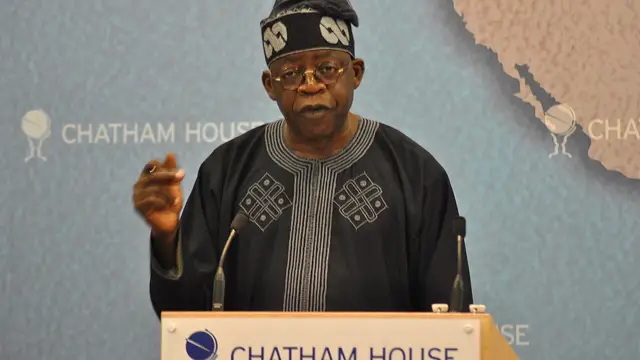
Atiku urges Senate to reject Tinubu's $7.7bn loan request, citing lack of project details and rising debt
Former Vice President Atiku Abubakar called on the Senate to refuse President Bola Tinubu’s request for a $7.7 billion external loan, warning that the borrowing adds to Nigeria’s debt burden without clear project allocations.
Photo: Chatham House / Wikimedia Commons · CC BY 2.0
LAS News Desk · 4 Nov 2026, 22:15 WAT · 8 sources
Nigeria’s cash transfer scheme reaches over 10 million households, World Bank urges broader reach and sustainability
The federal government reported disbursing N658.9 billion to 10.46 million vulnerable households by September 2026, while the World Bank highlighted gaps in coverage, payment adequacy and regularity, calling for a shift toward a sustainable social protection system.
LAS News Desk · 19 Oct 2026, 08:15 WAT · 2 sources
Federal High Court upholds UBA's receiver appointment in N156bn Stallion Group debt case
The Lagos Federal High Court confirmed United Bank for Africa's right to enforce mortgage securities and appointed a receiver to recover an alleged N156.03 billion owed by the Stallion Group, also restricting the conglomerate from diverting government payments.
LAS News Desk · 17 Oct 2026, 04:15 WAT · 2 sources
World Bank reports developing nations' external debt reaches record $9.4 trillion in 2025
The World Bank’s International Debt Report 2026 shows external debt of low‑ and middle‑income countries rose 5.5% to $9.4 trillion, driven by private borrowing and higher interest rates, raising concerns over fiscal pressure especially for the poorest economies.
LAS News Desk · 5 Nov 2026, 16:15 WAT · 4 sources
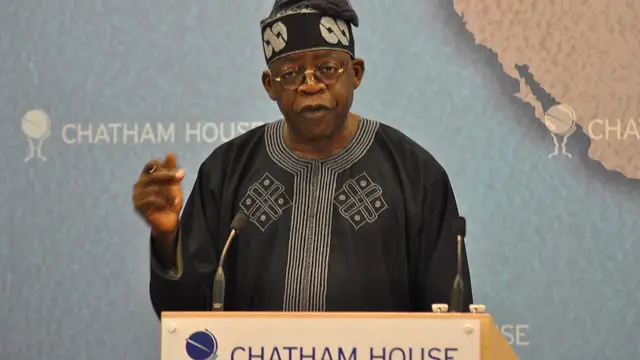
NDC calls for massive turnout as Tinubu seeks $7.7bn loan
The Nigeria Democratic Congress has urged voters to support Peter Obi and Rabiu Kwankwaso in the 2027 election after President Bola Tinubu requested a $7.7 billion external loan to cover the 2026 budget deficit. The party criticises the loan as part of a borrowing spree and warns of long‑term debt risks.
Photo: Chatham House / Wikimedia Commons · CC BY 2.0
LAS News Desk · 6 Nov 2026, 05:15 WAT · 3 sources
More Africa/Nigeria news ›
- FCT Minister Wike declares Rivers State will back Tinubu in 2027 election
- Tinubu urges Nigerian youths to collect PVCs ahead of 2027 elections
- Federal government halts all 2026 admissions to NTI’s NCE and degree programmes over regulatory breaches
- APC campaign chief Yari claims hardworking Nigerians can afford food despite cost-of-living crisis
- Rivers and Bayelsa governors pledge millions of votes for Tinubu in 2027 campaign