
Nigeria paints makers face reduced output as raw material, energy costs surge
Nigeria's Paints Manufacturers Association says rising costs of raw materials, fuel and distribution are lowering capacity utilisation, prompting firms to seek local alternatives and cut margins, ahead of the 2027 West Africa Coatings Show.
By LAS News Desk · Published 27 Nov 2026, 00:31 WAT

Nigeria’s paint industry is grappling with sharply higher input costs, according to the Paints Manufacturers Association (PMA). PMA chairman Adedayo Paseda told a press conference in Lagos that soaring expenses for raw materials, fuel and distribution are reducing capacity utilisation across the sector. He added that consumers are also feeling the squeeze as living costs rise, leaving less disposable income for non‑essential purchases such as paint.
Speaking on Thursday, Paseda revealed details of the upcoming second edition of the West Africa Coatings Show, which is set to run from 30 June through 2 July 2027 at the Landmark Centre on Victoria Island. Hosted by The Coatings Group, a sector of dmg events, the event is being conducted in collaboration with the PMA, a subgroup within the Manufacturers Association of Nigeria. The event is intended to showcase safer raw materials, emerging technologies and new production standards for the paint and coatings sector.
Background
The PMA attributes the decline in capacity utilisation to a combination of global economic pressures and local challenges. Paseda highlighted that international conflicts involving Iran, Israel and the United States have contributed to higher input costs and heightened inflationary pressures. Because many essential paint ingredients are imported, manufacturers remain vulnerable to foreign‑exchange fluctuations and rising import expenses.
To mitigate these pressures, manufacturers are turning to innovation and local sourcing. Paseda noted improvements in the quality of locally produced calcium carbonate and oils used for resin production, although these advances have not yet translated into significant cost reductions. He emphasized that businesses need to innovate, exercise creativity, and accept lower profit margins to remain operational.
The upcoming coatings exhibition follows a successful inaugural edition that attracted 115 exhibitors from 12 countries and more than 2,000 visitors. Paddy O’Neill, associate vice‑president of coatings at dmg events, said the 2027 show will build on that success, providing a platform for suppliers, manufacturers, distributors and technical experts to connect.
Why it matters
The rising cost environment affects multiple stakeholders. Paint manufacturers face tighter profit margins and may need to pass on higher prices to consumers, potentially dampening demand for construction and renovation projects. Reduced capacity utilisation could also impact employment within the sector and downstream industries that rely on paint supplies.
Consumers, already coping with higher food and living expenses, may defer or scale back paint purchases, further pressuring manufacturers. The PMA’s push for local alternatives aims to lessen dependence on imported inputs, which could stabilise costs if quality and supply reliability improve.
The West Africa Coatings Show serves as a critical venue for industry players to access new raw materials and technologies that could enhance efficiency and reduce costs in the long term. Successful adoption of these innovations may help mitigate the current cost squeeze and support the sector’s recovery.
What happens next
Scheduled for 30 June to 2 July 2027, the West Africa Coatings Show will be hosted at the Landmark Centre on Victoria Island. Organisers expect the event to provide manufacturers with exposure to safer raw materials and emerging developments, potentially influencing future sourcing decisions. No further policy interventions or financial assistance measures were announced at the press conference.
Sources
Spotted an error? · Corrections policy
Related stories
Nigeria's manufacturing growth eases as power cuts and cost pressures intensify, NESG report shows
The Nigerian Economic Summit Group's October 2026 Business Confidence Monitor recorded a slowdown in manufacturing activity, citing frequent electricity outages, rising input costs and limited credit, while optimism for the next quarter rose.
LAS News Desk · 9 Nov 2026, 09:09 WAT · 2 sources

Nigerian manufacturing credit falls by N2.88tn as high lending rates persist
Bank loans to Nigerian manufacturers dropped to N5.65tn by August 2026, down from N8.53tn in late 2024, due to high borrowing costs and government competition for funds.
LAS News Desk · 27 Nov 2026, 01:15 WAT · 1 source

Nigeria starts $70m passport factory construction in Abuja
Nigeria has begun building a $70 million passport manufacturing plant in Abuja, aiming to end reliance on foreign suppliers and produce up to six million booklets annually by May 2027.
LAS News Desk · 21 Nov 2026, 00:47 WAT · 2 sources

United Nigeria Airlines chief calls for skill‑focused reforms in Nigerian universities
Professor Obiora Okonkwo called for a shift from certificate-based education to competency-driven learning during a lecture at Afe Babalola University, Ado-Ekiti, urging stronger industry partnerships.
LAS News Desk · 26 Oct 2026, 17:47 WAT · 2 sources

Atiku accuses Tinubu government of unaffordable housing after manufacturers spend ₦842bn on energy
Former Vice‑President Atiku Abubakar says the ₦842 billion energy bill of 11 manufacturers has driven up cement prices and made homes unaffordable, while also questioning the administration’s claim of delivering 26,000 housing units.
LAS News Desk · 26 Nov 2026, 19:02 WAT · 2 sources
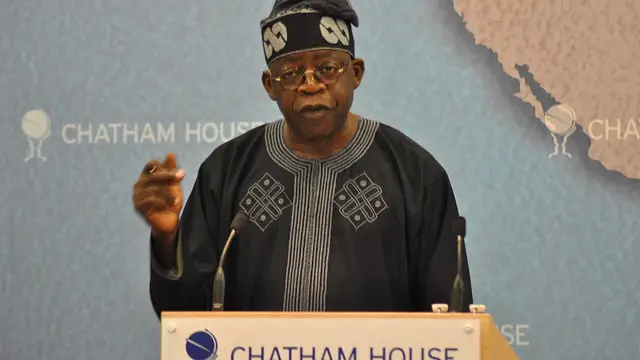
Atiku Accuses Tinubu Government of Driving Up Energy, Production and Housing Costs
Former vice president and ADC presidential candidate Atiku Abubakar says the Tinubu administration’s high energy prices are inflating manufacturing expenses, raising consumer prices and undermining affordable housing claims, citing N842 billion spent by 11 manufacturers in nine months of 2026.
Photo: Chatham House / Wikimedia Commons · CC BY 2.0
LAS News Desk · 26 Nov 2026, 22:00 WAT · 9 sources
More Africa/Nigeria news ›
- FCT High Court sentences two to death for 2022 murder of NYSC member in Abuja
- Nigerian Navy commissions new facilities at Onne Basic Training School to ease accommodation shortfalls and boost training
- Surgeons Urge More Local Training to Address Northern Nigeria’s Oral Surgery Shortage
- Federal Government launches five‑year ₦5 million support scheme for 600 Nigerian tailors
- Kebbi ADC demands probe into videos linking suspected thug to APC members amid accusations of political thuggery