
Nigeria starts $70m passport factory construction in Abuja
Nigeria has begun building a $70 million passport manufacturing plant in Abuja, aiming to end reliance on foreign suppliers and produce up to six million booklets annually by May 2027.
By LAS News Desk · Published 21 Nov 2026, 00:47 WAT
Nigeria has commenced the construction of a new passport manufacturing facility in Abuja, marking a significant shift in the country's approach to travel document production. The project, valued at $70 million, is located at the headquarters of the Nigeria Immigration Service (NIS) and is designed to eliminate the nation's long-standing dependence on overseas manufacturers for passport booklets. The Federal Government has targeted May 2027 for the completion of the facility and the commencement of local production, a timeline that Minister of Interior Olubunmi Tunji-Ojo described as a landmark step in domesticating the passport value chain.
The groundbreaking ceremony was attended by Tunji-Ojo, who outlined the strategic importance of the project for national security and administrative efficiency. The facility is being developed in partnership with IRIS Smart Technologies, a private sector entity that is financing the investment without direct funding from the Federal Government. This public-private partnership model is intended to support critical national infrastructure while alleviating the financial burden on the state. The minister noted that President Bola Tinubu is expected to be invited to commission the project once it is fully operational in 2027.
Background
The new facility will occupy 1.1 hectares within the NIS headquarters in Abuja. It is designed to operate using an off-grid, solar-powered energy system and will incorporate artificial intelligence-driven technology to enhance security and efficiency. The initial production capacity is set at six million electronic passport booklets per year, with the infrastructure designed to allow for expansion to 10 million booklets annually if demand increases.
According to the Minister of Interior, Nigeria’s estimated annual requirement for passports ranges between 800,000 and two million booklets. Consequently, the initial capacity of the new factory significantly exceeds domestic needs, creating a surplus that the government intends to utilize for export. Tunji-Ojo stated that the project aims to position Nigeria as a supplier of secure travel documents to other African nations, particularly within the Economic Community of West African States (ECOWAS).
This manufacturing facility represents the latest phase in a broader reform programme initiated by the current administration. Previous steps in this process included the introduction of automated passport application and approval systems, the establishment of a modern data centre in 2024, and the completion of a centralised passport personalisation centre in September 2025. IRIS Smart Technologies, which previously invested more than $5 million in the personalisation centre, is committing the $70 million for the manufacturing plant. The minister emphasized that the goal is to create an integrated system covering every stage from application and biometric capture to final issuance.
Why it matters
The establishment of the local factory is expected to address several critical issues in Nigeria's passport issuance process. By bringing manufacturing into the country, the government aims to reduce exposure to international supply-chain disruptions that have previously affected the availability of booklets. This self-sufficiency is projected to shorten waiting periods for applicants and improve the overall reliability of the passport issuance system.
Furthermore, the project strengthens Nigeria's control over a sensitive national security document. Tunji-Ojo argued that the country can no longer continue to import items it has the capacity to produce domestically. The initiative is framed not only as a logistical improvement but as a strategic move to enhance national security by ensuring that the production of secure travel documents remains under direct national oversight. The surplus production capacity also opens up economic opportunities, allowing Nigeria to serve regional markets and potentially generate revenue through the export of secure documents to ECOWAS member states.
What happens next
The construction phase is currently underway, with the facility expected to be completed by May 2027. Upon completion, President Bola Tinubu is scheduled to commission the plant, officially marking the start of local production. The government has stated its determination to move beyond mere processing to full domestic production, ensuring that the entire value chain—from application to manufacturing—is managed within Nigeria. The success of this project will be measured by its ability to meet domestic demand while fulfilling the goal of becoming a regional supplier of secure travel documents.
Sources
Spotted an error? · Corrections policy
Related stories

Federal Government Sets 18‑Month Timeline and $155bn Funding to Complete Abuja National Library
Nigeria’s federal government has revived the long‑delayed National Library headquarters in Abuja, flagging a new 18‑month deadline and committing roughly N155.3 billion, while the First Lady’s fundraising drive has already secured over N25 billion.
LAS News Desk · 20 Nov 2026, 10:15 WAT · 3 sources

Former Labour Party candidate condemns assault on APC musician Rarara in Abuja
Prince Kennedy Ahanotu has called for a police investigation into the reported attack on Hausa musician Dauda Kahutu, known as Rarara, at the National Mosque in Abuja.
LAS News Desk · 21 Nov 2026, 16:16 WAT · 1 source
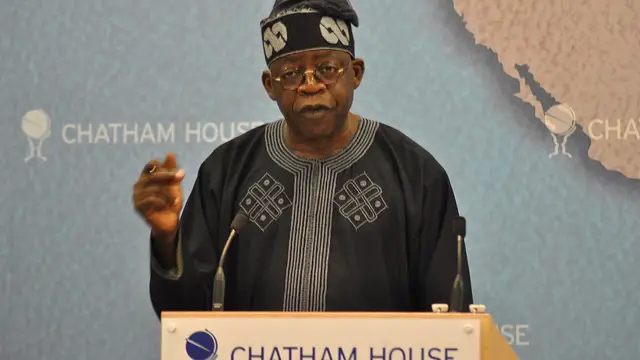
Tinubu’s Trans‑Sahara Superhighway reconstruction praised as economic and security catalyst in Nigeria’s north
APC National Chairman Prof Nentawe Yilwatda hailed the Akwanga‑Jos section of the Trans‑Sahara Superhighway as a transformative infrastructure project that will boost trade, improve security and bolster the ruling party’s prospects ahead of the 2027 elections.
Photo: Chatham House / Wikimedia Commons · CC BY 2.0
LAS News Desk · 1 Nov 2026, 15:16 WAT · 2 sources
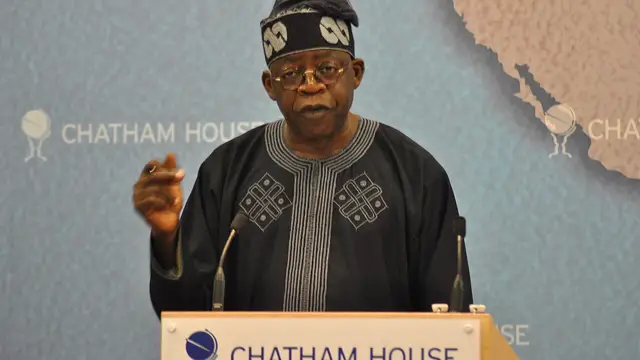
Tinubu launches $3‑5bn Bakassi Deep Seaport project in Cross River to boost Nigeria's maritime trade
President Bola Tinubu, represented by Vice‑President Kashim Shettima, broke ground on the Bakassi Deep Seaport in Cross River State, a $3‑5bn venture designed to handle large vessels, relieve Lagos ports and create jobs.
Photo: Chatham House / Wikimedia Commons · CC BY 2.0
LAS News Desk · 13 Nov 2026, 19:13 WAT · 5 sources
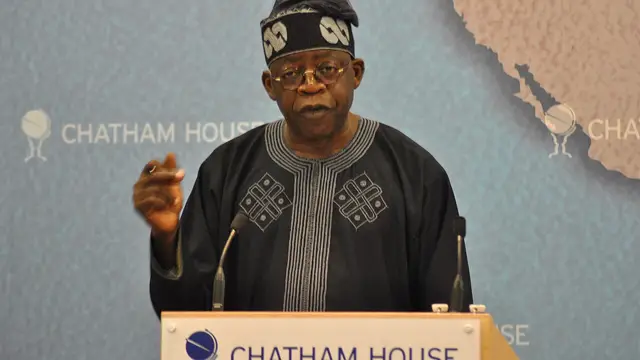
President Tinubu to table 2027 budget and $21.7bn investment plan before year‑end
President Bola Tinubu will present the 2027 Appropriation Bill to Nigeria’s National Assembly before 31 December, alongside a $21.7 billion multi‑year investment proposal focused on transport infrastructure and social programmes.
Photo: Chatham House / Wikimedia Commons · CC BY 2.0
LAS News Desk · 29 Oct 2026, 08:45 WAT · 4 sources
Nigeria's manufacturing growth eases as power cuts and cost pressures intensify, NESG report shows
The Nigerian Economic Summit Group's October 2026 Business Confidence Monitor recorded a slowdown in manufacturing activity, citing frequent electricity outages, rising input costs and limited credit, while optimism for the next quarter rose.
LAS News Desk · 9 Nov 2026, 09:09 WAT · 2 sources
More Africa/Nigeria news ›
- Senate schedules on‑site visit to Ogun communities to probe army land dispute
- President Tinubu praises Dr Musa Aliyu’s election as chair of African Asset Recovery Forum
- Atiku’s media adviser challenges Defence Ministry’s use of official social media to promote Tinubu rally
- South African golfer and Kenyan chef detained at Lagos airport over 50kg cannabis shipment
- Tinubu Reaffirms Commitment to Uninterrupted Academic Calendars at FUTA Convocation