
Nigeria inaugurates new Abuja CNG station as federal push expands network to 106 sites
The federal government opened a CNG refuelling and vehicle conversion centre in Karu, Abuja, marking the 106th operational station nationwide and underscoring a $2.6 billion private‑sector investment drive to cut transport costs.
By LAS News Desk · Published 7 Nov 2026, 06:08 WAT
The federal government inaugurated a new compressed natural gas (CNG) refuelling and vehicle conversion centre in Karu, Abuja, on Friday. The facility, situated on Saint George Akume Way, was opened as part of a broader effort to expand Nigeria’s CNG infrastructure and reduce transportation expenses.
Temitope Fashedemi, the Permanent Secretary of the State House, and Ismaeel Ahmed, the Executive Chairman of the Presidential Initiative on Compressed Natural Gas and Electric Vehicles (Pi‑CNG & EV), presided over the event. The project was delivered through a partnership that involved the State House, Pi‑CNG & EV, and private firm Rolling Energy Ltd, which financed the renovation of an abandoned State House petrol station and installed the necessary CNG equipment.
Background
Nigeria’s CNG rollout has accelerated over the past two years, with the federal government reporting about 106 operational stations across the country. Ahmed stated that this newest Karu location marks the 106th installation, while adding that 170 more sites are currently in the development phase or waiting for permits from the Nigerian Midstream and Downstream Petroleum Regulatory Authority (NMDPRA).
The initiative is backed by significant private‑sector capital, amounting to roughly $2.6 billion, which has been directed toward expanding the network. President Bola Tinubu has ordered a further round of approximately 500 refuelling units to be funded through the Midstream and Downstream Gas Infrastructure Fund (MDGIF). The Karu initiative transforms a previously used State House petrol depot into a combined CNG refuelling and vehicle conversion centre, a process that did not require any direct government funding for the upgrades.
Rolling Energy, selected for its experience in operating CNG facilities, provided free refuelling to motorists in nearby communities during a testing period of more than a week. The partnership model emphasises private investment over direct government ownership, reflecting the administration’s policy stance.
Why it matters
The expansion of CNG infrastructure is intended to lower transport costs, with Ahmed citing reductions of 30 % to 40 % on routes where CNG‑powered buses operate. By offering an alternative to diesel and petrol, the network aims to alleviate pressure on existing stations, improve fuel accessibility, and stimulate private‑sector participation in the energy sector.
The State House’s acquisition of about ten hybrid vehicles and shuttle buses, as disclosed by Fashedemi, signals a broader commitment to hybrid and CNG technologies within government operations. Eligible State House employees may also have their vehicles assessed for conversion to CNG‑hybrid systems, potentially extending the environmental and cost benefits.
Reduced reliance on imported fuels and decreased gas flaring are additional strategic goals, as the government seeks to capture greater economic value from Nigeria’s abundant natural gas reserves.
What happens next
The federal government plans to continue the rollout of CNG stations, with the announced 500‑unit expansion under the MDGIF expected to further extend coverage to remote and high‑traffic corridors. Rolling Energy and other private investors are encouraged to develop similar projects, leveraging the partnership framework demonstrated at the Karu site.
Pending licences from NMDPRA will determine the timeline for the 170 stations currently in development. Meanwhile, the State House intends to assess and potentially convert additional employee vehicles to CNG‑hybrid systems in the coming weeks.
The inauguration of the Abuja station thus marks both a milestone in the current network and a stepping stone toward the government’s longer‑term goal of nationwide CNG accessibility.
Sources
Spotted an error? Report a correction · Corrections policy
Related stories
Nigeria’s CNG network expands to 160 stations, Lagos targets 29 by 2028
Nigeria now operates about 160 compressed natural gas refuelling stations, with plans to add 500 more nationwide. Lagos State aims to reach 29 stations by early 2028, adding five in November 2026.
LAS News Desk · 6 Nov 2026, 15:16 WAT · 3 sources

Nigeria launches $78.5bn private‑capital drive for 65 infrastructure projects
The federal government presented a $78.5 billion investment programme covering 65 projects in energy, transport, agriculture and other sectors, aiming to attract private funding and create hundreds of thousands of jobs.
LAS News Desk · 15 Oct 2026, 04:15 WAT · 2 sources
NISO attributes Nigeria's power blackouts to gas shortages and low water inflows
The Nigerian Independent System Operator has explained that recent nationwide power cuts are caused by limited gas supply to thermal plants and reduced water levels affecting hydroelectric generation.
LAS News Desk · 5 Nov 2026, 20:47 WAT · 2 sources
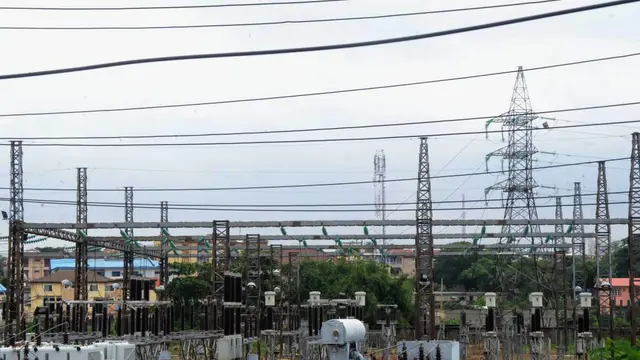
Transmission Company of Nigeria refutes Ikeja Electric’s claim that grid instability caused recent Band A outages
The Transmission Company of Nigeria (TCN) said the Band A feeder outages recorded on 3‑4 November were due to reduced generation from gas‑fuelled and hydro plants, not grid instability, and criticised Ikeja Electric’s public notice as misleading.
Photo: Godmyhelper / Wikimedia Commons · CC BY-SA 4.0
LAS News Desk · 6 Nov 2026, 22:15 WAT · 6 sources
Seyi Makinde unveils Reset Nigeria agenda, pledging power decentralisation and economic reforms
Allied Peoples Movement candidate Seyi Makinde launched his Reset Nigeria manifesto in Abuja, asserting Nigeria’s wealth in resources but criticizing its leadership, and outlining plans for state‑run electricity, tax reforms and security restructuring ahead of the 2027 election.
LAS News Desk · 4 Nov 2026, 14:15 WAT · 5 sources
Nigeria’s federal government and NLC agree on transport aid and health workers’ arrears
The federal government and the Nigeria Labour Congress signed eight agreements, including a N70,000 monthly transport intervention and the payment of 19 months of arrears to health workers, with implementation dates set for November and December 2026.
LAS News Desk · 28 Oct 2026, 10:46 WAT · 8 sources
More Africa/Nigeria news ›
- FCT Minister Wike declares Rivers State will back Tinubu in 2027 election
- Tinubu urges Nigerian youths to collect PVCs ahead of 2027 elections
- Federal government halts all 2026 admissions to NTI’s NCE and degree programmes over regulatory breaches
- APC campaign chief Yari claims hardworking Nigerians can afford food despite cost-of-living crisis
- Rivers and Bayelsa governors pledge millions of votes for Tinubu in 2027 campaign