
Lavrov denies Russian backing for flag-waving during 2024 Nigerian protests
Russian Foreign Minister Sergey Lavrov stated that Moscow did not sponsor the display of Russian flags during the 2024 #EndBadGovernance protests in Nigeria, describing the actions as personal gestures by individuals.
By LAS News Desk · Published 28 Oct 2026, 00:47 WAT
Russian Foreign Minister Sergey Lavrov has explicitly denied allegations that the Russian government was behind the display of Russian flags during the nationwide #EndBadGovernance protests in Nigeria in 2024. Speaking in Moscow on the sidelines of the Third Russia-Africa Summit, Lavrov addressed questions from the News Agency of Nigeria (NAN) regarding the incident, stating that Moscow had no involvement in the actions and distanced the Russian state from any attempt to undermine Nigeria’s sovereignty. He emphasized that the relationship between the two nations remains robust, a bond he noted has persisted since the Soviet Union era.
According to Lavrov, individuals who wore or waved Russian flags during the demonstrations did so in their personal capacity, which does not constitute official support from the Russian government. To illustrate this point, he drew a parallel to citizens who wave Palestinian flags to express solidarity, noting that such actions do not imply government backing from the Palestinian authorities. Lavrov maintained that while Russia values its ties with Nigeria, it does not intervene in the internal political affairs of its partner nations.
Background
The #EndBadGovernance protests took place across Nigeria from August 1 to August 10, 2024. The demonstrations were driven by public discontent over high cost of living and economic hardship. During these protests, groups of youths and minors in several locations, including Kano, Kaduna, Zamfara, and the federal capital, Abuja, were observed waving Russian flags and chanting slogans that called for military intervention.
The Nigerian Federal Government characterized these specific actions as treasonable and a direct threat to the country’s sovereignty. In response, authorities arrested scores of protesters, as well as several tailors who were allegedly involved in sewing the Russian flags. At the time of the protests, the Russian Embassy in Abuja also issued a denial, stating that it had no involvement in the activities of the protesters.
Lavrov referenced the broader diplomatic context, recalling a meeting he held with his Nigerian counterpart in Abuja in 2024. He described the reception as warm and stated that the meeting helped cement bilateral ties. He also highlighted the growth in educational exchanges, noting that the number of scholarships awarded to Nigerians by Russia reached a peak of 220 in 2026. Additionally, Lavrov commented on defense agreements with certain Sahel countries, asserting that Russia is assisting in eliminating security threats in the region. He claimed that some Western capitals were using Ukrainian mercenaries to sabotage these efforts, similar to actions previously observed in Libya, with the aim of undermining regional stability. He also addressed a recent diesel supply agreement with the United States, describing it as a purely business decision driven by concerns over rising energy costs, which he said would not affect the interests of Russia’s allies.
Why it matters
The clarification from the Russian Foreign Minister is significant given the heightened sensitivity surrounding foreign influence in Nigerian politics. The Nigerian government’s previous characterization of the flag-waving as treasonable underscores the severity with which authorities view potential external interference in domestic matters. The denial by Lavrov serves to reinforce the narrative of a sovereign relationship between the two countries, free from covert political manipulation.
The incident highlights the complex dynamics of international relations in Africa, where economic partnerships and diplomatic ties often intersect with local political unrest. The fact that the Russian Embassy had already denied involvement at the time of the 2024 protests suggests a consistent official stance. Furthermore, the mention of scholarships and defense pacts illustrates the multifaceted nature of the Russia-Nigeria relationship, which extends beyond politics into education and security sectors. The reference to Western mercenaries and the diesel agreement with the US indicates that these bilateral discussions are occurring against a backdrop of broader geopolitical competition and energy market shifts.
What happens next
The sources do not provide specific information regarding upcoming diplomatic meetings, new agreements, or further legal proceedings related to the arrested protesters or tailors. The statement by Lavrov appears to be a reactive clarification during the summit, with no announced subsequent steps or dates for further engagement on this specific issue.
Sources
Spotted an error? Report a correction · Corrections policy
Related stories
Mexico Grants Reno Omokri Agrément as Nigeria’s Ambassador to Four Latin American Nations
Mexico has formally accepted Reno Omokri as Nigeria's ambassador, a role that includes concurrent accreditation to Guatemala, Honduras, and Nicaragua. The agrément was delivered in Abuja, clearing the final diplomatic hurdle for his posting.
LAS News Desk · 27 Oct 2026, 17:15 WAT · 2 sources
Nigerian ambassador presents credentials to Cyprus president, pledges stronger ties
Nigeria’s ambassador to Israel, concurrently accredited to Cyprus, presented her letters of credence to President Nikos Christodoulides in Nicosia, signalling the start of her diplomatic mission and a commitment to deepen bilateral cooperation.
LAS News Desk · 25 Oct 2026, 12:15 WAT · 2 sources
Nigeria mourns death of veteran diplomat and journalist Patrick Dele Cole
President Bola Tinubu and national leaders expressed sorrow after the passing of former ambassador and Daily Times chief Patrick Dele Cole, who died in London at 86 following a period of ill health.
LAS News Desk · 18 Oct 2026, 06:15 WAT · 5 sources
Sokoto Assembly approves bill to create state police services
The Sokoto State House of Assembly unanimously passed a constitutional amendment to establish state police forces, while the federal Nigeria Police Force remains the national service. The bill outlines duties, appointment procedures and funding for the new bodies.
LAS News Desk · 28 Oct 2026, 01:46 WAT · 2 sources
Helabet cites 2.5 million users and shifts strategy to reduce ad spend amid regulatory changes
Helabet reveals 2.5 million active Nigerian users by late 2025 and plans to cut advertising costs, citing currency depreciation and a focus on player retention over acquisition.
LAS News Desk · 27 Oct 2026, 13:46 WAT · 1 source
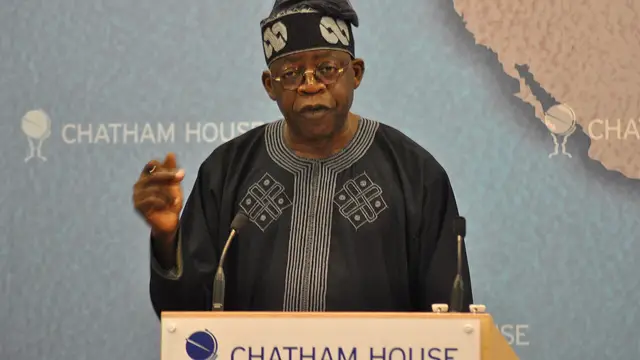
Tinubu approves 500,000 solar lights for South-East rural households
Deputy Speaker Benjamin Kalu announced that President Bola Tinubu has approved the distribution of 500,000 solar-powered lights to rural households in the South-East, with the first phase launching in Abia State.
Photo: Chatham House / Wikimedia Commons · CC BY 2.0
LAS News Desk · 27 Oct 2026, 12:16 WAT · 2 sources
More Africa/Nigeria news ›
- Egypt Court Orders Closure of Mada Masr, Fines Editor Lina Attalah
- Dangote Refinery IPO draws investors from 120 nations, covering every African country
- Federal High Court in Benin City declares Efosa Omo the rightful NDC candidate for Oredo Federal Constituency
- Enugu police detain 30‑year‑old accused of serial rapes, robberies and sextortion of POS operators
- Plateau Governor vows arrest of attackers after Gero community killings