
Incumbent José Maria Neves Secures Second Five‑Year Term in Cape Verde Presidential Election
Provisional results show President José Maria Neves winning re‑election with about 64% of the vote, while challenger Joana Rosa, the nation’s first female presidential candidate, received roughly 31.5%. Turnout was around one‑third of eligible voters.
By LAS News Desk · Published 16 Nov 2026, 16:16 WAT · Updated 16 Nov 2026, 20:45 WAT

President José Maria Neves has been re‑elected for a second five‑year term in Cape Verde, according to provisional results released on Sunday, 16 November 2026. The incumbent, representing the African Party for the Independence of Cape Verde (PAICV), secured approximately 64% of the vote, while his main rival, Joana Rosa of the centre‑right Movement for Democracy (MpD), garnered about 31.5%.
The election, which saw six candidates on the ballot, was decided without the need for a runoff because Neves achieved an outright majority. Official figures indicate that voter turnout was low, with just under one‑third of the roughly 419,000 eligible voters casting ballots.
Background
Cape Verde’s presidential race featured six contenders, but the contest centred on Neves and Rosa. Neves, first elected in 2021, sought to continue his agenda of job creation for young people and broader economic development. Rosa, aged 61, made history as the archipelago’s first female presidential candidate, running under the banner of the Movement for Democracy, which had governed for a decade before losing parliamentary control in May 2026.
Provisional counts from about 1,300 polling stations, both domestic and abroad, showed Neves winning 63.8% of the vote, with Rosa receiving 31.6%, according to AllAfrica. Africanews reported similar figures based on 98% of ballots counted. The remaining four candidates each received less than one percent.
Cape Verde’s political system is semi‑presidential: the prime minister holds most executive authority, while the president’s role is largely ceremonial but includes powers such as vetoing legislation. The country is widely regarded as a model of democratic stability in West Africa, with peaceful transfers of power and steady economic growth.
Why it matters
The election outcome has direct implications for Cape Verde’s domestic agenda and its diaspora. Neves pledged to build cross‑party support for improvements in housing, healthcare, education, and job creation, echoing campaign promises aimed at addressing high unemployment and rising living costs.
Rosa, after conceding defeat, highlighted the symbolic significance of her candidacy for gender equality, noting that her run could pave the way for greater societal parity. Her concession also underscored the competitive yet peaceful nature of Cape Verdean elections.
Low voter participation—around 32% according to Africanews—raised concerns about civic engagement. Neves attributed the abstention partly to internal migration among Cape Verdeans across the islands and called for an update of electoral registers and the introduction of electronic voting to modernise the system.
International observers and regional partners view the smooth transition as a reaffirmation of Cape Verde’s democratic credentials, which are important for foreign investment and development assistance.
What happens next
The national electoral commission is expected to publish official results later in the week, finalising Neves’s mandate. Should any procedural challenges arise, the commission will address them in accordance with the country’s electoral law.
Neves’s next steps include forming a presidential team that reflects the promised cross‑party approach and initiating policy discussions with Prime Minister and the PAICV‑led parliament, which secured a parliamentary majority in May 2026.
Rosa and the Movement for Democracy are likely to continue their parliamentary opposition, focusing on issues such as electoral reform and socioeconomic policies, while also preparing for the potential runoff scheduled for 29 November if any future elections require it.
The re‑election of José Maria Neves therefore marks a continuation of the current administration’s policies, while also setting the stage for ongoing debates about electoral participation, gender representation, and economic challenges in the Atlantic island nation.
Sources
- Cape Verde President Neves wins second term — France 24
- Cape Verde: Neves Wins Second Term As Cape Verde's President — AllAfrica
- Cape Verde President Neves wins second term — Nation Africa
- Cape Verde's President Neves projected to win re-election with 64% of vote — Africanews
- Cape Verde: Cape Verde Votes for President, With Incumbent Favoured to Win — AllAfrica
- In Cape Verde election, Neves seeks second term — Korea Herald
Spotted an error? · Corrections policy
Related stories

Atiku Criticises Tinubu’s Late Apology in Plateau State
Former Vice‑President Atiku Abubakar condemned President Bola Tinubu’s recent plea for forgiveness in Plateau, arguing the leader’s absence during violent attacks undermines his credibility. Tinubu, who limited his last visit to the airport, has since campaigned in the state.
LAS News Desk · 16 Nov 2026, 11:43 WAT · 5 sources

Lula secures unprecedented fourth term in Brazil after dramatic runoff
Incumbent President Luiz Inácio Lula da Silva won Brazil's 2026 presidential runoff with 51.7% of the vote, defeating right‑wing challenger Flávio Bolsonaro and halting a regional shift toward conservatism.
LAS News Desk · 26 Oct 2026, 06:15 WAT · 10 sources

Atiku Abubakar vows to stay in 2027 presidential race despite court nullifying his ADC nomination
Former vice‑president Atiku Abubakar says he will not withdraw from Nigeria’s 2027 presidential contest even after a Federal High Court ruled his African Democratic Congress candidacy invalid, while the ADC plans to appeal the decision.
LAS News Desk · 7 Nov 2026, 06:08 WAT · 10 sources
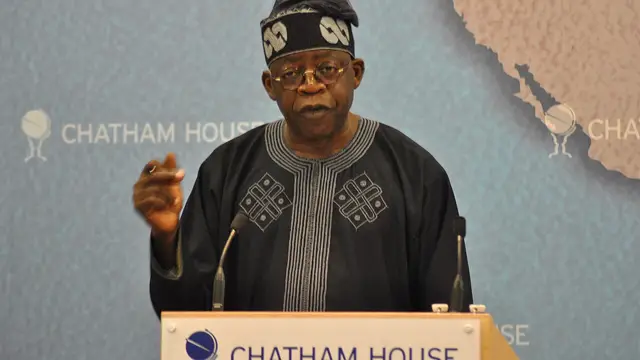
Tinubu launches 2027 re‑election bid in Kaduna amid economic and security concerns
President Bola Tinubu opened his campaign for a second term in Kaduna on 24 October, urging voters to support his reforms and highlighting road projects and security challenges ahead of the 16 January election.
Photo: Chatham House / Wikimedia Commons · CC BY 2.0
LAS News Desk · 24 Oct 2026, 19:15 WAT · 8 sources
Israel's election results point to a hung parliament as Netanyahu's Likud remains largest party
Exit polls on 27 October 2026 show Prime Minister Benjamin Netanyahu's Likud party topping the vote but lacking a clear majority, while Arab parties achieve record parliamentary seats, leaving coalition talks uncertain.
LAS News Desk · 27 Oct 2026, 22:15 WAT · 10 sources

Benue Governor Alia Launches 2027 Re‑election Campaign in Gboko
Rev. Fr. Hyacinth Alia formally began his 2027 bid for a second term in Benue, stressing APC unity and outlining his administration’s achievements. The flag‑off drew a large crowd and included praise for President Tinubu and Senator Gabriel Suswam.
LAS News Desk · 20 Nov 2026, 13:16 WAT · 1 source
More Africa/Nigeria news ›
- Senate schedules on‑site visit to Ogun communities to probe army land dispute
- President Tinubu praises Dr Musa Aliyu’s election as chair of African Asset Recovery Forum
- Atiku’s media adviser challenges Defence Ministry’s use of official social media to promote Tinubu rally
- South African golfer and Kenyan chef detained at Lagos airport over 50kg cannabis shipment
- Tinubu Reaffirms Commitment to Uninterrupted Academic Calendars at FUTA Convocation