
INEC flags 268 voter records for suspected AI‑generated photos ahead of 2027 elections
Nigeria’s Independent National Electoral Commission has identified 268 entries in its preliminary voter register as potentially containing AI‑generated images or other irregularities, and is reviewing them before the register is finalised for the 2027 general election.
By LAS News Desk · Published 2 Nov 2026, 08:16 WAT
The Independent National Electoral Commission (INEC) has announced that 268 records in its preliminary Register of Voters have been flagged for suspected artificial‑intelligence‑generated photographs and other irregularities. The discovery was disclosed by Lawrence Bayode, INEC’s Director of Information and Communication Technology, during an interview on Channels Television’s Sunday Politics programme. The flagged entries were identified by the commission’s Automated Biometric Identification System (ABIS), which highlighted the records for further examination.
Bayode said the commission is now reviewing each of the 268 entries to determine whether the photographs were entirely generated by AI or merely enhanced using AI tools on mobile devices. He clarified that voters whose images were only enhanced would remain on the register, while those with fully AI‑generated pictures would be removed. The review follows the publication of the preliminary register on 26 October, which sparked public outcry after screenshots of questionable photographs circulated on social media, especially from parts of Edo State.
Background
INEC began publishing its preliminary Register of Voters in October 2026 as part of a nationwide verification exercise. The register, displayed both online and at registration areas between 9 and 15 October, was intended to allow Nigerians to spot errors, challenge dubious entries and report inaccuracies before the final certification. Shortly after its release, users on platforms such as Twitter and Facebook highlighted anomalies, including duplicate registrations, entries for deceased individuals and photographs that appeared digitally fabricated.
The commission’s use of ABIS, a biometric system that cross‑checks fingerprint and facial data, is a central element of its effort to cleanse the voter database. In May 2025, INEC announced the creation of an Artificial Intelligence Division to integrate AI technologies into its electoral processes, a move that has drawn both optimism and scepticism from technology experts. Concerns have been raised about the robustness of safeguards surrounding AI deployment, especially given Nigeria’s history of contested elections and a lingering trust deficit.
One specific loophole under scrutiny is the “special registration” provision, designed for persons with disabilities who lack complete fingerprints. Bayode suggested that some individuals may have exploited this option to create fraudulent voter profiles, prompting the ABIS alerts.
Why it matters
The integrity of the voter register is critical to the credibility of the forthcoming 2027 general election, which will involve more than 103 million registered voters, according to INEC data released in October 2026. Any manipulation of voter records—whether through duplicate entries, deceased names or fabricated photographs—could affect the legitimacy of the electoral outcome and fuel political tensions.
Political leaders have already referenced the register’s anomalies. In Edo State, Governor Okpebholo has pledged to deliver 2.5 million votes for the incumbent president in 2027, a figure far exceeding the 144,471 votes the president secured there in 2023. Similar high‑vote promises have been made by governors of Niger and Ogun states. The presence of questionable entries could therefore have strategic implications for party calculations and campaign planning.
The distinction between AI‑enhanced and AI‑generated images is also significant for voter rights. Bayode emphasized that voters whose photos were merely improved with AI tools would not be disenfranchised, preserving their eligibility while still addressing fraudulent entries.
What happens next
INEC has stated that it will continue the verification process for the flagged 268 records, removing those confirmed to contain AI‑generated photographs from the preliminary register. The commission plans to complete the overall verification and certification of the voter register before the statutory deadline for the 2027 elections, though exact dates for the final publication were not provided in the sources.
Stakeholders, including political parties and civil society groups, are expected to monitor the cleanup closely, given the heightened public interest and the potential impact on electoral confidence. The outcome of INEC’s review will shape the final composition of the voter register and, by extension, the perceived fairness of the upcoming election.
Sources
Spotted an error? Report a correction · Corrections policy
Related stories

Atiku and former INEC chief warn that AI‑tainted voter register threatens credibility of Nigeria’s 2027 elections
Former Vice President Atiku Abubakar and ex‑INEC director Oluwole Osaze‑Uzzi allege that artificial‑intelligence‑generated images and other irregularities have compromised Nigeria’s voter register, urging an independent audit ahead of the 2027 polls.
LAS News Desk · 31 Oct 2026, 08:47 WAT · 5 sources
Kwankwaso Launches TikTok Profile Amid Calls for Independent Voter Register Probe
Vice‑presidential hopeful Rabiu Kwankwaso joined TikTok to share exclusive content while also demanding an independent investigation into suspected AI‑generated photographs in the INEC voter register.
LAS News Desk · 29 Oct 2026, 00:16 WAT · 6 sources

INEC to make preliminary voter register available online ahead of 2027 elections
The Independent National Electoral Commission will publish the preliminary register of voters on its website after a nationwide physical display, allowing wider public access while it processes claims and objections. The final register is expected in December 2026.
LAS News Desk · 27 Oct 2026, 07:45 WAT · 7 sources

INEC confirms Nigerians, not algorithms, will decide 2027 election
The Independent National Electoral Commission has said that artificial intelligence will support logistics and result verification but will not determine the outcome of the 2027 general election. The chairman, Prof. Joash Amupitan, explained the role of AI at the AI and Democracy Forum 2026 in Abuja.
LAS News Desk · 26 Oct 2026, 10:16 WAT · 2 sources
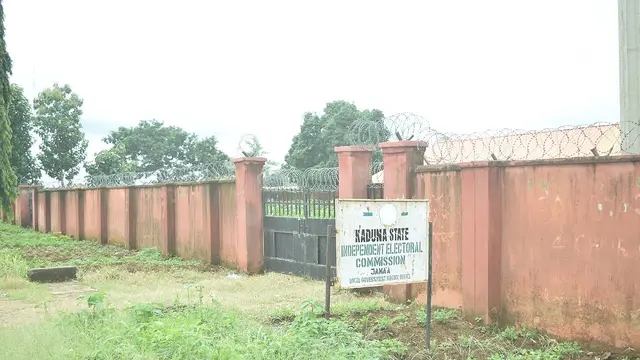
INEC chair stresses human vote will trump AI in Nigeria's 2027 election
At an AI and Democracy Forum in Abuja, INEC Chairman Joash Amupitan said algorithms will not decide the 2027 vote, though AI will shape logistics and information, according to local media reports.
Photo: Kambai Akau / Wikimedia Commons · CC BY-SA 4.0
LAS News Desk · 15 Oct 2026, 03:15 WAT · 8 sources

Nigeria’s 2027 election prep: NOA urges voters, INEC delays 2026 registrants’ PVCs
Ahead of the 2027 general elections, the National Orientation Agency is urging Nigerians to collect their permanent voter cards, while the Independent National Electoral Commission has announced that PVCs for those who registered in 2026 are not yet available for collection.
LAS News Desk · 14 Oct 2026, 09:57 WAT · 2 sources
More Africa/Nigeria news ›
- Access Bank appoints Oluseyi Kumapayi as DMD for African subsidiaries and Olanrewaju Bamisebi as ED of IT and Digitalisation
- INEC releases list of 35 candidates for Taraba State Senate seats ahead of 2027 elections
- Gunmen attack Plateau checkpoint, killing soldier and stealing weapons
- President Tinubu says Ka’abah prayer deepens resolve for Project Nigeria
- APC Campaign Council Defends Tinubu’s Power‑Sector Record Amid Calls for Scorecard