
Three oil tankers catch fire after striking mines in the Strait of Hormuz
Iran's navy and Revolutionary Guards reported that three oil tankers ignited after hitting naval mines in the Strait of Hormuz on Saturday, adding to a series of incidents that have disrupted shipping through the strategic waterway.
By LAS News Desk · Published 14 Nov 2026, 11:16 WAT · Updated 14 Nov 2026, 18:47 WAT
Three oil tankers were reported to have caught fire after striking naval mines in the Strait of Hormuz on Saturday, according to statements from Iran's navy and the Islamic Revolutionary Guard Corps (IRGC) navy. The incidents occurred in both the southern and eastern sections of the waterway, which is a crucial conduit for a third of the world’s fertilizer shipments and a significant portion of global oil trade.
Iranian state media said the first two vessels had turned off their radar and positioning systems and were attempting to transit the strait via an unauthorised route when they struck mines and exploded. A third tanker, also travelling with its tracking systems disabled, was reported to have hit a mine in the eastern part of the strait, igniting a fire that forced the vessel to stop.
The Iranian Revolutionary Guards released footage of a large plume of smoke rising from a vessel they identified as carrying liquefied gas, describing it as a supertanker that had been hit in the southern sector of the strait. The conventional navy confirmed that the third tanker was navigating through a prohibited zone when the explosion occurred. No names or nationalities of the vessels were disclosed in any of the statements.
Background
The Strait of Hormuz has been a flashpoint for regional tension for years, with Iran frequently asserting control over the narrow passage to pressure the United States and its allies. In recent weeks, multiple tankers have attempted to use unauthorised routes, prompting Iranian forces to enforce restrictions and, according to Tehran, target vessels that violate them. On the preceding Friday, two oil tankers collided with sea mines in the strait, causing large explosions that further heightened concerns about maritime safety.
The incidents coincided with a busy week of aerial interceptions by the Saudi-led coalition fighting the Iran‑backed Houthi militants in Yemen. The coalition reported destroying drones near Riyadh and in the eastern oil‑rich region, as well as intercepting ballistic and cruise missiles over various parts of Saudi Arabia. While the coalition’s actions were unrelated to the mine incidents, they underscore the broader volatility affecting the region’s shipping lanes.
A senior United Nations official, Jorge Moreira da Silva, highlighted the broader economic impact of disruptions in the strait, noting that before the conflict a third of the world’s fertilizer shipments passed through the waterway. He urged Iran and the United States to allow five vessels a day carrying fertilizers to alleviate the risk of food insecurity in vulnerable nations.
Why it matters
The fires on three tankers add to a pattern of maritime incidents that threaten the free flow of oil and fertilizer supplies through one of the world’s most strategic chokepoints. Any prolonged disruption could exacerbate global oil price volatility and impede the delivery of essential agricultural inputs, potentially pushing millions toward poverty, as warned by UN officials.
Shipping companies face heightened insurance costs and operational risks, while regional economies that depend on the uninterrupted transit of energy and commodities may experience supply chain strain. The Iranian claim that the vessels were engaged in "illegal activities" by disabling tracking systems reflects Tehran’s broader strategy of using maritime control to exert diplomatic pressure, particularly on the United States.
What happens next
Iran has not identified the affected vessels, and no international maritime authority has yet confirmed the incidents. The United Nations has called for immediate negotiations to secure a limited, time‑bound solution for fertilizer shipments, urging both Iran and the United States to continue broader talks while addressing the urgent humanitarian need.
The Saudi-led coalition continues to monitor aerial threats from Houthi forces, having intercepted multiple drones and missiles over Saudi territory in the days surrounding the tanker incidents. Further interceptions are expected as the coalition seeks to protect its own oil infrastructure and maintain regional stability.
The situation remains fluid, with the potential for additional naval or diplomatic actions depending on how Iran, the United States, and regional actors respond to the latest series of mine‑related fires in the Strait of Hormuz.
Sources
- U.N. watchdog agency pushes for access to key Iran nuclear site — CBS News
- UN watchdog 'increasingly concerned' over uninspected Iran nuclear site — BBC Middle East
- IAEA increasingly concerned about Iranian enrichment plant, its report says — Straits Times Asia
- Oil tanker on fire in Strait of Hormuz: Iran's navy — Middle East Eye
- Oil tanker on fire after hitting mine in Strait of Hormuz — Independent World
- Iran says three tankers hit by mines in Hormuz catch fire — Middle East Eye
Spotted an error? · Corrections policy
Related stories
Iran reiterates conditions for reopening Strait of Hormuz as US response under review
Iran's foreign minister said the offer to reopen the strategic waterway within a week remains on the table, but the United States has yet to meet all seven conditions outlined by Tehran, leaving negotiations stalled.
LAS News Desk · 18 Oct 2026, 17:45 WAT · 3 sources
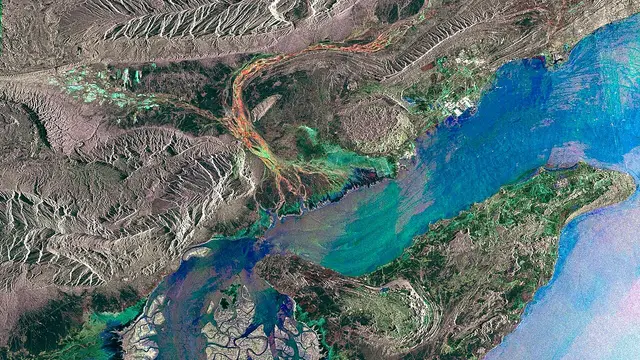
Explosions near Qeshm Island and vessel strikes raise tensions in Strait of Hormuz
Iranian media linked Saturday night blasts to its own military activity, while the US said its air force disabled a commercial ship in the Gulf of Oman, amid ongoing attacks on shipping in the strategic waterway.
Photo: Envisat satellite / Wikimedia Commons · CC BY-SA 3.0 igo
LAS News Desk · 8 Nov 2026, 17:46 WAT · 6 sources
Iran attacks trigger fire at Bahrain industrial site and strike US bases as tankers hit in Hormuz
Iran’s Revolutionary Guards said they launched missile‑and‑drone strikes on US military positions in Bahrain, while Bahrain reported a fire at a civilian industrial facility on Sitra Island; two tankers were also struck in the Strait of Hormuz.
LAS News Desk · 22 Nov 2026, 14:09 WAT · 5 sources
Iran claims new tanker attacks in Strait of Hormuz as Saudi coalition intercepts missiles
Iranian authorities reported that two oil tankers struck mines in the Strait of Hormuz, following similar incidents involving five other vessels. Meanwhile, the Saudi-led coalition intercepted Houthi missiles aimed at Najran.
LAS News Desk · 6 Nov 2026, 18:16 WAT · 1 source
France accuses Iran's Revolutionary Guards of unprecedented supermarket cyberattack
French authorities have attributed large-scale cyberattacks on supermarket refrigerators to Iran's Revolutionary Guards, vowing European sanctions and opening a criminal investigation.
LAS News Desk · 9 Nov 2026, 22:40 WAT · 8 sources
Iran launches drone attacks on US bases in Kuwait and Bahrain following US strike on Qeshm Island
Iran said it targeted US drone and missile sites at Kuwait's Ali Al Salem air base and launched multiple aerial attacks on Bahrain after a US fighter hit a Revolutionary Guard missile launch site on Qeshm Island, marking the first attack on a US‑allied Gulf state since September.
LAS News Desk · 18 Nov 2026, 11:15 WAT · 10 sources
More World news ›
- Three dead and 36 missing after fire engulfs confectionery factory near Jakarta
- US Central Command refutes Iranian claim of missile strike on F-16 in Gulf
- Israeli strike on Gaza vehicle distributing food kills three, civil defence says four dead overall
- South Korean education minister resigns after AI‑assisted cheating scandal erupts ahead of university entrance exam
- EU Council President Costa proposes smaller 2028‑2034 budget with 3% levy on major digital firms