
US pressure urged Venezuela and Iraq to weigh OPEC exit, blocked Venezuelan dues, sources say
According to ten sources, the Trump administration pushed both Venezuela and Iraq to consider leaving OPEC in 2026 and stopped Venezuela from paying its annual membership fee, prompting Saudi intervention and Iraq’s decision to stay while seeking a higher quota.
By LAS News Desk · Published 27 Nov 2026, 09:15 WAT
The Trump administration is reported to have urged two of OPEC’s founding members, Venezuela and Iraq, to contemplate exiting the organisation earlier this year. According to ten people familiar with the matter, US officials also prevented Venezuela from paying its annual OPEC membership fee, a move that has heightened tensions within the cartel.
The pressure on both countries was linked to Washington’s broader goal of increasing oil production and attracting investment. US officials feared that OPEC’s production caps could limit those ambitions, prompting them to raise the prospect of departure with the governments of Caracas and Baghdad.
In Venezuela, the effort to block the dues payment was possible because the United States controls the country’s access to state funds after the January ouster of President Nicolas Maduro. A State Department official confirmed that the department reviews disbursement requests from the interim Venezuelan government and can approve or deny uses of the foreign Government Deposit Funds held in a US‑controlled account.
Background
Venezuela and Iraq are two of the five founding members of the Organization of the Petroleum Exporting Countries, an entity that President Donald Trump has repeatedly accused of artificially inflating oil prices. The US push for higher output aligns with Trump’s long‑standing criticism of OPEC’s production limits.
Washington’s influence over Venezuela originates from the confiscation of national assets after Maduro was ousted, whereas Iraqi petroleum earnings are still routed via a Federal Reserve Bank of New York account, a consequence of the 2003 conflict. These financial controls gave Washington the ability to influence policy decisions in both nations.
In the summer, Saudi Crown Prince Mohammed bin Salman intervened in the Venezuelan case, persuading the Trump administration to cease further pressure on Caracas. The intervention was reported by two sources familiar with the discussions.
Following discussions with American officials, Iraqi Prime Minister Ali Faleh al‑Zaidi suggested during a cabinet session that the country might withdraw from OPEC. However, Iraq’s oil ministry pushed back, convincing the prime minister to retain membership and instead seek a higher production quota within the cartel.
The United States State Department declined to comment on whether it had directly blocked the Venezuelan dues payment, but it affirmed that it has authority over the use of Venezuelan state funds held in the US‑controlled account. The department also clarified that its conversations with Iraq have focused on improving energy infrastructure rather than OPEC matters.
Spokespeople for OPEC, Venezuela, Iraq, and Saudi Arabia declined to answer inquiries seeking their input.
Why it matters
These American-led actions intensify pressure on OPEC, an organization that has already seen four nations depart since 2019. The organisation’s share of the global oil market has recently fallen to a low point, partly due to disruptions and the departure of members.
If either Venezuela or Iraq were to leave, the balance of production within OPEC could shift, potentially affecting global oil prices. Venezuela’s exit would remove a historically high‑output member, while Iraq’s continued presence but with a higher quota could alter the cartel’s internal allocation.
The actions also illustrate the extent of US financial leverage over oil‑producing states. Control of Venezuela’s state funds and Iraq’s oil‑revenue account enables Washington to shape policy decisions beyond traditional diplomatic channels.
What happens next
According to the sources, Iraq’s oil ministry is now pursuing a higher production quota within OPEC rather than withdrawal. No further public statements have been made about any formal request to increase the quota.
Saudi Arabia’s Crown Prince has reportedly signalled to Washington that further pressure on Venezuela would be unwelcome, suggesting that any future US attempts to influence OPEC membership may face regional pushback.
The State Department has indicated that lower‑level officials may have raised the OPEC‑exit idea with Venezuela, but that it has not been a topic for senior officials. No additional US actions have been announced regarding Venezuela’s membership fee or OPEC engagement.
The situation remains fluid, with OPEC’s leadership likely to monitor the developments closely as the organisation seeks to stabilise its membership and production strategy amid ongoing geopolitical and market pressures.
Sources
- Exclusive-US pushed Venezuela, Iraq to consider leaving OPEC, sources say — Al-Monitor
- US pushed Venezuela, Iraq to consider leaving OPEC, sources say — Straits Times World
Spotted an error? · Corrections policy
Related stories
Iraq deploys forces to Kataib Hezbollah stronghold after compromise deal
Iraqi security forces entered Jurf al‑Sakhar in Babil province on 20 November 2026 following a deal brokered by Shi’ite politicians, after Prime Minister Ali al‑Zaidi accused the Iran‑backed militia of smuggling state‑owned oil worth hundreds of millions of dollars.
LAS News Desk · 20 Nov 2026, 18:46 WAT · 5 sources

María Corina Machado returns to Venezuela after ten‑month exile, greeted in Lara state
Opposition leader and Nobel laureate María Corina Machado landed in western Venezuela on Sunday, appearing at a church in Lara state before travelling by road to Caracas, a move that strains relations with the U.S. and displeases interim president Delcy Rodríguez.
Photo: Alexcocopro / Wikimedia Commons · CC BY-SA 4.0
LAS News Desk · 25 Oct 2026, 22:15 WAT · 5 sources
German police detain two Iraqi nationals linked to pro‑Iranian group over planned synagogue attack
Federal prosecutors say two Iraqi citizens were arrested in Heidelberg and Cologne on suspicion of plotting an explosive attack on a Cologne synagogue, citing ties to the HAYI network responsible for attacks on Jewish and Israeli sites across Europe.
LAS News Desk · 26 Nov 2026, 20:30 WAT · 2 sources
US intelligence warns Iran has advanced plots to target American personnel worldwide
A memo from Director of National Intelligence Jay Clayton says Iran has stepped up efforts to attack US staff and citizens, with lethal plans at advanced stages in the Middle East and other regions, prompting heightened alerts and staffing cuts.
LAS News Desk · 24 Oct 2026, 19:45 WAT · 5 sources
Maduro and wife Flores plead not guilty to US torture charges
Former Venezuelan president Nicolas Maduro and his wife Cilia Flores were arraigned in New York on new torture allegations, rejecting the indictment and facing a trial set for June 2027.
Photo: Asamblea Nacional del Ecuador / Wikimedia Commons · CC BY-SA 2.0
LAS News Desk · 16 Oct 2026, 06:42 WAT · 8 sources
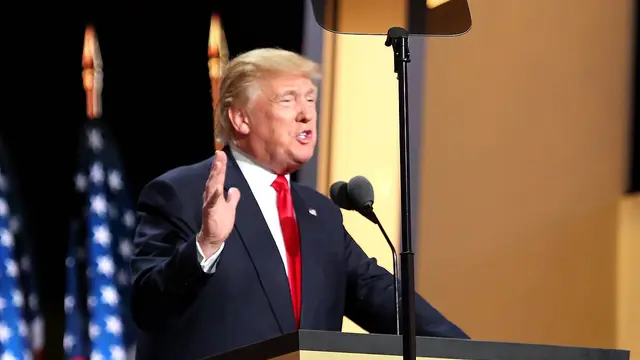
Trump administration appoints Pentagon CIO Kirsten Davies as acting national cyber director after Sean Cairncross departs amid tech outages
President Donald Trump has named Pentagon chief information officer Kirsten Davies as the acting National Cyber Director, replacing Sean Cairncross who left the post following a series of high‑profile technology failures that affected aviation, email and government networks.
Photo: Ali Shaker/VOA / Wikimedia Commons · Public domain
LAS News Desk · 20 Nov 2026, 17:45 WAT · 7 sources
More World news ›
- Australian woman convicted of mushroom murders seeks High Court appeal
- New Zealand's National-led coalition falls one seat short, must court centrist Opportunity Party
- London's Gingerbread City returns for tenth anniversary with 50 edible structures
- Macron rebukes Le Pen over EU budget timing as Brussels summit seeks 2028‑2034 deal
- Trump says Nvidia CEO Jensen Huang poses no security risk after board reinstates him