
US conducts limited strikes on Iran's Qeshm Island ahead of American midterm elections
The United States carried out limited, defensive strikes on Iran's Qeshm Island in the Strait of Hormuz on Monday, citing Iranian fire on US aircraft, as the country heads into a pivotal midterm election.
By LAS News Desk · Published 4 Nov 2026, 10:33 WAT
The United States launched a series of limited strikes on Qeshm Island, situated in the strategic Strait of Hormuz, on Monday. US officials described the operation as defensive, saying it was a response to fire from Iran's Islamic Revolutionary Guard Corps (IRGC) directed at a US aircraft. State broadcaster IRNA announced that multiple blasts occurred on the island after the offensive.
Officials speaking with CBS, which partners with the BBC, explained that the bombardment was a response to Iranian forces downing two MQM-170 surveillance aircraft south of the island and an MQ-9 aircraft east of the Strait. While the IRGC declined to address the alleged attacks, it acknowledged the destruction of the unmanned aerial vehicles. US Central Command was contacted for comment but had not responded at the time of reporting.
The timing of the strikes coincided with the approach of the US midterm elections, a period that has seen heightened political pressure on President Donald Trump. Polling data released in the days before the election indicated a decline in Trump’s support, and members of his own Republican Party have urged a de‑escalation of the conflict that began after US and Israeli forces attacked Iran in February 2024.
Background
The conflict between the United States and Iran escalated in February 2024 when US and Israeli forces carried out a joint attack on Iranian targets, marking the start of an eight‑month‑long confrontation. Since then, the United States has conducted a series of covert, limited strikes against Iranian positions, a pattern noted by multiple news outlets. In diplomatic developments, Tehran’s lead negotiator recently informed journalists that the responsibility to avert conflict now rests with the United States, signaling that negotiations to cease fighting are still underway.
President Trump has publicly stated that the United States is not in a hurry to expand the military campaign. In an interview with Axios, he said the US would act but there was “no rush,” adding that Iran’s finances and fuel supplies were already crippled. He also hinted at a possible strike on an underground site known as Pickaxe Mountain, linked to Iran’s nuclear programme, describing such an operation as something that could be carried out in “one hour.”
Why it matters
The strikes have immediate implications for regional security and for the US domestic political landscape. The Strait of Hormuz is a critical chokepoint for global oil shipments; any escalation could threaten the flow of energy supplies and affect international markets. Iranian officials have warned that further US attacks could provoke retaliation, potentially widening the conflict.
Domestically, the timing of the strikes places the US military action under intense scrutiny as voters head to the polls. Critics within the Republican Party argue that continued aggression could undermine Trump’s re‑election prospects, while supporters claim a strong response is necessary to protect US interests and maintain pressure on Iran.
What happens next
US officials have indicated that the operation was limited and defensive, suggesting no immediate plan to resume full‑scale combat. Diplomatic talks between Washington and Tehran are ongoing, with Tehran’s negotiator stating that the United States now has the opportunity to prevent further war. No specific timeline for the next steps in the negotiations has been disclosed.
The US military’s next actions will likely depend on the outcome of these talks and on the political climate surrounding the midterm elections. Observers will be watching for any further statements from the White House, the Department of Defense, and Iranian officials to gauge whether the situation will de‑escalate or intensify in the weeks ahead.
Sources
- US Strikes Iran’s Qeshm Island Ahead Of Midterm Elections — Arise
- US strikes Iran's Qeshm Island ahead of midterm elections — Euronews
- US carries out 'limited strikes' on Qeshm Island in Iran — Sky News World
- US strikes Iran's Qeshm Island as Trump signals progress in talks — France 24 Middle East
- U.S. military carries out limited strikes on Iran’s Qeshm Island — NBC World
Spotted an error? Report a correction · Corrections policy
Related stories
UN chief calls for US‑Iran talks, stresses maritime freedom and Gaza aid
Secretary‑General António Guterres urged the United States and Iran to resume dialogue and warned that further military action could spiral into wider conflict. He also highlighted the need to restore navigation in key straits and lift restrictions on humanitarian aid to Gaza.
LAS News Desk · 27 Oct 2026, 06:16 WAT · 2 sources
Saudi, Turkish and Pakistani delegations meet Iran in Tehran to curb Middle East fighting
Senior officials from the Mecca defence pact travelled to Tehran on 27 October 2026, seeking to de‑escalate the eight‑month war after fresh Houthi attacks on Saudi Arabia and Egypt’s approval of defence aid for Riyadh.
LAS News Desk · 27 Oct 2026, 11:15 WAT · 10 sources
Iran Declares No Intent to Negotiate with United States Amid Rising War Rhetoric
Iran's deputy parliamentary speaker said Tehran will not enter talks with the US, while US officials remain divided over further strikes, as the conflict that began in February escalates.
LAS News Desk · 1 Nov 2026, 13:17 WAT · 1 source
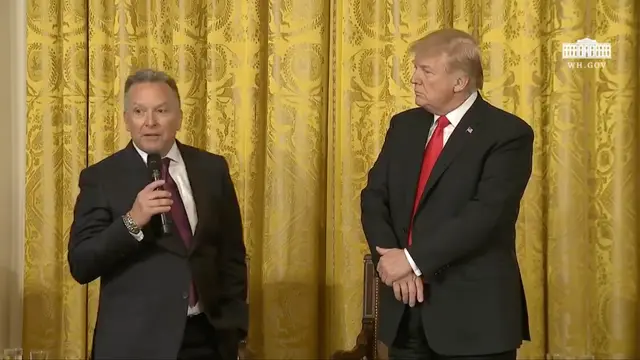
US envoy Steve Witkoff arrives in St Petersburg to meet Putin after constructive talks with Zelensky
Steve Witkoff, Donald Trump’s special envoy, landed in St Petersburg to discuss the Ukraine conflict with President Vladimir Putin following a positive meeting with Ukrainian President Volodymyr Zelensky in Oslo. The talks aim to open a pathway for further diplomatic engagement.
Photo: Wikimedia Commons contributor / Wikimedia Commons · Public domain
LAS News Desk · 21 Oct 2026, 09:45 WAT · 8 sources
US war on Iran costs exceed $47 billion, Pentagon data shows
Pentagon figures released by Reuters show U.S. military spending on the Iran conflict has risen to more than $47 billion, up over 25 % from a July estimate. The cost includes munitions, equipment and personnel support.
LAS News Desk · 28 Oct 2026, 07:16 WAT · 5 sources
Iran dismisses Israeli election outcome as irrelevant amid heightened threats from Netanyahu
Iran's foreign ministry said the result of Israel's October 27 parliamentary vote will not affect Tehran, while Israeli Prime Minister Benjamin Netanyahu warned Iran and its proxies against any attempts to disrupt the election.
LAS News Desk · 26 Oct 2026, 11:16 WAT · 7 sources
More World news ›
- Abdul El‑Sayed Wins Michigan Senate Seat, Becomes First Muslim U.S. Senator
- Spanish police launch manslaughter inquiry after Tenerife striker Jesús de Miguel dies from on‑field collision
- Democrats Secure Control of Both US Congressional Chambers in Midterm Upset
- Democrats Secure Control of Both US House and Senate in 2026 Midterms
- All nine aboard Learjet 60 killed in crash near Trump’s Mar‑a‑Lago resort in Palm Beach County