
Iran Declares No Intent to Negotiate with United States Amid Rising War Rhetoric
Iran's deputy parliamentary speaker said Tehran will not enter talks with the US, while US officials remain divided over further strikes, as the conflict that began in February escalates.
By LAS News Desk · Published 1 Nov 2026, 13:17 WAT
Iranian officials have reiterated that the country will not engage in diplomatic talks with the United States, even as the rhetoric between the two nations intensifies. During a session of the Iranian parliament, deputy speaker Ali Nikzad told fellow lawmakers that the United States has "nothing new to offer" and that Tehran will not negotiate on its nuclear programme regardless of external pressure. Nikzad added that Iran expects the United States to eventually recognise Iranian power and that any future conflict would not be limited to West Asia.
The statement follows a series of escalatory remarks from both sides. Iran’s army spokesperson, Mohammad Akraminia, said the Iranian war strategy had already shifted from a defensive stance to an offensive approach, warning that any new war could be longer and geographically broader than previous conflicts. In the United States, President Donald Trump claimed that US forces had already neutralised much of Iran’s military capability, stating that only one or two targets remained and could be dealt with in ten minutes. However, US Secretary of State Marco Rubio countered that Trump had not yet decided on fresh strikes and that Washington remained open to a diplomatic solution.
Background
The current hostilities trace back to 28 February, when joint US‑Israeli air strikes targeted Iranian facilities. Iran responded by striking several Gulf states that host US military bases, widening the regional dimension of the conflict. Since then, diplomatic overtures have been sporadic. A Qatari delegation visited Tehran earlier in the week, after which Iran sent envoys to Qatar to continue indirect negotiations with the United States aimed at ending the war. The United Arab Emirates, represented by diplomatic adviser Anwar Gargash, expressed hope for a breakthrough while also preparing for the worst, noting that further conflict would not serve regional interests.
US political figures have voiced divergent views on the next steps. A member of both the Senate Foreign Relations and Appropriations committees, Senator Chris Murphy characterized a fresh American military strike as irrational, cautioning that such an action would lead to catastrophic escalation and weaken legal norms. Murphy made these remarks after reports that the US had warned Gulf Arab allies to brace for a short, intense offensive following the US mid‑term elections on 3 November.
Why it matters
The refusal to negotiate by Iran and the mixed signals from US leadership have direct implications for regional stability and global security. Iran’s declaration that it will not discuss its nuclear programme removes a potential diplomatic lever that could de‑escalate tensions. Meanwhile, US statements suggesting both readiness for further strikes and openness to diplomacy create uncertainty for Gulf states that host American forces, such as Saudi Arabia and the United Arab Emirates, which have already voiced concerns about a possible escalation.
The conflict also affects international non‑proliferation efforts. Iran’s nuclear facilities have been a focal point of diplomatic negotiations for years, and the current stance eliminates a channel for addressing those concerns through dialogue. Moreover, the possibility of a broader war, as warned by Akraminia, could involve additional countries and disrupt global oil markets, given the strategic importance of the Persian Gulf.
What happens next
According to the sources, no concrete diplomatic timetable has been set. Iran has dispatched envoys to Qatar for indirect talks, but the deputy speaker’s remarks suggest that any negotiations would require the United States to change its approach substantially. In Washington, Secretary of State Marco Rubio indicated that a decision on fresh strikes had not yet been made, leaving the prospect of further military action unresolved. The United Arab Emirates continues to prepare for the worst while hoping for a diplomatic breakthrough, and US Senator Chris Murphy’s criticism may influence congressional oversight of any future military moves.
The situation remains fluid, with both sides signalling readiness for either diplomatic engagement or further confrontation. Observers will be watching for any official statements from the US administration or Iranian leadership that could clarify the next steps in this volatile conflict.
Sources
- Iran has 'no intention' to engage in peace talks with US as war looms — Middle East Eye
Spotted an error? Report a correction · Corrections policy
Related stories
Saudi, Turkish and Pakistani delegations meet Iran in Tehran to curb Middle East fighting
Senior officials from the Mecca defence pact travelled to Tehran on 27 October 2026, seeking to de‑escalate the eight‑month war after fresh Houthi attacks on Saudi Arabia and Egypt’s approval of defence aid for Riyadh.
LAS News Desk · 27 Oct 2026, 11:15 WAT · 10 sources
US war on Iran costs exceed $47 billion, Pentagon data shows
Pentagon figures released by Reuters show U.S. military spending on the Iran conflict has risen to more than $47 billion, up over 25 % from a July estimate. The cost includes munitions, equipment and personnel support.
LAS News Desk · 28 Oct 2026, 07:16 WAT · 5 sources
US intelligence warns Iran has advanced plots to target American personnel worldwide
A memo from Director of National Intelligence Jay Clayton says Iran has stepped up efforts to attack US staff and citizens, with lethal plans at advanced stages in the Middle East and other regions, prompting heightened alerts and staffing cuts.
LAS News Desk · 24 Oct 2026, 19:45 WAT · 5 sources
Iran reiterates conditions for reopening Strait of Hormuz as US response under review
Iran's foreign minister said the offer to reopen the strategic waterway within a week remains on the table, but the United States has yet to meet all seven conditions outlined by Tehran, leaving negotiations stalled.
LAS News Desk · 18 Oct 2026, 17:45 WAT · 3 sources
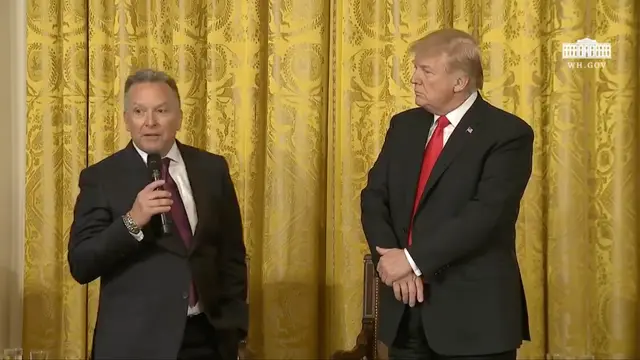
US envoy Steve Witkoff arrives in St Petersburg to meet Putin after constructive talks with Zelensky
Steve Witkoff, Donald Trump’s special envoy, landed in St Petersburg to discuss the Ukraine conflict with President Vladimir Putin following a positive meeting with Ukrainian President Volodymyr Zelensky in Oslo. The talks aim to open a pathway for further diplomatic engagement.
Photo: Wikimedia Commons contributor / Wikimedia Commons · Public domain
LAS News Desk · 21 Oct 2026, 09:45 WAT · 8 sources
Iran rejects Saudi claims of backing Houthi attacks amid rising tensions
Saudi air raids in Yemen have killed at least 12 people, including children, while Iran rejected Saudi accusations that it is backing the Houthi militia’s recent escalation. The dispute comes amid a fragile 2023 China‑brokered rapprochement between Tehran and Riyadh.
LAS News Desk · 25 Oct 2026, 14:45 WAT · 5 sources
More World news ›
- US Federal Judge Dismisses Donald Trump's $10 Billion Defamation Suit Against Wall Street Journal and Rupert Murdoch
- Hundreds of thousands rally across France as protests over living costs turn violent in several cities
- London police detain 139 demonstrators outside U.S. Embassy in support of banned Palestine Action group
- Ukrainian civilians from Oleshky cross back into Kyiv‑held territory under U.S.-brokered ceasefire
- UK Prime Minister Andy Burnham signals openness to formal slavery apology but rejects reparations ahead of Caribbean summit