
Tinubu submits revised 2026 budget and updated laws to House for approval
President Bola Tinubu has sent a N65.18 trillion 2026 budget and a revised edition of the Laws of the Federation to the 10th House of Representatives for consideration, following a comprehensive review of federal statutes.
By LAS News Desk · Published 24 Nov 2026, 12:46 WAT
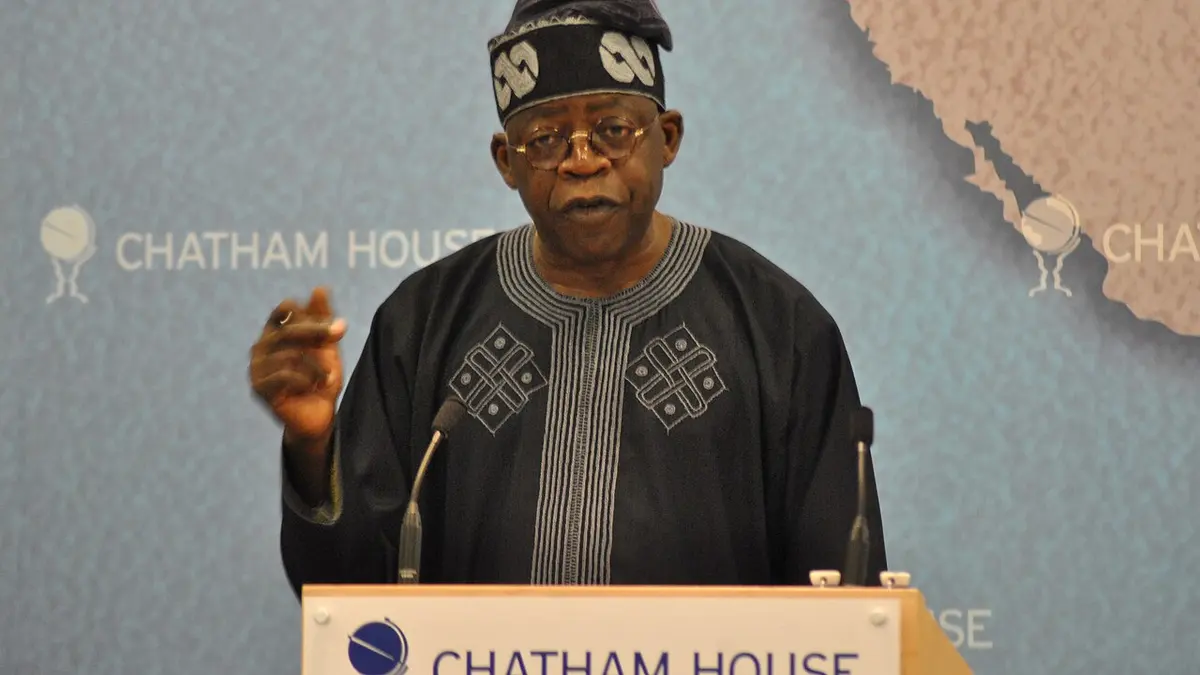
President Tinubu submits revised 2026 budget and laws to the House
On 24 November 2026, President Bola Tinubu presented a revised federal budget for the 2026 financial year to the House of Representatives. The new plan, amounting to N65.176 trillion, represents a reduction of N3.15 trillion from the previously approved N68.323 trillion. The budget was transmitted in a letter dated 20 November addressed to Speaker Tajudeen Abbas and read on the House floor on the same day. In the same week, the president also forwarded a revised edition of the Laws of the Federation (LFN 2025) to the House. The updated compendium contains 664 principal enactments and 731 subsidiary legislations, following a review of 932 federal statutes. The letter, dated 18 November, was addressed to Speaker Abbas and requests expeditious consideration of the revised laws. Both submissions were made in the context of the 10th House of Representatives, the current legislative body in Nigeria.
Background
The 2026 budget was originally approved at N68.323 trillion. According to the correspondence, President Tinubu stated that the adjustments were made to ensure the fiscal plan matched the administration's current liabilities and financial capacity. The updated strategy maintains the anticipated federal income, which incorporates returns from state-controlled businesses, at N33.720 trillion and maintains the fiscal deficit, including project‑tied loans, at N31.457 trillion, which is 5.64 percent of gross domestic product. The government’s planned borrowing remains unchanged at N29.218 trillion, split between N18.428 trillion domestic and N10.790 trillion foreign borrowing. Furthermore, the amended budget regularizes specific spending by the Nigerian National Petroleum Company Limited (NNPCL), modifies debt repayment duties, acknowledges issued capital warrants and supplementary pledges, and sets aside funds for reimbursements to Ministries, Departments, Agencies (MDAs) and Special Accounts. Capital provisions mainly cover already warranted amounts, with a limited number of new capital and overhead provisions for priority national interventions. These measures are intended to facilitate major highway construction, safeguard crop output, lower manufacturing expenses, boost harvest quantities and market reach, and mitigate risks associated with water scarcity. The adjusted structure assigns N26.232 trillion for aggregate capital expenditure.
The legal review that produced the LFN 2025 was carried out by a specialised committee established on 24 October 2024 under the supervision of the Attorney‑General and Minister of Justice. The committee was tasked with reviewing, updating and consolidating federal enactments and subsidiary legislation, eliminating obsolete or spent laws, resolving statutory inconsistencies and overlaps, and producing an authoritative edition of the laws. The last official consolidation of Nigeria’s federal laws was in 2004. Since then, numerous new statutes and substantial amendments have been enacted, creating a significant accumulation of subsidiary legislation.
Why it matters
The revised budget directly affects the allocation of public funds across sectors. By reducing aggregate expenditure by N3.15 trillion, the government aims to align spending with available resources while maintaining the same fiscal deficit level. The unchanged borrowing plan means that the government will continue to raise N29.218 trillion in new debt, with a mix of domestic and foreign borrowing. The budget also includes specific interventions to support infrastructure, agriculture and water security, which are critical for economic growth and food security. The updated laws compendium has implications for the judiciary, legal practitioners, government institutions, investors and the public. By consolidating 664 principal enactments and 731 subsidiary legislations, the revised edition seeks to provide a dependable legal reference, enhance legal certainty, improve institutional efficiency and increase public confidence in the justice system. The removal of 268 obsolete or spent laws is intended to reduce statutory clutter and clarify the legal framework.
What happens next
The House of Representatives will consider both the revised budget and the updated laws. The budget requires approval before it can be implemented, while the laws compendium requires parliamentary approval to become official. No specific dates for the next steps are mentioned in the sources, but the letters indicate that the president has requested expeditious consideration of both documents. The outcomes will determine the allocation of resources for 2026 and the legal framework that will guide federal legislation and governance for the coming years.
Sources
Spotted an error? · Corrections policy
Related stories
President Tinubu seeks House approval for N10.79 trillion external borrowing to fund 2026 budget deficit
President Bola Tinubu has written to the House of Representatives asking for statutory approval of a N10.79 trillion ($7.7 billion) external borrowing plan outlined in the 2026 Appropriation Act, aimed at partially financing the 2026 budget deficit and supporting infrastructure and social projects.
Photo: Chatham House / Wikimedia Commons · CC BY 2.0
LAS News Desk · 12 Nov 2026, 12:07 WAT · 3 sources
Speaker Abbas’ inclusive style boosts opposition support for Tinubu’s 2027 bid
House of Representatives Deputy Spokesperson Philip Agbese says Speaker Tajudeen Abbas’ non‑partisan leadership has drawn opposition lawmakers into backing President Bola Tinubu’s re‑election campaign.
LAS News Desk · 10 Nov 2026, 15:46 WAT · 2 sources
President Tinubu to table 2027 budget and $21.7bn investment plan before year‑end
President Bola Tinubu will present the 2027 Appropriation Bill to Nigeria’s National Assembly before 31 December, alongside a $21.7 billion multi‑year investment proposal focused on transport infrastructure and social programmes.
Photo: Chatham House / Wikimedia Commons · CC BY 2.0
LAS News Desk · 29 Oct 2026, 08:45 WAT · 4 sources
Atiku demands audit of N10bn Ebola fund amid Abuja case concerns
Former Vice President Atiku Abubakar has called for a public audit of the N10 billion Ebola preparedness fund, alleging that the recent Abuja case exposed surveillance failures and inadequate protection for health workers.
LAS News Desk · 26 Oct 2026, 16:15 WAT · 2 sources
Bayelsa Governor Douye Diri tables ₦1.24 trillion 2027 budget with 68% earmarked for capital projects
Governor Douye Diri presented a ₦1.242 trillion appropriation bill for 2027 to the Bayelsa State House of Assembly, allocating roughly ₦841 billion to capital expenditure and outlining major infrastructure and social sector allocations.
LAS News Desk · 4 Nov 2026, 11:45 WAT · 2 sources
Nigerian House Committee Gives Telecom CEOs One‑Week Deadline to Address Network Failures
The House of Representatives’ ad‑hoc committee on telecommunications has ordered the CEOs of major operators to appear before it within seven days to explain persistent service problems, warning of possible arrest warrants for non‑compliance.
LAS News Desk · 21 Oct 2026, 22:46 WAT · 5 sources
More Africa/Nigeria news ›
- Court voids Omo‑Agege’s NDC senatorial nomination for Delta Central
- Court of Arbitration for Sport reinstates Senegal as 2025 Africa Cup of Nations champions
- APC Urges Jigawa Opposition to Conserve Resources Ahead of 2027 Elections
- SEC clears Dangote Refinery share allocation after oversubscribed IPO
- Delta NDC campaign attack kills six, police probe police conduct