
President Tinubu seeks House approval for N10.79 trillion external borrowing to fund 2026 budget deficit
President Bola Tinubu has written to the House of Representatives asking for statutory approval of a N10.79 trillion ($7.7 billion) external borrowing plan outlined in the 2026 Appropriation Act, aimed at partially financing the 2026 budget deficit and supporting infrastructure and social projects.
By LAS News Desk · Published 12 Nov 2026, 12:07 WAT
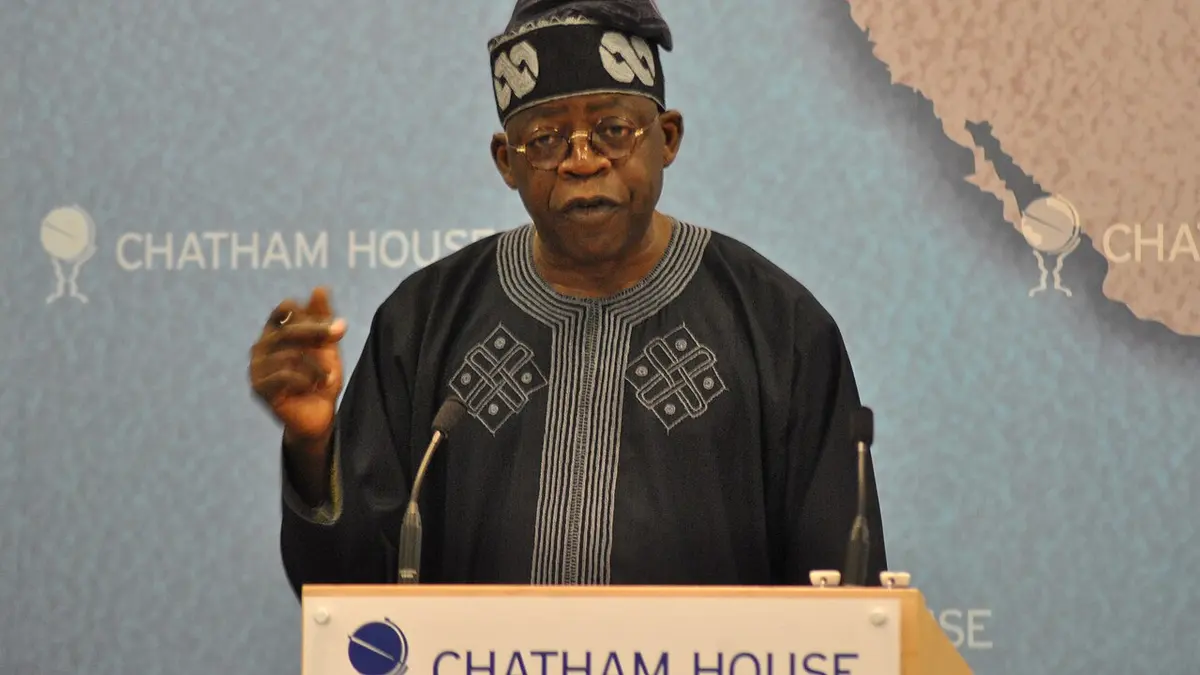
President Bola Tinubu has formally requested that the 10th House of Representatives approve the implementation of an external borrowing programme valued at N10.79 trillion (approximately $7.70 billion). The request, conveyed in a letter read on the House floor by Speaker Abbas Tajudeen on 28 November 2026, is presented as part of the 2026 Appropriation Act and is intended to partially finance the 2026 budget deficit, which the President estimates at about N31.4 trillion.
The borrowing request is separate from a broader supplementary external borrowing rolling plan that totals $20.52 billion and €1.045 billion for the 2026–2027 period. According to Speaker Tajudeen, the N10.79 trillion request satisfies statutory requirements under the Debt Management Office Establishment Act 2003, which mandates parliamentary approval of the terms and conditions of external loans. The Speaker emphasized that this request does not supersede any earlier borrowing proposals and remains subject to its own legislative scrutiny.
Background
The 2026 Appropriation Act, passed earlier in the year, authorised new borrowings of N29.2 trillion to address a projected budget deficit of N31.4 trillion. Of this amount, N18.4 trillion is earmarked for domestic borrowing while N10.79 trillion is allocated for external borrowing. According to the President's correspondence, the necessary external capital will be secured via a combination of Eurobond sales, both concessional and commercial borrowing from multilateral and bilateral bodies, IMF credit lines, transitional funding, loan syndicates, and direct loans from global financial organizations. Tinubu highlighted the speed of Eurobond issuance as a key advantage and indicated that all financing options will be pursued concurrently, weighing costs, benefits and access timelines.
During a plenary meeting, Speaker Tajudeen presented the petition to the assembly, prompting the House to delegate the issue to the joint committees responsible for Aids, Loans and Debt Management, as well as Finance, to proceed with legislative measures. This procedural step follows a similar pattern observed in previous borrowing authorisations, such as the Senate’s approval of the 2025–2026 borrowing framework in July 2025.
Why it matters
Approval of the N10.79 trillion external borrowing is crucial for the government’s ability to fund projects outlined in the 2026 budget, including infrastructure development, agriculture, healthcare, education, security and employment generation. The President argued that the external financing will reinforce macro‑economic gains recorded to date and enable the timely execution of capital programmes.
The borrowing plan also has implications for Nigeria’s public debt profile. The external component represents a significant addition to the country’s external debt stock, and the mix of financing sources—particularly Eurobond issuance—could affect debt servicing costs and foreign exchange exposure. Lawmakers, as well as multilateral lenders and investors, are therefore interested in the terms and conditions attached to the loans, which the Debt Management Office is required to disclose under the 2003 Act.
What happens next
After Speaker Tajudeen presented the President's written communication, the proposal was sent to the joint committees overseeing Aids, Loans and Debt Management, and Finance. These committees are expected to examine the proposal, assess the proposed terms, and report back to the House for a resolution. The House’s decision will determine whether the executive can proceed with the outlined financing channels and commence the disbursement of funds for the 2026 budget projects. No specific date for the committee’s report or the final House vote has been announced in the available sources.
Sources
Spotted an error? · Corrections policy
Related stories
Speaker Abbas’ inclusive style boosts opposition support for Tinubu’s 2027 bid
House of Representatives Deputy Spokesperson Philip Agbese says Speaker Tajudeen Abbas’ non‑partisan leadership has drawn opposition lawmakers into backing President Bola Tinubu’s re‑election campaign.
LAS News Desk · 10 Nov 2026, 15:46 WAT · 2 sources
Bayelsa Governor Douye Diri tables ₦1.24 trillion 2027 budget with 68% earmarked for capital projects
Governor Douye Diri presented a ₦1.242 trillion appropriation bill for 2027 to the Bayelsa State House of Assembly, allocating roughly ₦841 billion to capital expenditure and outlining major infrastructure and social sector allocations.
LAS News Desk · 4 Nov 2026, 11:45 WAT · 2 sources
Tinubu seeks Senate approval for $20.5bn external borrowing to cover funding gaps
President Bola Tinubu has requested the Nigerian Senate to approve over $20 billion in external loans to address deficits in the 2026-2027 supplementary borrowing plan, a move criticized by opposition figures.
Photo: Chatham House / Wikimedia Commons · CC BY 2.0
LAS News Desk · 28 Oct 2026, 08:17 WAT · 1 source

Nigerian House Committee Gives Telecom CEOs One‑Week Deadline to Address Network Failures
The House of Representatives’ ad‑hoc committee on telecommunications has ordered the CEOs of major operators to appear before it within seven days to explain persistent service problems, warning of possible arrest warrants for non‑compliance.
LAS News Desk · 21 Oct 2026, 22:46 WAT · 5 sources
Nigeria's House of Representatives calls for swift release of Ebola emergency funds
Following a confirmed Ebola case in Abuja, the lower chamber urged the federal government to release earmarked health emergency money and boost preventive measures, citing gaps in awareness and supplies.
LAS News Desk · 21 Oct 2026, 14:15 WAT · 2 sources
Abubakar Kabir Bichi’s Role as Appropriation Committee Chair Highlights Kano’s Influence in Parliament
Hon. Abubakar Kabir Bichi, representing Bichi Federal Constituency, serves as Chairman of the House Committee on Appropriation, a position historically held by Kano legislators three times before his tenure, underscoring the state’s parliamentary weight.
LAS News Desk · 18 Oct 2026, 23:45 WAT · 2 sources
More Africa/Nigeria news ›
- Senate schedules on‑site visit to Ogun communities to probe army land dispute
- President Tinubu praises Dr Musa Aliyu’s election as chair of African Asset Recovery Forum
- Atiku’s media adviser challenges Defence Ministry’s use of official social media to promote Tinubu rally
- South African golfer and Kenyan chef detained at Lagos airport over 50kg cannabis shipment
- Tinubu Reaffirms Commitment to Uninterrupted Academic Calendars at FUTA Convocation