
Senate Sends State Police Bill to President, Calls for Operational Guidelines
Nigeria’s Senate has forwarded the Constitution (Sixth Alteration) Bill, 2026, establishing State Police Services, to President Bola Tinubu, while urging the creation of operational rules to prevent abuse. The move follows approvals by both Houses of Assembly and all state legislatures.
By LAS News Desk · Published 19 Nov 2026, 11:43 WAT

Senate Transmits State Police Bill to President
On 19 November 2026, the Nigerian Senate approved the transmission of the Constitution (Sixth Alteration) Bill, 2026, which creates State Police Services, to President Bola Tinubu for assent. The bill had already been passed by the House of Representatives on 23 July 2026 and had received the required two‑thirds majority in both chambers. The Senate also urged the president to expedite the National Policing Bill to the National Assembly so that operational guidelines can be drafted.
Senate Leader Senator Opeyemi Bamidele introduced a motion directing the Clerk to the National Assembly, Kamoru Ogunlana, to forward the amendment in accordance with the Authentication Act, 2004. The motion was seconded by Minority Leader Senator Abba Moro and supported by Deputy Senate President Senator Barau Jibrin.
Background
The Constitution (Sixth Alteration) Bill, 2026, proposes the establishment of State Police Services across Nigeria’s 36 states. The bill was approved by the Senate on 24 June 2026 and by the House of Representatives on 23 July 2026, both achieving the constitutionally required two‑thirds majority. All state Houses of Assembly also transmitted resolutions approving the amendment, satisfying Section 9(2) of the 1999 Constitution.
The move follows a long‑standing debate over decentralising policing. Previous administrations had considered the idea but had not implemented it. Senator Barau Jibrin highlighted that the current proposal is a collaborative policing structure designed to strengthen, rather than undermine, the Nigeria Police Force.
Security concerns such as terrorism, banditry, kidnapping, communal conflicts and other violent crimes have driven the push for state‑level policing.
Why it Matters
The establishment of State Police Services is seen as a way to improve local security response. Senator Abba Moro argued that the new arrangement would complement the existing security architecture and enhance the capacity of state governments to address threats within their jurisdictions.
However, the Senate also warned of potential abuse. Senator Opeyemi Bamidele and other senators urged the president to ensure safeguards are built into the operational guidelines. They called for clear definitions of the relationship between federal and state police authorities and for measures to prevent misuse of power.
President Bola Tinubu has been praised for providing political leadership that facilitated the bill’s passage. The upper chamber expressed gratitude for his backing and called on him to submit the National Policing Bill to lawmakers for review and rapid enactment.
What Happens Next
The Senate’s resolution calls for the president to transmit the National Policing Bill to the National Assembly. The bill will then be examined by the relevant committees before any further action. No specific dates for the next steps have been announced, but the Senate has emphasized the need for an expeditious process.
The resolution further noted that the lower house is required to obtain approval from at least two-thirds of state legislatures before sending any constitutional changes to the president for approval. The current bill has already met this requirement.
The development marks a significant milestone in Nigeria’s attempt to decentralise its policing architecture amid persistent security challenges.
Sources
Spotted an error? · Corrections policy
Related stories
Senate sets 15 November deadline for six states to approve State Police bill
The Senate has given Kano, Abia, Cross River, Niger, Oyo and Benue a deadline of 15 November to communicate their positions on the proposed State Police constitutional amendment, after 30 states have already approved it.
LAS News Desk · 4 Nov 2026, 18:16 WAT · 2 sources

Nigerian Senate Calls for Border Security Camps After Massacre in Taraba Community
Following an attack that killed around 80 people in Binnari, Taraba State, the Senate urged immediate deployment of security personnel and relief aid to border communities in Taraba, Plateau and Bauchi.
Photo: Kabusa16 / Wikimedia Commons · CC BY-SA 4.0
LAS News Desk · 29 Oct 2026, 07:43 WAT · 4 sources
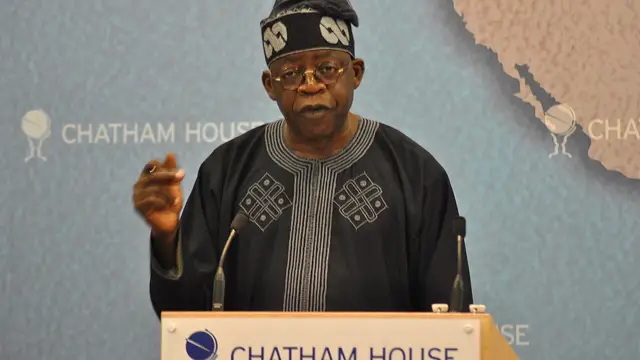
Atiku urges Senate to reject Tinubu's $7.7bn loan request, citing lack of project details and rising debt
Former Vice President Atiku Abubakar called on the Senate to refuse President Bola Tinubu’s request for a $7.7 billion external loan, warning that the borrowing adds to Nigeria’s debt burden without clear project allocations.
Photo: Chatham House / Wikimedia Commons · CC BY 2.0
LAS News Desk · 4 Nov 2026, 22:15 WAT · 8 sources

Nigerian Senate advances bill to decriminalise attempted suicide amid presidential opposition
The Senate has approved a second‑reading vote on legislation to remove criminal penalties for attempted suicide, though Senate President Godswill Akpabio continues to argue for imprisonment of survivors. The bill now moves to committee review.
Photo: Kabusa16 / Wikimedia Commons · CC BY-SA 4.0
LAS News Desk · 14 Oct 2026, 07:47 WAT · 2 sources

Nigerian Senate Sends State Police Constitutional Amendment to President Tinubu for Assent
On 18 November 2026, the Senate directed the National Assembly clerk to forward the Sixth Alteration Bill, amending the 1999 Constitution to create state police, to President Bola Tinubu for signature, after securing the required two‑thirds majority in both chambers and all 36 state assemblies.
Photo: Ovinuchi Prince Ejiohuo / Wikimedia Commons · CC BY-SA 4.0
LAS News Desk · 18 Nov 2026, 15:45 WAT · 7 sources
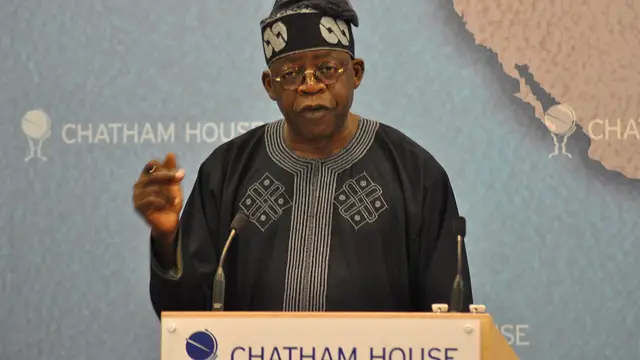
President Tinubu pushes bill to replace ASCON with new National School of Government
Bola Tinubu has asked the Nigerian Senate to approve a bill that would repeal the Administrative Staff College of Nigeria Act and establish a National School of Government, aiming to strengthen leadership development and policy delivery.
Photo: Chatham House / Wikimedia Commons · CC BY 2.0
LAS News Desk · 14 Oct 2026, 16:16 WAT · 2 sources
More Africa/Nigeria news ›
- Senate schedules on‑site visit to Ogun communities to probe army land dispute
- President Tinubu praises Dr Musa Aliyu’s election as chair of African Asset Recovery Forum
- Atiku’s media adviser challenges Defence Ministry’s use of official social media to promote Tinubu rally
- South African golfer and Kenyan chef detained at Lagos airport over 50kg cannabis shipment
- Tinubu Reaffirms Commitment to Uninterrupted Academic Calendars at FUTA Convocation