
Public‑health‑focused candidates win US midterms as voters react to disease outbreaks
Candidates who campaigned on public‑health issues, including Annie Andrews and Abdul El‑Sayed, secured victories in the 2026 US midterm elections, reflecting voter concern over rising measles cases and foodborne illness outbreaks.
By LAS News Desk · Published 9 Nov 2026, 13:09 WAT
Public‑health‑oriented politicians achieved notable success in the United States midterm elections held in early November 2026. Among the winners were Senator‑elect Annie Andrews and former Detroit health commissioner Abdul El‑Sayed, both of whom ran on platforms that highlighted healthcare affordability, reproductive rights and stronger disease‑prevention measures. Their victories were interpreted by observers as a direct response to a sharp increase in vaccine‑preventable illnesses such as measles, as well as a series of severe foodborne‑illness outbreaks that dominated public discourse in the weeks leading up to the vote.
Election analysts linked the outcomes to growing public frustration with policies advanced by the Trump administration since it took office in 2025. Julie Scofield, a coordinator for the grassroots group Defend Public Health, described the results as a “complete repudiation” of the incumbent administration’s health agenda. Voters in several key states, including Texas, expressed concerns about access to essential services such as vaccinations and abortion care, influencing their ballot choices.
Background
The 2026 midterm cycle unfolded against a backdrop of escalating public‑health challenges. The United States recorded its worst measles year since the early 1990s, with case numbers surpassing previous peaks. Simultaneously, multiple states reported large‑scale foodborne‑illness incidents that strained local health departments. These trends heightened the visibility of candidates who promised to prioritize disease surveillance, vaccine distribution and broader health‑care reform.
Annie Andrews, a former state legislator from South Carolina, centered her campaign on expanding Medicaid, protecting reproductive health services and establishing stronger mechanisms for outbreak response. Abdul El‑Sayed, a former public‑health official in Michigan, emphasized the need for federal investment in epidemiological research and the repeal of recent restrictions on vaccine mandates. Their platforms resonated with voters who cited personal experiences with the health system, such as Mallory Harris, an Austin‑based scientist who delayed family planning due to concerns over vaccine access and the lack of paid parental leave in Texas.
Why it matters
The election outcomes are poised to influence policy at multiple levels of government. At the federal level, the influx of public‑health‑focused legislators may shift congressional debates toward expanding funding for the Centers for Disease Control and Prevention and revisiting the administration’s stance on vaccine requirements. State governments, particularly those that elected Andrews and other health‑oriented officials, are expected to consider legislation that improves access to preventive care, strengthens reporting systems for foodborne illnesses and safeguards reproductive health services.
Stakeholders in the healthcare sector, including hospitals, insurers and advocacy groups, are closely monitoring the developments. The potential rollback of policies that limited vaccine mandates could affect employer‑based health plans, while expanded Medicaid eligibility may increase enrollment numbers and alter funding streams for community health providers.
What happens next
According to the Guardian report, newly elected officials are preparing to introduce a series of bills in the upcoming legislative sessions, though specific timelines were not detailed. The article noted that public‑health organisations plan to lobby for immediate action on measles vaccination campaigns and to address gaps in paid parental leave, particularly in states like Texas where such benefits remain absent. Further reporting is expected as the new Congress convenes and state legislatures begin drafting health‑related legislation.
Sources
- ‘A complete repudiation’: public health won big in US midterm elections — Guardian Health
Spotted an error? Report a correction · Corrections policy
Related stories
CDC Deputy Director Jennifer Shuford to Resign After Six Months
Dr Jennifer Shuford, the CDC's deputy director and chief medical officer, will resign in November following a six-month tenure, citing personal reasons.
LAS News Desk · 28 Oct 2026, 14:46 WAT · 1 source
Pro-regime crowds in Tehran burn banner of US leaders after Republican defeat in US midterms
Following the US midterm elections that saw the Republican Party suffer a heavy loss, supporters of Iran’s regime gathered in Tehran’s Enghelab Square to burn a large banner depicting Donald Trump, JD Vance, US envoy Steve Witkoff and Israeli Prime Minister Benjamin Netanyahu, while officials hailed the result as a rebuke of US policy toward Iran.
LAS News Desk · 7 Nov 2026, 14:16 WAT · 1 source
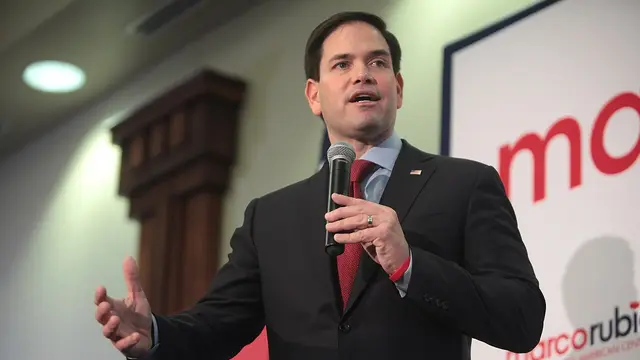
Marco Rubio Mulls Resignation Amid Trump Administration After US Midterm Losses
Reports suggest US Secretary of State Marco Rubio is weighing a departure from President Donald Trump’s team following the Republican defeat in the midterms, though the White House denies the claim.
Photo: Gage Skidmore from Peoria, AZ, United States of America / Wikimedia Commons · CC BY-SA 2.0
LAS News Desk · 6 Nov 2026, 05:45 WAT · 1 source

Democrats seize control of US Senate and House in 2026 midterm sweep
The 2026 US midterm elections gave Democrats majorities in both chambers, ending Republican dominance for the remainder of Donald Trump's term and prompting varied reactions across the country.
LAS News Desk · 4 Nov 2026, 21:15 WAT · 10 sources

US midterm outcomes spur new limits on data centre expansion and AI regulation
The 2026 US midterm elections resulted in several measures restricting data centre growth and calls for tighter AI oversight, reflecting voter concerns over cost of living and technology impacts.
LAS News Desk · 8 Nov 2026, 16:15 WAT · 1 source
Trump blames ballot absence after Democrats seize Congress in 2026 midterms
Donald Trump claimed he would have won a landslide if his name appeared on the ballot following the November 3, 2026 midterm elections, which gave Democrats control of both House and Senate, highlighting his desire to link the vote to his personal popularity.
Photo: Ali Shaker/VOA / Wikimedia Commons · Public domain
LAS News Desk · 7 Nov 2026, 06:09 WAT · 1 source
More Health news ›
- Women with cancer report treatment‑induced menopause and call for better support
- Wales plans ban on energy drinks for under-16s following England's move
- New York declares disaster emergency after child dies from measles, first fatality in three decades
- Betsi Cadwaladr health board proposes closing three urgent primary care centres by 2027
- MS patient endures severe pain as UK-wide Nabilone shortage persists