
President Tinubu’s administration urges private sector to draft funding and implementation plan for Nigeria’s state police
President Bola Tinubu’s team has asked the Nigerian Economic Summit Group, chambers of commerce and business bodies to produce detailed proposals on financing, managing and partnering on the proposed state police, highlighting the link between security and economic growth.
By LAS News Desk · Published 28 Oct 2026, 06:15 WAT
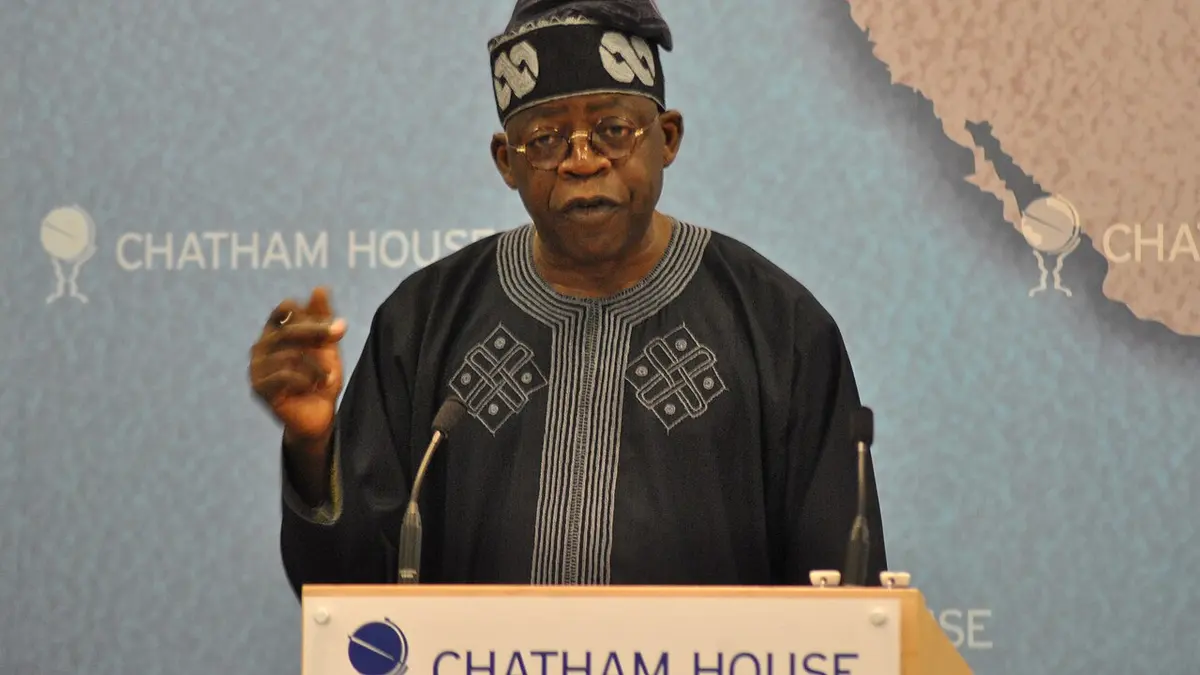
The Nigerian presidential office has officially requested that the structured private sector develop a detailed plan for funding and executing the planned state police framework. Femi Gbajabiamila, who serves as the President's Chief of Staff and leads the Presidential Working Group on the National Policing Bill, issued this directive during a session titled 'Security, Stability and Economic Resilience' at the 32nd Nigerian Economic Summit held in Abuja on Monday, 28 October 2026. Gbajabiamila directed the Nigerian Economic Summit Group (NESG), trade bodies, and other commercial organizations to formulate actionable plans addressing financial resources, organizational oversight, and responsible collaborations to facilitate the decentralization of law enforcement.
As reported in the official statements, the presidential administration considers the establishment of state police forces a chance for the corporate sector to assist in developing security structures that safeguard capital, create employment, and strengthen economic stability. Gbajabiamila urged business leaders to engage governors and legislators, stressing that effective local policing is linked to employment creation and investment decisions. He warned that any private‑sector contribution must be transparent, subject to published accounts and independent scrutiny, and must never compromise police independence or allow donations to influence investigations.
Background
The push for a state police system forms part of President Bola Tinubu’s broader security reform agenda. The National Policing Bill, which seeks to decentralise policing powers from the federal level to the states, has been under legislative consideration for several months. The 32nd Nigerian Economic Summit, a yearly gathering of policymakers and business leaders, provided the platform for the latest announcement. Gbajabiamila pointed out that the current lack of security has already placed a massive financial burden on companies via interrupted logistics, cancelled investments, delayed industrial growth, and missed commercial prospects. He argued that the private sector’s experience in managing institutions, controlling expenditure and assessing risk could improve the design and implementation of the new policing framework.
The presidency’s request builds on earlier statements that public funding must remain reliable and that private contributions should focus on expertise such as communications infrastructure, equipment maintenance and financial planning, rather than merely supplying vehicles or uniforms. Gbajabiamila stressed that sustainable financing is essential, noting that a state must be able to fund personnel salaries, professional training and ongoing operational maintenance beyond the initial procurement of equipment.
Why it matters
The proposed state police system is positioned as a catalyst for economic growth. By improving local security, the government hopes to reduce the costs businesses incur from insecurity, thereby encouraging investment and job creation. The private sector’s involvement could shape how resources are allocated, ensuring that funding mechanisms are transparent and that oversight mechanisms are robust. If successful, the partnership model could set a precedent for public‑private collaboration in other sectors of public service delivery.
Stakeholders, including business leaders, state governors and legislators, are expected to assess the proposals for financing and oversight. The emphasis on published accounts and independent scrutiny aims to safeguard the independence of police institutions while leveraging private‑sector expertise. The blueprint’s development is also intended to feed into the legislative process, providing lawmakers with concrete models for funding and managing state police operations.
What happens next
Gbajabiamila asked the NESG and associated business groups to take the engagement beyond the summit, develop detailed proposals and present them to both the legislative process and state governments. The presidency indicated that these proposals will be examined as the National Policing Bill moves through parliament. No specific timeline for submission or approval of the blueprint was provided, but the call for immediate action suggests that the government expects the private sector to begin work promptly. The next steps will involve discussions with governors and legislators to align the financing models with state capacities and to ensure that any partnership adheres to the legal and accountability frameworks outlined by the presidency.
Sources
Spotted an error? Report a correction · Corrections policy
Related stories

Five Nigerian state assemblies endorse constitutional amendment for state police
On 20 October 2026, the legislatures of Taraba, Kwara, Delta, Plateau and Enugu voted to approve a constitutional amendment that would permit the creation of state police forces, moving the reform closer to national implementation.
LAS News Desk · 20 Oct 2026, 17:45 WAT · 5 sources

Bank of Industry secures $30m credit line with French development bank to fund Nigeria’s creative sector
The Bank of Industry and France’s Agence Française de Développement have signed a $30 million facility in Abuja to provide affordable financing for music, film, fashion, design and gaming businesses, with a focus on women‑ and youth‑led firms.
LAS News Desk · 28 Oct 2026, 04:46 WAT · 2 sources

Nigeria’s NEC backs 90‑day plan to curb living costs and boost food affordability
Nigeria's National Economic Council has endorsed a 90-day action plan to improve food affordability and reduce living costs, alongside a new national dashboard for project tracking.
LAS News Desk · 25 Oct 2026, 16:46 WAT · 7 sources
Nigeria mourns death of Prof. Kamene Okonjo, mother of WTO chief Ngozi Okonjo‑Iweala
Prof. Kamene Okonjo, a 96‑year‑old sociologist and matriarch of the Ogwashi‑Uku royal family, died on Friday. President Bola Tinubu and the Okonjo family issued condolences, highlighting her scholarly legacy and advocacy for women.
LAS News Desk · 26 Oct 2026, 02:15 WAT · 2 sources
Senator Umeh questions destination of previous federal loan funds amid new borrowing request
Senator Victor Umeh has challenged President Bola Tinubu's request for $20.5 billion in new external loans, asking where previously approved funds went given that three budgets remain unfunded.
LAS News Desk · 28 Oct 2026, 04:16 WAT · 2 sources
Atiku Abubakar urges Nigeria’s Assembly to halt Tinubu’s $20.52bn loan request
Former Vice‑President Atiku Abubakar has called on the National Assembly to suspend approval of President Bola Tinubu’s supplementary external borrowing plan, demanding a full project breakdown before any funds are released.
Photo: Chatham House / Wikimedia Commons · CC BY 2.0
LAS News Desk · 28 Oct 2026, 00:15 WAT · 9 sources
More Africa/Nigeria news ›
- Five siblings killed in Gombe water tanker and school tricycle collision
- Tinubu seeks National Assembly approval for $20.5bn, €1.04bn in new foreign loans
- President Tinubu proposes amendment to enable transfer of Nigerians convicted abroad to serve sentences at home
- Dangote Refinery IPO draws applications from 120 nations, achieving full African participation
- TotalEnergies completes $800m sale of 10% stake in Nigeria’s Renaissance licences