
Nigeria's NNPC posts September profit of $378 million on $3.4 billion revenue
The state oil firm recorded revenue of N4.61 trillion (about $3.4 billion) and a profit after tax of N509 billion (approximately $378 million) in September, with hydrocarbon output rising to 3.04 million barrels of oil equivalent per day.
By LAS News Desk · Published 4 Nov 2026, 12:16 WAT
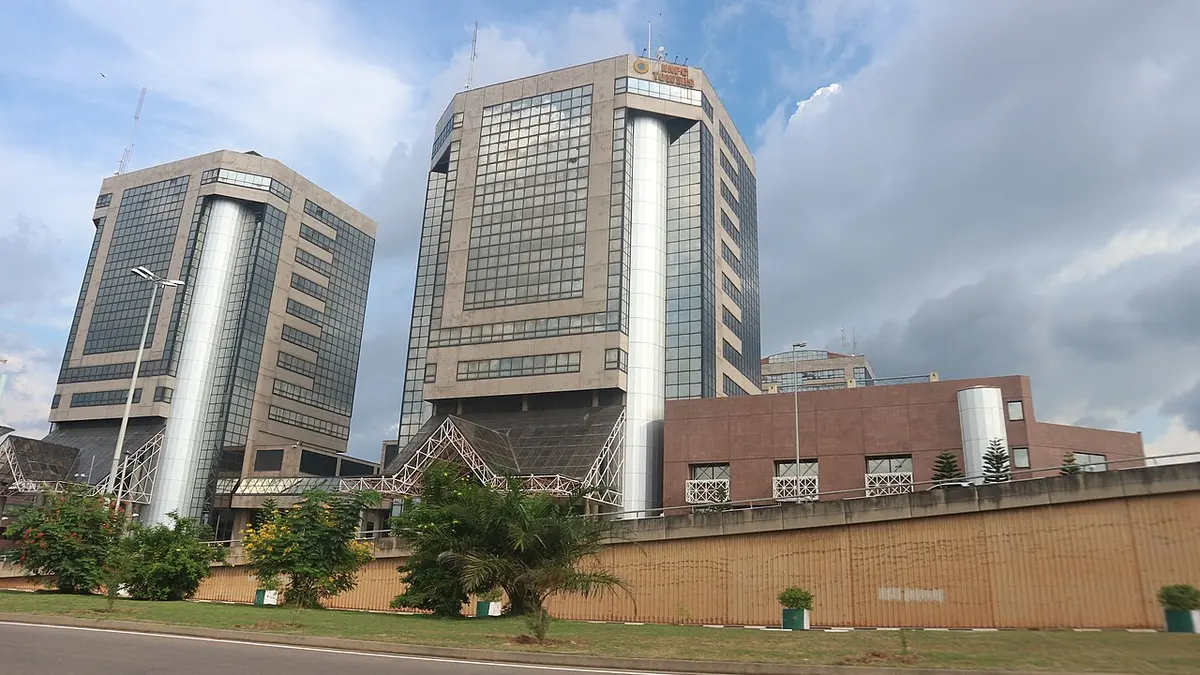
Nigeria's state‑owned oil company, the Nigerian National Petroleum Company (NNPC) Limited, announced its financial results for September 2026 on 4 November. The firm posted revenue of N4.61 trillion, equivalent to roughly US$3.4 billion, and a profit after tax of N509 billion, or about US$378 million. Monthly crude output rose to 3.04 million barrels of oil equivalent per day (mmboe/d), surpassing the previous figure of 3.01 mmboe/d in August.
The September figures were released in the company's Monthly Report Summary. Crude oil and condensate output stood at 1.70 million barrels per day, while natural gas production was recorded at 7,789 million standard cubic feet per day, a slight dip from 7,841 mmscf/d in the previous month. Upstream pipeline availability was reported at 100 percent, and petrol availability at NNPC Retail Limited stations was 54 percent.
Background
NNPC, established as the national oil corporation of Nigeria, manages the country's upstream, midstream and downstream petroleum activities. As stated by the corporation, the results for September were driven by the resumption of operations at the Obodo field within Oil Mining Lease (OML) 150 and the recovery of output from other properties. Earlier in 2025, NNPC's audited financial statements showed a 32.7 percent rise in profit after tax to N7.18 trillion, although revenue fell by 23.4 percent to N3 trillion.
The enterprise has encountered various operational hurdles, such as unexpected halts resulting from facility reliability concerns, underground complications, pipeline leaks, local demonstrations, and mechanical breakdowns. Limitations in storage capacity and tank-top facilities, combined with interruptions to export systems, have further restricted production levels. In response, NNPC outlined plans to restore shut‑in wells, optimise production, carry out well interventions, and implement preventive maintenance to improve facility reliability. The company also intends to strengthen community engagement and address storage and export bottlenecks.
Why it matters
The September results are significant for several stakeholder groups. For the Nigerian government, NNPC's profitability contributes to fiscal revenues and supports budgetary planning. The increase in hydrocarbon production demonstrates the company's capacity to boost output despite operational setbacks, which is crucial for maintaining Nigeria's position as Africa's largest oil producer.
Investors and potential shareholders are watching NNPC's consideration of a partial equity sale. The company has signalled an intention to list between 5 percent and 10 percent of its equity through an initial public offering (IPO) focused on the domestic capital market. Such a move could attract capital, improve transparency and potentially enhance corporate governance.
Consumers are affected by the reported petrol availability of 54 percent at NNPC Retail stations, indicating ongoing supply constraints in the downstream sector. The full upstream pipeline availability suggests that upstream logistics are functioning, but downstream distribution challenges remain.
What happens next
NNPC stated that it will persist in reactivating idle wells and installations, enhancing output efficiency, and performing well interventions for the rest of 2026. Preventive maintenance programmes are slated to address facility reliability, while efforts to resolve subsurface and flow‑line integrity issues are ongoing.
The company also plans to advance its IPO preparations, with the proposed listing expected to target Nigeria's domestic capital market. No specific timeline for the offering was disclosed in the September report.
The September performance, while showing improved production and profitability, also highlights persistent infrastructure and community challenges that NNPC must manage to sustain growth and meet domestic fuel demand.
Sources
Spotted an error? Report a correction · Corrections policy
Related stories
TotalEnergies completes $800m sale of 10% stake in Nigeria’s Renaissance licences
The French company has sold its 10% non‑operated interest in 15 oil licences of the Renaissance joint venture to Vaaris for $800m, retaining full economic interest in three gas licences that supply half of Nigeria LNG.
LAS News Desk · 28 Oct 2026, 04:46 WAT · 2 sources

AIICO Insurance posts 27% rise in nine‑month pre‑tax profit on stronger insurance and investment income
AIICO Insurance Plc reported a 27.3% increase in consolidated pre‑tax profit to N19.42 billion for the nine months ended 30 September 2026, driven by higher insurance revenue and investment returns, despite higher service expenses.
LAS News Desk · 1 Nov 2026, 10:53 WAT · 5 sources
PRP candidate Donald Duke says security costs outpace Nigeria's oil production expenses
Donald Duke, the People's Redemption Party presidential hopeful, argues that Nigeria spends as much as $15 per barrel on security, pushing total oil costs to $25‑$45 and inflating petrol prices, and calls for reforms to lower fuel costs.
LAS News Desk · 16 Oct 2026, 12:15 WAT · 2 sources

Nigerian Exchange Group and United Capital Report Strong Nine‑Month Earnings, While Dangote Cement Posts 31% Profit Rise
NGX Group posted N20.6bn pre‑tax profit and United Capital posted N41.58bn, both driven by higher fees and trading income. Dangote Cement’s nine‑month profit rose 31% to N974.79bn, pushing its shares above N1,000.
LAS News Desk · 28 Oct 2026, 10:16 WAT · 4 sources

Nigerian Bonny Light rises to $115 a barrel amid heightened Strait of Hormuz attacks
Bonny Light crude reached $115 a barrel on 24 October 2026, driven by supply concerns and a surge in attacks on shipping in the Strait of Hormuz. The price move reflects geopolitical risk and a tightening of Middle Eastern supply.
LAS News Desk · 24 Oct 2026, 23:15 WAT · 1 source
Bayelsa Governor Douye Diri tables ₦1.24 trillion 2027 budget with 68% earmarked for capital projects
Governor Douye Diri presented a ₦1.242 trillion appropriation bill for 2027 to the Bayelsa State House of Assembly, allocating roughly ₦841 billion to capital expenditure and outlining major infrastructure and social sector allocations.
LAS News Desk · 4 Nov 2026, 11:45 WAT · 2 sources
More Africa/Nigeria news ›
- President Tinubu recounts US taxi driving as inspiration for Nigeria's student loan expansion
- South Africans cast votes in municipal elections amid mounting frustration over services and ANC decline
- Education Minister Alausa Defends Tinubu’s Academic Record, Calls President a Genius
- Education Minister Alausa predicts Tinubu’s 2027 re‑election on record of reforms
- Akwa Ibom appoints 4,000 new civil servants to address vacancies, governor says