
Iran’s Supreme Leader Calls for Overhaul of Intelligence Ministry After Security Gaps Exposed
Iran’s Supreme Leader Ayatollah Mojtaba Khamenei has ordered a restructuring of the country’s intelligence apparatus, urging swift appointment of a permanent minister once the Guardian Council reviews the new legislation, parliamentary speaker Mohammad Baqer Qalibaf said.
By LAS News Desk · Published 29 Nov 2026, 14:12 WAT
Iran’s Supreme Leader Ayatollah Mojtaba Khamenei has instructed a comprehensive reform of the nation’s intelligence ministry, parliamentary speaker Mohammad Baqer Qalibaf announced on Sunday. The directive follows a series of incidents that, according to officials, revealed significant weaknesses in Tehran’s security and intelligence structures. Qalibaf, speaking in a video shared on Telegram, urged the government to avoid further delays in appointing a permanent intelligence minister once the proposed overhaul legislation clears a review by the Guardian Council, the constitutional watchdog.
The call for reform comes after the death of Esmail Khatib, the last serving intelligence minister, who was killed in an Israeli strike on 18 March 2026. Khatib, a hard‑line cleric who had worked in the office of former Supreme Leader Ayatollah Ali Khamenei before leading the civilian intelligence apparatus from August 2021, has not yet been succeeded. The vacancy and the recent security breaches have heightened pressure on Iran’s leadership to restructure the ministry.
Background
Iran’s intelligence challenges have been highlighted by several high‑profile incidents over the past few years. In 2020, Israeli operatives assassinated nuclear scientist Mohsen Fakhrizadeh, an event that underscored the reach of foreign intelligence services inside Iran. The pattern continued with the 2024 killing of Hamas leader Ismail Haniyeh in Tehran, further exposing vulnerabilities.
The most recent demonstration of Israeli penetration occurred during the twelve‑day conflict in June 2025, when Israeli agents allegedly assisted in targeting Iranian air defences, missile launchers and senior military commanders. These operations, according to Iranian officials, illustrated deep gaps in the country’s counter‑intelligence capabilities.
Parliament initially requested the executive branch to draft a bill restructuring the intelligence ministry. After experiencing delays, the legislature took up the issue itself. Lawmakers approved the general outline of the bill on 29 November 2026 and began debating specific provisions. The draft seeks to broaden eligibility for the intelligence minister’s post, allowing candidates who are not clerics but possess a master’s degree, relevant expertise, and at least ten years of middle‑ or senior‑management experience in intelligence affairs. Candidates qualified in ijtihad, the independent Islamic legal reasoning, will also remain eligible.
Why it matters
The overhaul is significant for several reasons. First, the intelligence ministry plays a central role in safeguarding Iran’s national security, particularly amid ongoing regional tensions and the threat of foreign covert actions. A more robust leadership structure could enhance coordination across security agencies and improve response to external threats.
Second, the change in eligibility criteria may open the post to a wider pool of technocrats, potentially shifting the ministry’s culture away from exclusively clerical leadership. This could affect internal power dynamics within Iran’s political system, where religious authority traditionally intertwines with state functions.
Third, the swift appointment of a permanent minister is seen as essential to maintain continuity and authority within the intelligence community. Prolonged vacancies risk further erosion of operational effectiveness and could embolden adversaries.
What happens next
The proposed legislation now awaits review by the Guardian Council, which is responsible for ensuring compliance with the constitution. Once the council completes its assessment, the parliament is expected to move forward with the appointment process for a new intelligence minister. Qalibaf has emphasized that the government should not postpone this step, signalling a desire for rapid implementation.
No specific individual has been named as a potential successor to Esmail Khatib, and the parliament’s broadened eligibility criteria suggest that several qualified candidates may emerge. The outcome of the Guardian Council’s review and the subsequent ministerial appointment will determine how quickly Iran can address the security gaps highlighted by recent incidents.
The reform effort reflects Tehran’s broader strategy to fortify its intelligence capabilities in the face of persistent external pressures and internal demands for more effective governance of security affairs.
Sources
- Iran's supreme leader orders intelligence ministry overhaul — Al-Monitor
- Iran's supreme leader orders intelligence ministry overhaul — Straits Times World
Spotted an error? · Corrections policy
Related stories
US Intelligence Estimates Iran Holds 1,500‑2,500 Missiles, Influencing Washington’s Strike Plans
American officials say Iran still possesses a large missile arsenal, a figure that has shaped the Trump administration’s deliberations on potential strikes. Israeli and Iranian sources confirm the size and range of the stockpile.
LAS News Desk · 15 Nov 2026, 12:48 WAT · 2 sources
Iran forwards nuclear proposal to US via Qatar, pending seven demands
Iran has sent a nuclear proposal to the United States through Qatar, but will only discuss it after Washington meets seven conditions, a senior Iranian official said. The US is reviewing the offer while tensions remain high in the region.
LAS News Desk · 6 Nov 2026, 09:16 WAT · 2 sources
Iran’s security chief meets Putin to discuss post‑war security and gas pipeline
Iranian security chief Mohsen Rezaei met Russian President Vladimir Putin in Moscow to discuss regional security, a gas pipeline, and Iran's conditions for peace with the US.
LAS News Desk · 19 Nov 2026, 09:14 WAT · 4 sources
Iran reportedly employed SpaceX's Starlink internet service in attacks on US forces after US‑Israel strikes
Multiple outlets cite a Washington Post report that Iran used SpaceX's Starlink satellite internet, including its militarised variant Starshield, in operations against US troops following retaliatory strikes by the United States and Israel.
LAS News Desk · 29 Nov 2026, 13:41 WAT · 6 sources
Iran attacks trigger fire at Bahrain industrial site and strike US bases as tankers hit in Hormuz
Iran’s Revolutionary Guards said they launched missile‑and‑drone strikes on US military positions in Bahrain, while Bahrain reported a fire at a civilian industrial facility on Sitra Island; two tankers were also struck in the Strait of Hormuz.
LAS News Desk · 22 Nov 2026, 14:09 WAT · 5 sources
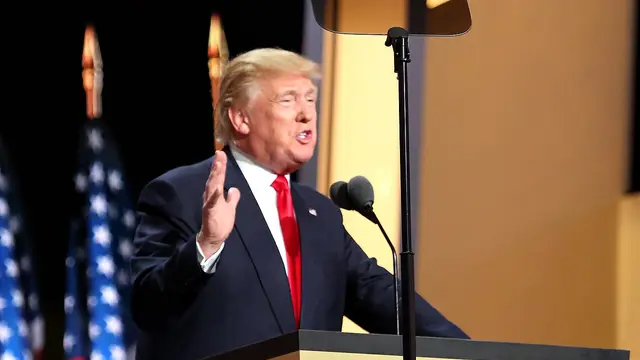
Trump says US ready to resume strikes on Iran while Qatar and Saudi Arabia favour diplomacy
President Donald Trump told Reuters on 9 November that Qatar and Saudi Arabia prefer a peaceful resolution to the Iran conflict, but the United States remains prepared to restart military strikes if required.
Photo: Ali Shaker/VOA / Wikimedia Commons · Public domain
LAS News Desk · 9 Nov 2026, 22:39 WAT · 3 sources
More World news ›
- Magnitude 5.0 quake off Manhattan Beach shakes Los Angeles, triggers airport disruption and refinery safety shutdowns
- Spanish journalist attacked by Israeli settlers during West Bank reporting
- Pakistan announces deployment of troops to Saudi Arabia amid heightened Houthi attacks
- Mike Love, co‑founder and longtime frontman of the Beach Boys, dies at 85
- Ukraine imposes media ban on reporting damage to critical infrastructure amid intensified Russian strikes