
Democrats’ 2026 midterm win fuels anti‑AI sentiment and pushes for datacenter moratoriums across the US
The 2026 midterm elections saw Democrats defeat Republican‑backed AI industry allies, leading to local bans on new datacenters in over 30 jurisdictions and signalling a shift toward anti‑AI populism ahead of the 2028 cycle.
By LAS News Desk · Published 9 Nov 2026, 12:39 WAT
The 2026 United States midterm elections resulted in a sweeping Democratic victory that many observers link to growing public unease over artificial intelligence (AI). Voters in more than 30 localities across nine states approved moratoriums or other restrictions on new AI datacenters, and the outcomes in states such as Texas, Ohio and Georgia mean that roughly 41 % of planned datacenter capacity now lies in jurisdictions whose governors‑elect support such bans. While AI was not the sole issue driving the election, exit polls cited by NBC indicated that 23 % of voters considered AI and datacenters “crucial” to their decision, with Democrats winning those voters 67 % to 30 %.
The election is being framed as a rebuke of former President Donald Trump, who has been described as the AI industry’s most powerful champion. The shift has prompted calls from some Democratic figures to hold industry leaders such as OpenAI CEO Sam Altman, Anthropic co‑founder Dario Amodei and Tesla/SpaceX owner Elon Musk accountable for the direction of AI development.
Background
The surge in anti‑AI sentiment follows a period of rapid expansion in AI infrastructure, particularly large‑scale datacenters that host powerful machine‑learning models. Critics argue that these facilities represent a “theft of labor” and pose existential risks. Anthropic’s chief executive Dario Amodei has cautioned that artificial intelligence serves as a broad alternative to human labor rather than a direct substitute for particular roles, whereas Sam Altman has earlier proposed that the technology might cause global catastrophe while simultaneously generating highly profitable enterprises. These statements have been amplified by media coverage and local organising campaigns that have targeted the perceived environmental and economic impacts of datacenters.
Local opposition grew markedly after 2024, when voters expressed concerns over cost‑of‑living, corruption, Iran and immigration, yet also flagged AI as an emerging priority. A review by The Guardian highlights that although the 2026 outcomes were not chiefly driven by artificial intelligence, the topic’s prominence has increased significantly, with political experts forecasting that it will dominate the 2028 electoral contest.
Why it matters
The moratoriums affect a substantial portion of the AI industry’s expansion plans. With 41 % of projected datacenter capacity now situated in states where new governors‑elect support bans, companies may need to relocate or redesign infrastructure projects, potentially delaying the rollout of advanced AI services. The political backlash also places pressure on leading AI firms to address labour‑displacement concerns and to demonstrate responsible development practices.
Stakeholders ranging from tech executives to local communities are directly impacted. Industry leaders such as Altman, Amodei and Musk face heightened scrutiny, while voters who identified AI as a decisive issue have shown strong partisan alignment with Democrats. The broader public may experience slower adoption of AI‑driven technologies, influencing sectors from healthcare to finance.
What happens next
According to the source, the political landscape suggests that AI will dominate the 2028 election cycle, implying that further legislative and regulatory actions are likely. Governors‑elect who have pledged to enforce moratoriums are expected to implement their policies over the coming months, though specific timelines were not detailed. The Democratic Party may continue to pursue accountability measures against AI executives, but concrete steps beyond the election rhetoric have not been outlined in the available material.
The evolving stance of voters and state officials indicates that the United States is entering a period of intensified debate over AI governance, with potential ramifications for both the technology sector and the broader electorate.
Sources
- Anti-AI populism is the future of American politics | Garrison Lovely — Guardian Business
Spotted an error? Report a correction · Corrections policy
Related stories
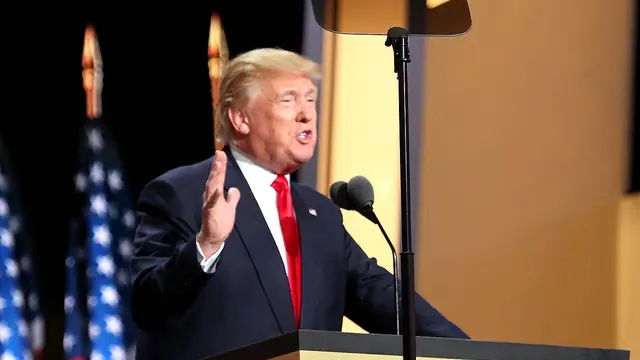
Democrats Secure Control of Both US Congressional Chambers in Midterm Upset
US voters handed the Democratic Party majorities in the House and Senate, delivering a decisive rebuke to President Donald Trump and his Republican Party amid concerns over the cost‑of‑living crisis and the Iran conflict.
Photo: Ali Shaker/VOA / Wikimedia Commons · Public domain
LAS News Desk · 4 Nov 2026, 10:45 WAT · 10 sources
US Vice President JD Vance blames Iran war for Republican midterm losses and distances himself from Trump
JD Vance posted on X that the conflict with Iran was the primary cause of the GOP’s defeat in the 2026 midterms, seeking to separate himself from President Trump’s defence of the war as he weighs a possible 2028 presidential run.
Photo: Elekes Andor / Wikimedia Commons · CC BY 4.0
LAS News Desk · 5 Nov 2026, 14:15 WAT · 9 sources
Democrats take full control of US Congress as Australians express AI fears
The US mid‑term elections saw Democrats win both the Senate and House, while a new Australian social‑cohesion report highlights growing concerns over cost of living and artificial intelligence.
LAS News Desk · 4 Nov 2026, 21:16 WAT · 1 source
Democrats surge in 2026 midterms as potential 2028 presidential contenders emerge
The 2026 US midterm elections produced significant Democratic gains, boosting the profiles of several possible 2028 White House candidates, while Republicans faced narrower victories in key states, according to BBC coverage.
LAS News Desk · 6 Nov 2026, 18:16 WAT · 1 source
Democrats seize control of U.S. Senate after Trump‑backed candidates lose in key races
In the 2026 midterm elections, voters rejected Donald Trump‑endorsed candidates in South Carolina, North Carolina and Texas, handing the Senate to the Democrats and underscoring limits on the president’s influence.
LAS News Desk · 4 Nov 2026, 21:46 WAT · 3 sources

EU AI rules extend to Northern Ireland for physical products
The UK government announced that EU AI regulations will apply in Northern Ireland only to goods with embedded AI systems, following the Windsor Framework. The move aims to give manufacturers clarity on dual market access.
LAS News Desk · 4 Nov 2026, 20:20 WAT · 1 source
More Business news ›
- US midterm outcomes spur new limits on data centre expansion and AI regulation
- Democrats face limited levers to address cost-of-living concerns after historic election win
- Freshways cuts milk price by 7p a litre, sparking concern among UK dairy farmers
- Global tech stocks tumble $1tn as Democrats win US midterms and AI fears mount
- Nasdaq Slides 5.5% as AI Regulation Fears Trigger Worst Day in 18 Months