
President Tinubu Faces Booing at Abuja Mosque Amid Security Restrictions
President Bola Ahmed Tinubu was booed by worshippers as his convoy left the Shehu Shagari Central Mosque in Abuja on Friday, with chants linked to opposition to his re‑election bid and complaints over heavy security measures.
By LAS News Desk · Published 14 Nov 2026, 06:15 WAT
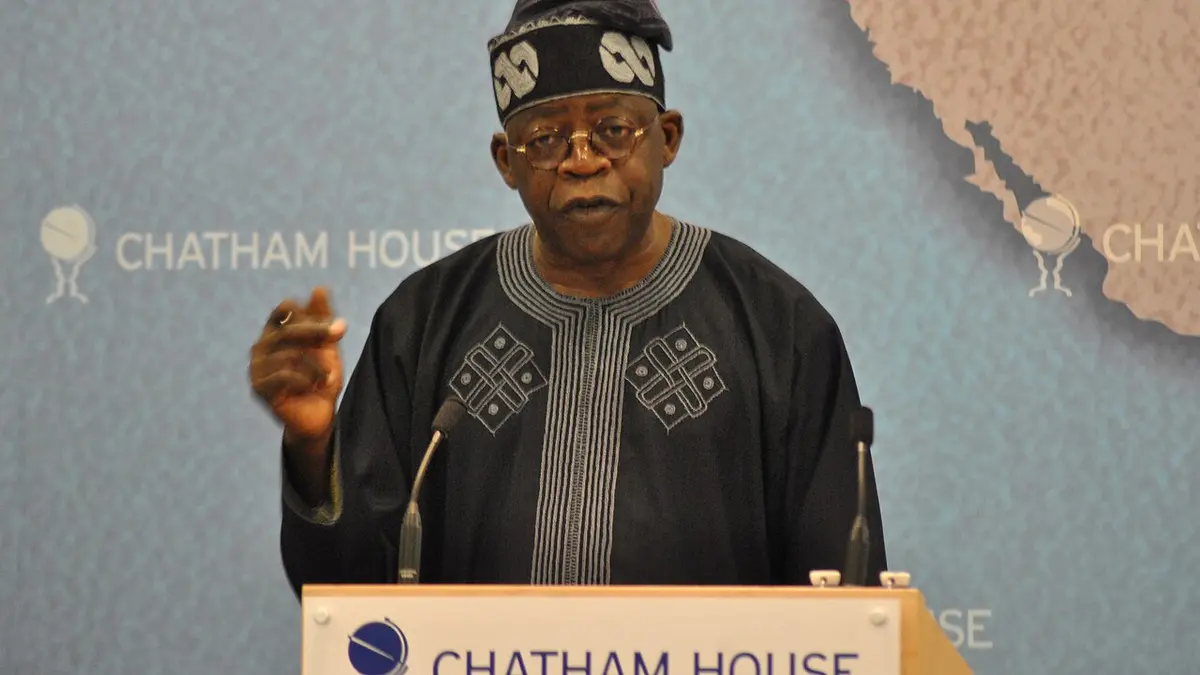
President Bola Ahmed Tinubu was met with vocal opposition as he departed the Shehu Shagari Central Mosque in Abuja on Friday afternoon. Online clips captured congregations shouting demands for the leader's departure, alongside a Hausa expression indicating a lack of support for him. The chants began as the president’s convoy left the mosque following the Juma’at prayers, which concluded at approximately 1:49 p.m.
According to witnesses, security operatives had imposed strict access controls after the president arrived. People were barred from entering the mosque once Tinubu was inside, and roads leading to the site were blocked. Some worshippers were reportedly prevented from leaving the premises until the president’s convoy had departed, creating a bottleneck that contributed to the unrest.
An unnamed informant disclosed to PREMIUM TIMES that the demonstration could have been sparked by such limitations. The witness described how security personnel mounted the mosque’s perimeter fences and how worshippers were left waiting outside the barricades. The same source said the booing originated from the area where people had been confined, suggesting a direct link between the security measures and the vocal dissent.
Background
The Shehu Shagari Central Mosque, located in the Garki district of Abuja, is a prominent place of worship that often hosts high‑profile visitors. During the president’s visit, the chief imam, Rabiu Suleiman, delivered a sermon based on Surah Al‑Fatihah and prayed for the president’s health and wisdom. Suleiman also acknowledged Tinubu’s contribution to the mosque’s renovation, a point highlighted in the Daily Trust report.
Tinubu’s appearance at the mosque came amid a period of heightened political contestation ahead of Nigeria’s next presidential election. Opposition figures such as Atiku Abubakar of the African Democratic Congress and Peter Obi of the Nigeria Democratic Congress have been positioning themselves as challengers to Tinubu’s re‑election bid. The chanting of “Tinubu Must Go” aligns with slogans used by these opposition camps in previous rallies.
Historically, Tinubu has attended Friday prayers at various mosques during election cycles. The Daily Trust article notes that on the eve of the 2023 general elections, the then‑presidential candidate visited several mosques without incident. The current episode marks a departure from that pattern, reflecting growing public frustration.
The head of state was joined by high-ranking aides, among them National Security Adviser Nuhu Ribadu, Special Adviser on Political Affairs Ibrahim Masari, Chief of Staff Femi Gbajabiamila, and ex-Kano State governor Abdullahi Ganduje. Their presence underscores the security concerns surrounding the visit.
Why it matters
The incident highlights several immediate concerns. First, the public’s reaction signals discontent with Tinubu’s governance and his re‑election prospects, as evidenced by the chants directed at him. Second, the heavy security arrangements, which restricted both entry and exit from the mosque, appear to have exacerbated tensions among worshippers, raising questions about the balance between presidential security and civil liberties.
The booing also reflects broader political dynamics. Opposition leaders are actively mobilising anti‑Tinubu sentiment, and the incident provides a visual illustration of that mobilisation. The presence of high‑ranking security officials suggests that the government anticipates potential unrest, but the backlash indicates that such measures may be counter‑productive.
For ordinary Nigerians, the episode underscores how political disputes are intersecting with religious spaces, potentially affecting the freedom to worship without intimidation. The reaction of the presidential spokesperson, Bayo Onanuga, who did not respond to media inquiries at the time of reporting, leaves the administration’s official stance on the protest unclear.
What happens next
No official statements have been released by the presidency regarding the booing or the security protocols employed at the mosque. The Daily Trust report notes that the presidential spokesperson was unavailable for comment. Observers anticipate that the incident may fuel further criticism of Tinubu’s security approach as the election campaign intensifies.
Opposition figures are expected to reference the incident in upcoming rallies, using it as evidence of public dissatisfaction. Meanwhile, security agencies may review the crowd‑control strategies used during high‑profile visits to religious sites, though no specific reforms have been announced.
The incident remains a focal point for media coverage as Nigeria approaches a pivotal electoral cycle, with both supporters and detractors closely monitoring the president’s public engagements.
Reactions
Witnesses at the mosque attributed the booing partly to the excessive security measures that prevented worshippers from entering and exiting freely. The chief imam’s prayer for Tinubu’s health and guidance was juxtaposed with the vocal dissent, illustrating the complex interplay of religious respect and political opposition.
Opposition leaders, though not directly quoted in the sources, are identified as potential drivers of the anti‑Tinubu slogans. The Daily Trust article lists Atiku Abubakar and Peter Obi as major challengers, suggesting that their campaigns may be influencing public sentiment.
The president’s entourage, including National Security Adviser Nuhu Ribadu and Chief of Staff Femi Gbajabiamila, remained present throughout the event, indicating that the administration maintained its security posture despite the unrest.
Overall, the booing at the Shehu Shagari Central Mosque serves as a micro‑cosm of the broader political tensions shaping Nigeria’s pre‑election landscape.
Sources
- Tinubu booed at Abuja mosque after Friday prayers — Daily Trust
- Tinubu booed at Abuja mosque after Friday prayers — Premium Times
Spotted an error? · Corrections policy
Related stories
Presidential aide O’tega Ogra refutes videos alleging Tinubu convoy was pelted with stones in Abuja
Senior Special Assistant O’tega Ogra denied claims that President Bola Tinubu’s convoy was attacked after Friday prayers at Abuja’s Shagari Central Mosque, presenting alternative footage that showed the president being welcomed by supporters.
Photo: Chatham House / Wikimedia Commons · CC BY 2.0
LAS News Desk · 14 Nov 2026, 12:17 WAT · 6 sources
ADC‑PCC urges President Tinubu to withdraw “All Is Fair in Politics” comment ahead of 2027 elections
The African Democratic Congress Presidential Campaign Council has demanded that President Bola Ahmed Tinubu retract his “All Is Fair in Politics” remark, warning it could incite violence and undermine peace as Nigeria approaches the 2027 general election.
Photo: Chatham House / Wikimedia Commons · CC BY 2.0
LAS News Desk · 14 Nov 2026, 01:12 WAT · 2 sources
Tinubu accuses Atiku of using public funds to build university while serving as vice‑president
President Bola Tinubu questioned former Vice‑President Atiku Abubakar’s funding of a private university during his 1999‑2007 vice‑presidency, prompting Atiku to say the institution was founded in 1993, before his public office.
Photo: Chatham House / Wikimedia Commons · CC BY 2.0
LAS News Desk · 7 Nov 2026, 20:15 WAT · 5 sources
Olujuwon Obasanjo joins PBAT Door‑to‑Door Movement as adviser, backs President Tinubu’s 2027 re‑election bid
Former President Olusegun Obasanjo’s son, Olujuwon Obasanjo, was appointed Special Adviser on Political Affairs for the PBAT Door‑to‑Door Movement in Abuja and pledged support for President Bola Ahmed Tinulu’s 2027 re‑election campaign.
Photo: MediaMOF / Wikimedia · CC BY-SA 4.0
LAS News Desk · 5 Nov 2026, 08:34 WAT · 5 sources

Vice President Shettima urges northern voters to back Tinubu’s 2027 re‑election, citing past support
Kashim Shettima appealed to voters in northern Nigeria to ensure President Bola Tinubu’s re‑election in 2027, arguing the region should repay the president’s historical backing of northern politicians and projects.
LAS News Desk · 25 Oct 2026, 11:15 WAT · 3 sources

Former aide claims Buhari-era cabal blocked Tinubu's ministerial nominees and backed rival candidate
Laolu Akande, a former presidential spokesperson, alleges that a powerful group within Muhammadu Buhari’s administration rejected Bola Tinubu’s ministerial picks, including Dele Alake and Wale Edun, and promoted Ahmad Lawan as the APC’s consensus presidential candidate before the 2022 primary.
LAS News Desk · 25 Oct 2026, 02:45 WAT · 2 sources
More Africa/Nigeria news ›
- Senate schedules on‑site visit to Ogun communities to probe army land dispute
- President Tinubu praises Dr Musa Aliyu’s election as chair of African Asset Recovery Forum
- Atiku’s media adviser challenges Defence Ministry’s use of official social media to promote Tinubu rally
- South African golfer and Kenyan chef detained at Lagos airport over 50kg cannabis shipment
- Tinubu Reaffirms Commitment to Uninterrupted Academic Calendars at FUTA Convocation