
Jensen Huang reinstated as Nvidia CEO after brief resignation amid affair scandal
Nvidia’s founder Jensen Huang resigned on 12 November following revelations of affairs, including one with an alleged Chinese spy, but was reinstated by the board eleven days later, sparking debate over the board’s handling of the investigation.
By LAS News Desk · Published 23 Nov 2026, 21:16 WAT
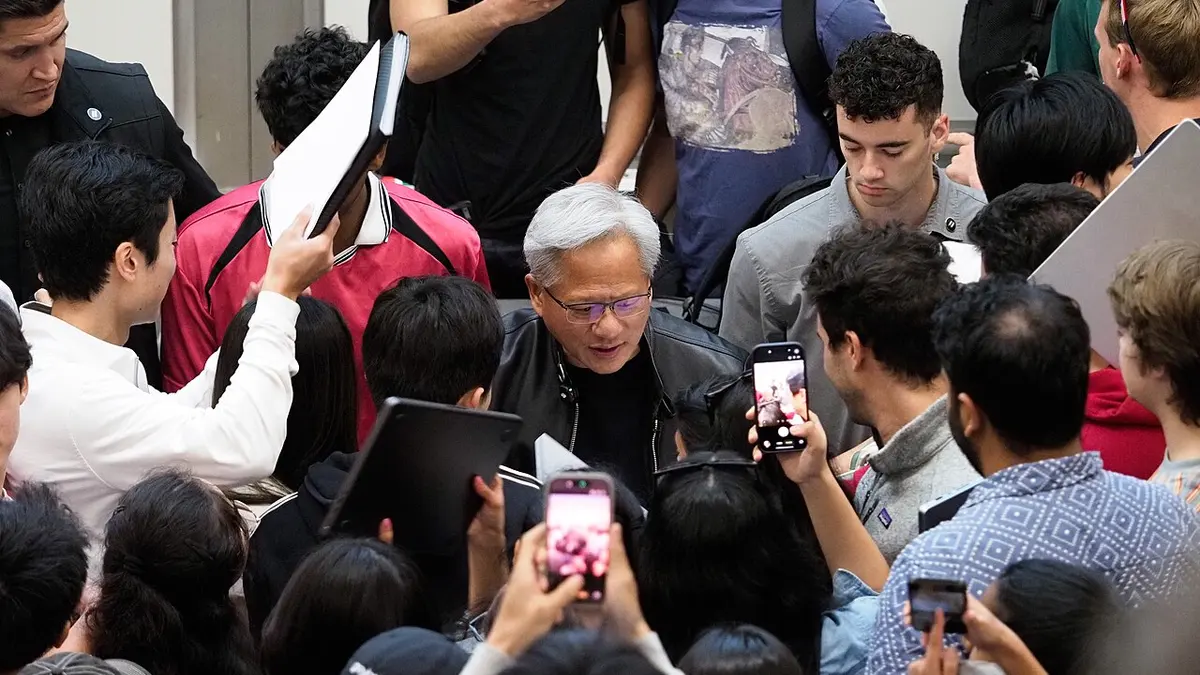
Jensen Huang, the founder and long‑time chief executive of Nvidia, stepped down on 12 November 2026 after media reports disclosed that he had been involved in at least two extramarital affairs, one of which was with a businesswoman suspected of acting as a Chinese intelligence asset. The resignation came amid accusations that his personal conduct breached the company’s code of conduct and cultural standards, prompting an immediate leadership vacuum at the AI‑focused chipmaker.
Within a week and a half, Nvidia’s board voted unanimously to reinstate Huang as chief executive, ending the brief interregnum. The board’s decision, announced on 23 November, cited confidence that Huang remained the right person to lead the company through a critical period for artificial‑intelligence technology and US‑China competition. The rapid reversal has drawn both praise for restoring stability and criticism for the board’s apparent lack of a completed investigation into the allegations.
Background
Nvidia, founded by Huang in the mid‑1990s, grew from a $1 billion public company in 1999 to a global powerhouse valued at over $4 trillion in 2026, largely on the back of its graphics‑processing units (GPUs) that power modern AI applications. Huang, an electrical engineer by training, has been credited with steering the firm through the AI boom that began in 2020, making it a linchpin in the United States’ technological rivalry with China.
The scandal emerged when reports surfaced that Huang had engaged in an affair with a businesswoman alleged to be a Chinese spy, alongside a second undisclosed relationship. Harvey Jones, the recently installed chair of Nvidia, characterized the revealed actions as individual conduct that violated the corporation's ethical guidelines, professional standards, and prevailing cultural expectations. In response, Huang announced his resignation on 12 November, a move that shocked investors and prompted a sharp dip in Nvidia’s share price.
Board member Nils Pratley, writing for The Guardian, highlighted that the board had not completed its investigation into the affair allegations before deciding on Huang’s reinstatement. The board’s unanimous vote to bring Huang back on 23 November was framed as a measure to ensure continuity in a period when Nvidia’s chips remain essential to the AI sector and broader US‑China technology competition.
Why it matters
The episode has significant implications for several stakeholder groups. For shareholders, the abrupt leadership change and subsequent reversal introduced volatility to Nvidia’s market valuation, a concern given the company’s $4 trillion market cap and its central role in AI hardware supply chains. Investors have expressed unease about governance standards, with some analysts questioning whether the board’s swift reinstatement reflects a prioritisation of short‑term stability over thorough oversight.
Employees and partners are also affected. Nvidia’s workforce, which recently celebrated an all‑employee gathering in Taipei, may experience uncertainty regarding corporate culture and ethical expectations. The board’s handling of the affair allegations could influence internal morale and the company’s reputation for upholding conduct standards.
From a geopolitical perspective, the involvement of a suspected Chinese intelligence operative underscores the heightened scrutiny on technology firms operating at the frontier of AI. Nvidia’s dominance in GPU production makes it a strategic asset in the US‑China technology race, and any perception of compromised leadership could have broader national‑security ramifications.
What happens next
The board has indicated that it believes Huang is the appropriate leader for Nvidia moving forward, but it has not disclosed a timeline for completing its investigation into the affair allegations. Observers, including business commentators, have called for the board to resign or at least undergo an independent review, arguing that the lack of a finished probe undermines confidence in corporate governance.
Nvidia is expected to continue its focus on AI‑related product development and maintain its pivotal role in the US’s technological strategy against China. The company’s next earnings report, due in early 2027, will likely be closely watched for any impact the leadership turbulence may have had on performance and strategic initiatives.
The situation remains fluid, with potential regulatory scrutiny and shareholder activism possible as more details emerge about the alleged intelligence operation and the board’s decision‑making process.
Sources
- A timeline of Jensen Huang’s affair scandal, from quitting Nvidia to his return — Guardian Asia Pacific
- Nvidia’s humiliated board should resign out of embarrassment | Nils Pratley — The Guardian
- The rise and fall and rise again of Jensen Huang — BBC World
- Jensen Huang returns as NVIDIA CEO after intelligence scandal — Al Jazeera
- Nvidia board reinstates Jensen Huang as CEO — Al Jazeera
Spotted an error? · Corrections policy
Related stories
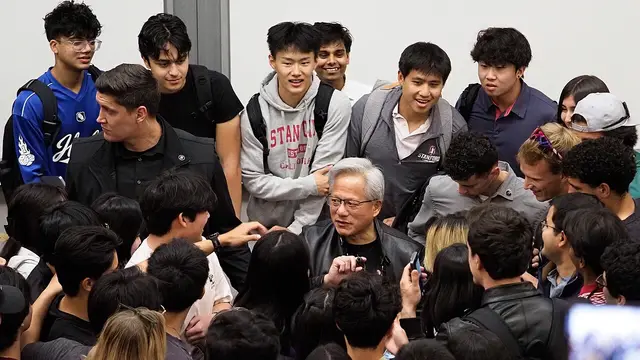
Nvidia board appoints CFO Colette Kress as interim CEO after Jensen Huang resigns amid affair and spy allegations
Nvidia's founder and long‑time chief executive Jensen Huang stepped down immediately following revelations of two extramarital affairs, one involving a woman suspected of Chinese espionage. CFO Colette Kress will serve as interim CEO while the board launches a search for a permanent successor.
Photo: Anderseidesvik / Wikimedia Commons · CC BY-SA 4.0
LAS News Desk · 12 Nov 2026, 20:15 WAT · 9 sources
Nvidia board launches independent probe into CEO Jensen Huang after affair with woman alleged to be Chinese spy
Nvidia has launched an independent investigation into CEO Jensen Huang after he admitted to an affair with a woman US intelligence agencies identified as a Chinese spy. The company stated there is no evidence its secrets or national security were compromised.
LAS News Desk · 14 Nov 2026, 18:16 WAT · 9 sources
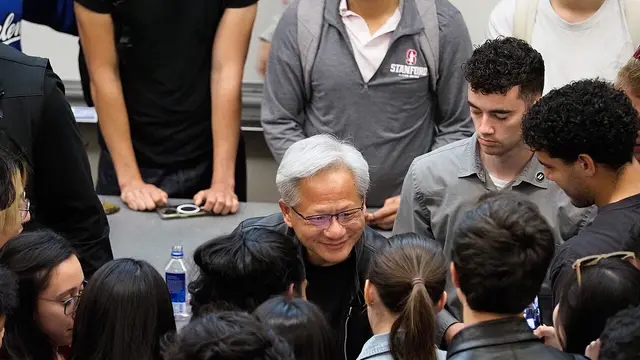
Jensen Huang to give first public Senate testimony on spy allegations
Former Nvidia CEO Jensen Huang will testify publicly before the Senate Banking Committee, according to Chairman Tim Scott, as lawmakers investigate his relationship with a suspected Chinese spy.
Photo: Anders Eidesvik / Wikimedia Commons · CC BY 4.0
LAS News Desk · 21 Nov 2026, 01:16 WAT · 2 sources

China's MSS recruited Megaspeed exec to spy on Nvidia CEO Jensen Huang
China's Ministry of State Security recruited Alice Huang, a Megaspeed executive, to gather intelligence on Nvidia CEO Jensen Huang and influence US chip export policies.
LAS News Desk · 7 Nov 2026, 17:46 WAT · 2 sources

Nvidia shares jump over 30% after Jensen Huang reinstated as CEO
Nvidia’s stock surged more than 30% on Monday following the announcement that former chief executive Jensen Huang will return to lead the company, prompting optimism and caution among investors.
LAS News Desk · 24 Nov 2026, 00:45 WAT · 5 sources

US President Trump intervenes to reinstate Nvidia CEO Jensen Huang, sparking bipartisan congressional backlash
President Donald Trump’s involvement in Nvidia’s board decision to restore Jensen Huang as chief executive prompted a sharp, bipartisan reaction in Congress and raised concerns about political influence over high‑tech firms.
Photo: Anders Eidesvik / Wikimedia Commons · CC BY 4.0
LAS News Desk · 24 Nov 2026, 16:15 WAT · 5 sources
More World news ›
- California Representative Jimmy Gomez to resign after ethics committee finds credible sexual misconduct
- Pope Francis’ diaries reveal visions of the devil and a spiritual crisis
- Iowa to detonate five tonnes of lead azide after court clearance
- UK Health Security Agency reports record 5,258 heat‑related deaths in England during summer 2026
- Chinese official sentenced to death for spying, state‑linked report says