
Goodluck Jonathan warns Nigeria’s development stalled by leader selection based on religion and ethnicity
Former President Goodluck Jonathan criticised Nigeria’s practice of choosing political leaders on narrow identity criteria, calling for merit‑based recruitment and democratic reforms at a colloquium marking Herbert Macauley’s birthday in Lagos.
By LAS News Desk · Published 15 Nov 2026, 05:10 WAT
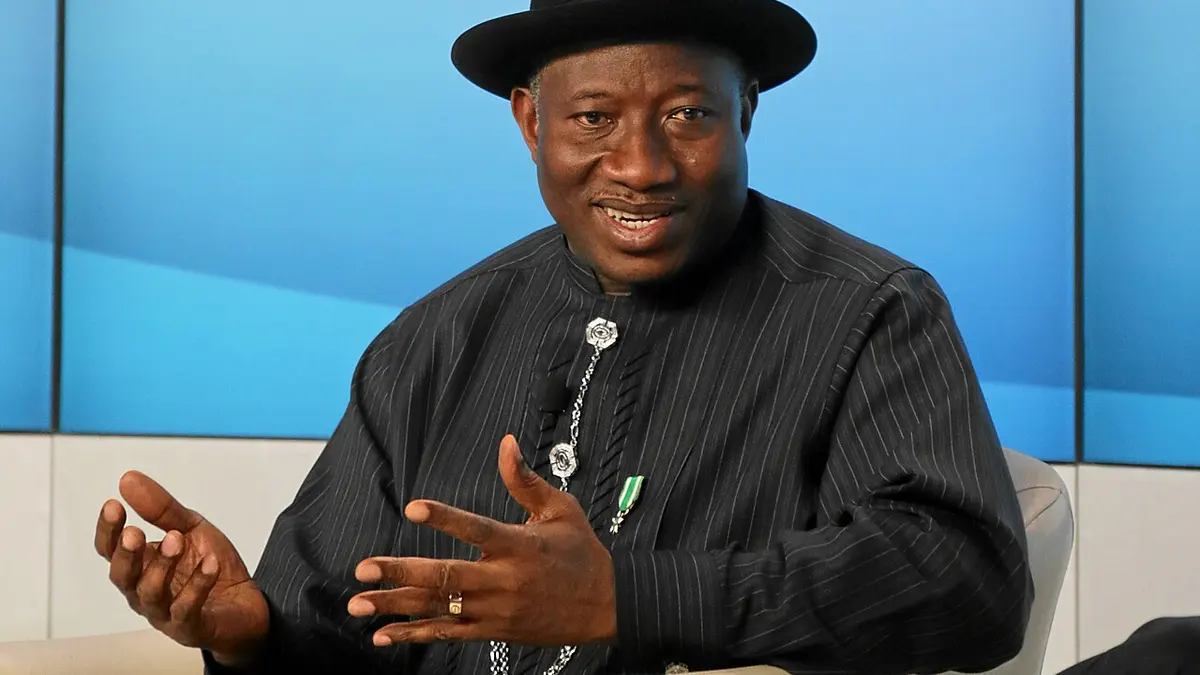
Former President Goodluck Jonathan used a speaking engagement in Lagos on 14 November 2026 to caution that Nigeria’s development will remain constrained while political leaders continue to be chosen on the basis of religion, ethnicity, language and other narrow considerations. Addressing the inaugural Herbert Macaulay Colloquium, organised by the Macaulay Heritage Foundation and the Lagos State Ministry of Tourism, Arts and Culture, Jonathan highlighted that such “primitive” recruitment practices prevent competent individuals from attaining office, regardless of their qualifications.
Jonathan’s remarks were made at the Nigerian Institute of International Affairs on Victoria Island, where he chaired the event commemorating the 162nd birthday of nationalist Herbert Macaulay. He pointed to a southern state where, according to him, 99.9 percent of the population are Christians, yet a governor must belong to a specific denomination to be eligible. This example, he argued, illustrates how identity criteria override merit in the country’s political calculus.
Background
A gathering centered on the themes of nationalism and nation-building was held to honor Macaulay's role as a pioneer of Nigerian national identity. Jonathan commended Macaulay and fellow early advocates for their vision of a cohesive country in which all residents, regardless of their ethnic, religious, or social standing, would possess identical rights and prospects. He lamented that, 66 years after independence, Nigeria has not fulfilled those aspirations.
In his speech, Jonathan identified a suite of systemic challenges that compound the leadership recruitment issue. He listed institutional weaknesses, pervasive corruption, policy inconsistency, inadequate infrastructure, insecurity and an over‑reliance on raw‑material exports as factors that continue to undermine national development. He also described Nigeria’s current democratic system as “opaque and amorphous,” calling for comprehensive reforms that would enhance popular participation, the rule of law, human‑rights protection, judicial independence, accountability, pluralism and civil‑society vibrancy.
Jonathan’s call for reform extended to education. He argued that weak educational institutions impede progress and cited India, Singapore and South Korea as examples of countries that leveraged high‑quality, research‑intensive universities to drive technological advancement. He urged Nigeria to invest deliberately in its brightest minds and to establish world‑class universities capable of competing on a global stage.
The event also featured remarks from other figures. Chief Bode George, a relative of Macaulay, received gratitude for arranging the event and urged President Bola Tinubu along with the federal administration to restore Macaulay's previous home to his kin so it might be transformed into a heritage hall. Professor Jide Oshuntokun, the keynote speaker, stressed that Nigeria should be understood as a multinational state with diverse ethnic, linguistic and cultural identities, and that a shared sense of belonging is essential for peaceful coexistence.
Why it matters
Jonathan’s critique directly targets the mechanisms by which political power is allocated in Nigeria, a country of over 200 million people with a complex mosaic of ethnic and religious groups. If leadership selection continues to be driven by identity considerations, the nation risks perpetuating the very divisions that have historically fueled conflict and hindered policy continuity. The identified challenges—corruption, infrastructure deficits and insecurity—are already cited by international observers as major obstacles to foreign investment and economic diversification.
By advocating for merit‑based recruitment and democratic reforms, Jonathan is calling for a shift that could affect the composition of legislative bodies, executive appointments and party structures across the federation. Improved governance, he suggests, would enhance accountability and enable more effective deployment of resources, potentially reducing Nigeria’s dependence on raw‑material exports and fostering industrialisation.
Education reforms, another pillar of his argument, have implications for the country’s long‑term human‑capital development. Establishing research‑intensive universities could attract diaspora talent, stimulate innovation ecosystems and position Nigeria to compete in high‑value sectors, echoing the development trajectories of the cited Asian economies.
What happens next
Jonathan’s speech did not outline specific legislative proposals, but he called for a review of Nigeria’s democratic system to embed popular participation, rule of law and judicial independence. The colloquium’s organisers, the Macaulay Heritage Foundation and the Lagos State Ministry of Tourism, Arts and Culture, indicated that the event would serve as a platform for ongoing dialogue on nationalism and nation‑building. Chief Bode George’s appeal to return Macaulay’s residence suggests that heritage‑preservation initiatives may be pursued alongside political reforms.
The broader push for reform may influence upcoming policy discussions within the National Assembly and among political parties, especially as the country approaches the 2027 general elections. Stakeholders, including civil‑society groups and international development partners, are likely to monitor how Jonathan’s calls translate into concrete actions, particularly in the areas of electoral law, anti‑corruption measures and higher‑education investment.
The colloquium’s emphasis on shared national identity, as articulated by Professor Oshuntokun, may also shape future discourse on federalism and resource allocation, potentially informing debates on constitutional amendments or devolution of powers.
Overall, Jonathan’s intervention adds a high‑profile voice to longstanding debates about leadership selection in Nigeria, underscoring the perceived link between identity‑based politics and the nation’s developmental challenges.
Sources
Spotted an error? · Corrections policy
Related stories
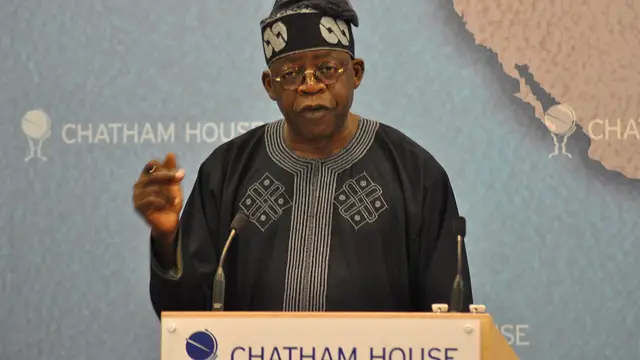
President Tinubu pushes bill to replace ASCON with new National School of Government
Bola Tinubu has asked the Nigerian Senate to approve a bill that would repeal the Administrative Staff College of Nigeria Act and establish a National School of Government, aiming to strengthen leadership development and policy delivery.
Photo: Chatham House / Wikimedia Commons · CC BY 2.0
LAS News Desk · 14 Oct 2026, 16:16 WAT · 2 sources

Former Chicago State lecturer accuses Tinubu of false university claims and warns against election rigging
Former Chicago State University lecturer Adetokunbo Pearse has warned President Bola Tinubu and INEC Chairman Joash Amupitan against manipulating the 2027 general election, claiming those responsible could face imprisonment.
LAS News Desk · 14 Nov 2026, 17:45 WAT · 3 sources

TRCN finds 250 counterfeit teaching certificates during recruitment drive
The Teachers Registration Council of Nigeria uncovered 250 forged teaching certificates while vetting about 1,000 candidates in an unnamed state, prompting the rollout of QR‑coded certificates and tighter exam controls.
LAS News Desk · 13 Nov 2026, 09:44 WAT · 2 sources
Federal Ministry of Education refutes viral claims of 2,000 fake universities and 100 bogus professors in Nigeria
The Ministry of Education said the National Universities Commission never announced 2,000 fake universities or a list of 100 fake professors, describing the circulating posts as recycled misinformation, and urged the public to verify information through official channels.
LAS News Desk · 15 Nov 2026, 05:09 WAT · 2 sources

BBC launches Hausa‑language learning programme for Nigerian children
The BBC has introduced Dars Hausa, a multimedia education initiative aimed at Nigerian children who cannot attend school due to insecurity, poverty or other barriers. The programme offers lessons in maths, English, science and geography via TV, radio and social media.
LAS News Desk · 19 Nov 2026, 11:43 WAT · 1 source

JAMB moves course and institution change process fully online
The Joint Admissions and Matriculation Board has eliminated the need for physical office visits for UTME course changes, moving the entire service to its e-Facility portal to reduce costs and delays.
LAS News Desk · 18 Nov 2026, 15:46 WAT · 2 sources
More Africa/Nigeria news ›
- Senate schedules on‑site visit to Ogun communities to probe army land dispute
- President Tinubu praises Dr Musa Aliyu’s election as chair of African Asset Recovery Forum
- Atiku’s media adviser challenges Defence Ministry’s use of official social media to promote Tinubu rally
- South African golfer and Kenyan chef detained at Lagos airport over 50kg cannabis shipment
- Tinubu Reaffirms Commitment to Uninterrupted Academic Calendars at FUTA Convocation