
African Youths Map Water Challenges in 51 Countries Ahead of COP31
A joint effort by the Green Africa Youth Organisation and the Children’s Investment Fund Foundation has surveyed over 1,200 young people across 51 African nations to document water insecurity and propose solutions, with findings due at the UN Water Conference in Abu Dhabi.
By LAS News Desk · Published 13 Nov 2026, 12:44 WAT
Youth‑led Mapping of Water Insecurity
Delegates from the Green Africa Youth Organisation (GAYO) and the Children’s Investment Fund Foundation (CIFF) revealed the outcomes of the African Youth Water and Climate Engagement Initiative during the 31st United Nations Climate Change Conference (COP31) held in Antalya, Turkey. The project surveyed more than 1,200 young people in 51 African countries and held consultations with over 900 participants across the continent’s five regions. The aim was to document how water insecurity affects young people and to bring their proposed solutions into policy discussions.
Baliqees Salaudeen‑Ibrahim, GAYO’s Climate Director, explained that the research was designed to capture current water challenges and to identify community‑based solutions already being developed by youth. She said the consultations reinforced concerns raised in the preliminary survey and highlighted initiatives led by young people.
These results are scheduled for a formal unveiling at the UN Water Conference in Abu Dhabi this December, with the goal of guiding policymakers on strategies to combat water shortages throughout the African continent.
Background
Water insecurity remains a pressing issue across the continent. According to the 2025 WHO/UNICEF Joint Monitoring Programme, merely 32 per cent of the population in sub‑Saharan Africa possessed access to safely managed drinking water during 2024. Access rates in rural regions were recorded at 16 per cent, significantly lower than the 52 per cent observed in urban settings.
Data from the 2024 Demographic and Health Survey in Nigeria indicated that 71 per cent of the national population could access at least basic drinking water services. Nevertheless, just 38 per cent of residences had water available on their property, while 66 per cent received adequate volumes when required. These figures illustrate the gap between national coverage statistics and the lived experience of households.
The initiative was launched ahead of COP31 so that the youth‑generated findings and recommendations could be presented to conference leadership. GAYO and CIFF aim to pinpoint effective strategies from the study, secure funding for them, and investigate methods for scaling these successful interventions to other communities.
Why It Matters
This project ensures that the perspectives of young individuals, who are frequently marginalized in policy discussions, are included in debates regarding water security. By documenting their experiences and solutions, the initiative seeks to influence governments to develop and implement practical interventions. The research highlights that community‑led solutions can attract attention and resources, but also that governments must support these efforts through policy and administrative cooperation.
The data also underscore persistent inequalities in water access. While national statistics may suggest broad coverage, the detailed survey reveals that a significant proportion of households lack on‑premises water and sufficient supplies. Addressing these gaps is crucial for public health, economic development, and climate resilience.
What Happens Next
The GAYO–CIFF partnership has scheduled the release of these findings for the UN Water Conference taking place in Abu Dhabi in December. The objective of this presentation is to shape policy dialogues and promote the distribution of funds toward initiatives led by youth. Furthermore, the initiative seeks to partner with governmental bodies to assist young people in overcoming bureaucratic obstacles, engaging with local communities, and ensuring public officials fulfill their water-related obligations.
No further dates or decisions have been announced beyond the December conference, but the project’s momentum suggests ongoing engagement with policymakers and stakeholders across Africa.
Sources
Spotted an error? · Corrections policy
Related stories
COP31 draft in Turkey omits fossil fuels as talks near final agreement
Negotiators at the United Nations climate summit in Antalya have presented a new draft that for the first time acknowledges warming could exceed 1.5°C, but it still does not name fossil fuels, prompting criticism from Ireland, the EU and developing nations.
LAS News Desk · 22 Nov 2026, 10:45 WAT · 8 sources

IOC praises Senegal after historic first Youth Olympic Games held in Africa
The 2026 Youth Olympic Games in Dakar concluded as the first Olympic event held on the African continent, with the IOC praising the host nation's capability to manage major international sporting events.
LAS News Desk · 14 Nov 2026, 18:48 WAT · 2 sources
AfDB Report Highlights Debt Distress for 22 African Nations
The African Development Bank says 14 countries face high debt‑distress risk and eight are already in distress, with $87 billion paid in interest between 2022‑24. Rising debt service cuts fiscal space for health, education and infrastructure.
LAS News Desk · 20 Nov 2026, 13:16 WAT · 3 sources
Singapore approves first carbon credit project in Rwanda for water filters
Singapore's NEA has authorised a Rwandan water purification project, allowing local firms to buy carbon credits to offset emissions while providing safe drinking water to 1.8 million people.
LAS News Desk · 14 Nov 2026, 11:18 WAT · 2 sources

Access Bank appoints Oluseyi Kumapayi as DMD for African subsidiaries and Olanrewaju Bamisebi as ED of IT and Digitalisation
Access Bank Plc has elevated Oluseyi Kumapayi to Deputy Managing Director of its African subsidiaries and appointed Olanrewaju Bamisebi as Executive Director of Information Technology and Digitalisation, with both appointments approved by the Central Bank of Nigeria and effective from late October 2026.
LAS News Desk · 2 Nov 2026, 10:18 WAT · 3 sources
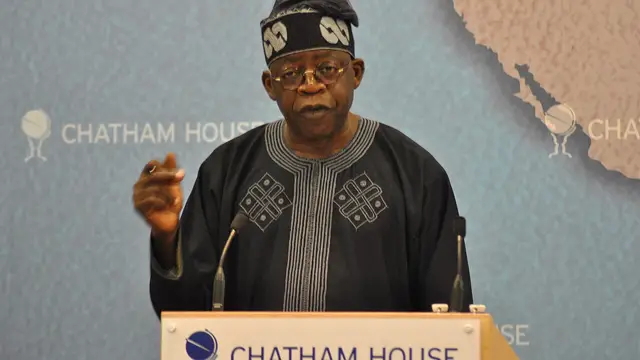
APC Campaign Council Defends Tinubu’s Power‑Sector Record Amid Calls for Scorecard
The All Progressives Congress presidential campaign team said President Bola Tinubu’s promise to end estimated electricity billing should be judged alongside his administration’s actions, citing the Electricity Act, metering initiative and debt‑settlement bond as evidence of progress.
Photo: Chatham House / Wikimedia Commons · CC BY 2.0
LAS News Desk · 2 Nov 2026, 08:47 WAT · 5 sources
More Africa/Nigeria news ›
- Senate schedules on‑site visit to Ogun communities to probe army land dispute
- President Tinubu praises Dr Musa Aliyu’s election as chair of African Asset Recovery Forum
- Atiku’s media adviser challenges Defence Ministry’s use of official social media to promote Tinubu rally
- South African golfer and Kenyan chef detained at Lagos airport over 50kg cannabis shipment
- Tinubu Reaffirms Commitment to Uninterrupted Academic Calendars at FUTA Convocation